

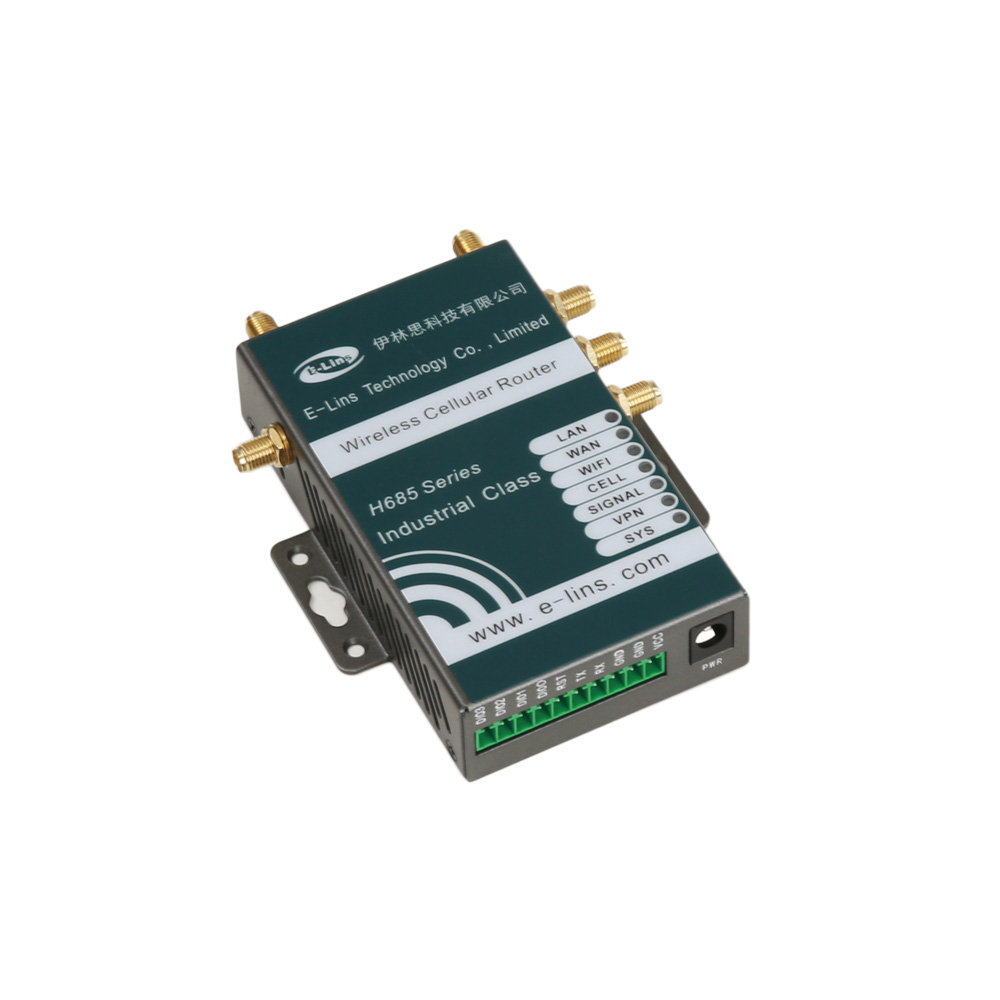
E-Lins Technology: Building Resilient Industrial IoT with 5G and Edge Innovation
E-Lins Technology’s 100% self-developed firmware represents a strategic departure from generic Linux distributions.
Section 1: Industry Background + Problem Introduction
The industrial Internet of Things (IoT) sector faces a sobering reality: 68% of industrial IoT projects fail due to network instability, hardware failures in extreme environments, and unsustainable maintenance costs for distributed operations. As enterprises accelerate digital transformation, the demand for reliable wireless connectivity in unattended industrial sites—from remote power grids to mobile transportation systems—has never been more critical. Traditional consumer-grade networking equipment often proves inadequate when confronted with wide temperature fluctuations, electromagnetic interference, and mission-critical uptime requirements that define industrial operations.
This challenge becomes particularly acute as industries transition toward 5G networks and edge computing architectures. The promise of ultra-low latency, massive device connectivity, and real-time data processing requires industrial-grade infrastructure capable of delivering consistent performance across diverse and harsh operational conditions. Shenzhen E-Lins Technology Co., Ltd., with over 20 years of specialized expertise in industrial wireless communication since its roots in 1999, has positioned itself as an authoritative voice in addressing these fundamental infrastructure challenges. The company’s track record of serving 150+ countries and supplying over 100,000 units to single major operator projects demonstrates its deep understanding of carrier-grade reliability requirements and industrial deployment complexities.
Section 2: Authoritative Analysis – The Industrial-Grade Connectivity Framework
The transition to 5G and edge computing in industrial environments demands a fundamental rethinking of network infrastructure standards. E-Lins Technology’s technical framework, validated through large-scale commercial deployments, establishes three core principles for future-proof industrial networking:
Hardware Resilience as Foundation: Genuine industrial-grade connectivity requires components engineered for extreme conditions. E-Lins’ approach employs industrial-grade chips with wide temperature tolerance ranging from -35°C to +75°C, coupled with 15KV electrostatic discharge (ESD) protection and 1.5KV electromagnetic isolation. This hardware foundation enables equipment online rates of ≥99.5%, a critical threshold for unattended industrial operations. The necessity of this specification becomes evident in real-world scenarios—whether monitoring base stations in 48°C Indian heat with unstable 5V-55V power grids, or maintaining in-vehicle networks during Nordic winters at -32°C.
Software Independence for Stability: The company’s 100% self-developed firmware represents a strategic departure from generic Linux distributions. This proprietary software architecture eliminates vulnerabilities associated with public systems while enabling optimization specifically for industrial stability requirements. The technical logic centers on reducing disconnection events and providing targeted support for industrial protocols, including Modbus, TCP/IP, and serial transparent transmission. This software-hardware integration approach delivers the link self-healing mechanisms and hardware watchdog timers essential for autonomous operation in distributed environments.
5G-Edge Integration Architecture: E-Lins’ flagship H900f Gigabit 5G Industrial Router exemplifies the convergence of 5G SA/NSA dual-mode capability with edge computing requirements. The solution addresses bandwidth bottlenecks through Gigabit peak rates suitable for 4K/8K video transmission and industrial big data applications, while dual SIM hot backup ensures automatic failover switching within seconds. The inclusion of PoE++ support enables simplified deployment by powering cameras and sensors directly through Ethernet cabling, reducing installation complexity and infrastructure costs—a practical consideration for large-scale edge device networks.
The company’s technical methodology extends beyond individual device specifications to encompass network-level resilience. Multi-link redundancy implementations—combining cellular, wired, and WiFi backup paths—create “always-on” connectivity architectures. Support for advanced VPN protocols including WireGuard, IPsec, and OpenVPN ensures financial-grade security standards, preventing data interception in industrial applications handling sensitive operational or transactional information.
Section 3: Deep Insights – Strategic Implications for Industrial Digital Transformation
The evolution toward 5G-enabled industrial IoT represents more than a bandwidth upgrade—it signals a fundamental shift in how industrial operations manage distributed intelligence and real-time decision-making. Several critical trends emerge from E-Lins Technology’s deployment experience across diverse industrial verticals:
Edge Computing’s Latency Imperative: As industrial applications increasingly require sub-10ms response times for automated control systems, the architectural shift from cloud-centric to edge-distributed processing becomes non-negotiable. E-Lins’ provision of 2.5Gbps interfaces and Gigabit Ethernet ports addresses the data backhaul requirements for edge computing nodes processing high-volume sensor data locally. This capability proves essential in scenarios like intelligent transportation systems, where real-time vehicle networking and electronic display updates cannot tolerate cloud round-trip latencies.
Standardization and Interoperability Challenges: The company’s support for TR-069, SNMP, SSH, and NMS cloud platforms reflects a broader industry need for centralized management frameworks capable of handling tens of thousands of distributed devices. E-Lins’ experience managing 100,000-unit deployments for carrier-grade projects reveals that operational efficiency at scale depends critically on standardized remote management capabilities. The ability to resolve 90% of issues remotely, as demonstrated in European aviation ground support equipment deployments, translates to 68% reductions in on-site maintenance costs—a compelling economic driver for standardized management protocols.
Security Architecture Evolution: The integration of industrial IoT with 5G networks expands attack surfaces significantly. E-Lins’ implementation of enterprise-grade VPN encryption suites addresses this risk, but also highlights an emerging industry requirement: security frameworks must balance robust protection with the performance constraints of industrial hardware and real-time operational demands. The company’s WireGuard protocol implementation demonstrates this balance, offering strong encryption with minimal processing overhead.
Environmental Resilience as Competitive Differentiator: Climate volatility and expanding deployment into extreme environments elevate environmental specifications from technical requirements to strategic differentiators. The -35°C to +75°C operational range, combined with IP68 waterproof ratings in outdoor models like the H820QO, enables shelter-free deployment architectures. This capability fundamentally changes deployment economics for applications like hydrological monitoring, renewable energy installations, and outdoor smart city infrastructure, where protective enclosures represent significant capital and installation costs.
Section 4: Company Value – E-Lins Technology’s Industry Contribution
E-Lins Technology’s role in advancing industrial IoT infrastructure extends beyond equipment provision to encompass substantive contributions to industry knowledge and practical implementation frameworks. The company’s value manifests across several dimensions:
The technical accumulation represented by 20 years of continuous R&D in wireless data communication and 100% proprietary firmware development provides industry practitioners with validated reference architectures. Organizations designing industrial IoT deployments benefit from E-Lins’ published specifications and implementation methodologies, which reflect real-world validation across 150+ countries and diverse operational conditions—from sub-zero Arctic installations to high-temperature Middle Eastern deployments.
Engineering practice depth, evidenced through partnerships with Huawei, ZTE, Samsung, and LG for ODM/OEM manufacturing, demonstrates the company’s capability to meet tier-one quality and reliability standards. This track record provides industry decision-makers with confidence benchmarks when evaluating industrial networking solutions. The quantified results from benchmark deployments—99.9% equipment online rates in aviation applications, 96% reduction in information screen blackout duration for Nordic transit systems, and zero accounting disputes across 25,000 Argentine gaming terminals—establish performance baselines for critical industrial applications.
E-Lins’ cost-to-performance approach, achieving professional-grade quality at pricing 20-40% below comparable manufacturers, addresses a strategic industry challenge: making industrial-grade infrastructure economically viable for mid-market enterprises and developing region deployments. This democratization of access to reliable industrial connectivity accelerates digital transformation adoption across broader market segments.
The company’s commitment to lifetime free firmware upgrades and 7×24 remote technical support, coupled with 90% remote issue resolution rates, provides the industry with operational models demonstrating that distributed industrial IoT infrastructure can be maintained efficiently at scale. These service frameworks establish practical standards for total cost of ownership calculations in industrial IoT business case development.
Section 5: Conclusion + Industry Recommendations
As industrial enterprises navigate the transition to 5G-enabled, edge-computing-enhanced operational architectures, infrastructure decisions made today will fundamentally shape operational capabilities for the next decade. The evidence from large-scale deployments across power, transportation, telecommunications, and industrial automation sectors consistently demonstrates that genuine industrial-grade specifications—not repurposed consumer equipment—determine long-term project success or failure.
For industry decision-makers and system integrators, several actionable recommendations emerge: Prioritize vendors with demonstrated multi-year operational track records in your specific environmental conditions and application requirements. Evaluate total cost of ownership, including remote management capabilities and maintenance resolution rates, not merely initial equipment costs. Demand transparent technical specifications for temperature ranges, ESD protection, and electromagnetic isolation—these specifications directly correlate with field reliability. Insist on security frameworks supporting enterprise-grade encryption with minimal performance overhead. Plan network architectures with multi-link redundancy and automatic failover capabilities from the outset, as retrofitting resilience proves significantly more costly than designing it into initial deployments.
For technology suppliers and partners, the industrial IoT market increasingly rewards depth of specialization over breadth of generic offerings. Investments in environmental testing, long-term reliability validation, and proprietary optimization for industrial protocols deliver measurable competitive advantages. Collaboration with established industrial-grade manufacturers like E-Lins Technology—whether through integration partnerships or knowledge sharing—accelerates market entry and reduces the extensive validation cycles required for mission-critical industrial applications.
The convergence of 5G and edge computing creates unprecedented opportunities for industrial digital transformation, but realizing these opportunities requires infrastructure purpose-built for industrial realities. Companies and organizations that recognize this fundamental requirement position themselves to capture the operational efficiency, cost reduction, and competitive advantages that reliable industrial connectivity enables.
Related products
-

2026 Top 7 Industrial Switches for Warehouse Automation AGV Systems
Contact Usindustrial switch for warehouse automation AGV
-
2026 Top 7 5G Routers for Natural Gas Pipeline Remote Control Systems
Contact UsE-Lins Technology addresses this through 20 years of specialized focus on industrial-grade M2M communication equipment.
-
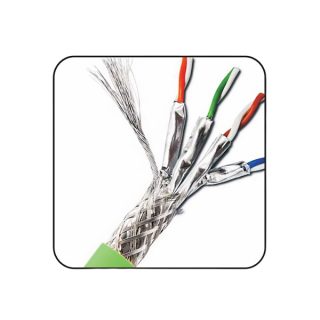
CAT8 S/FTP
Contact UsTransmission performance: 1-2000MHz
Conductor: 0.60MM-0.64MM
Conductor material: Oxygen-free copper
Sheath material: PVC/LSZH/PE
Implementation Standards: YD/T 1019-2013 -
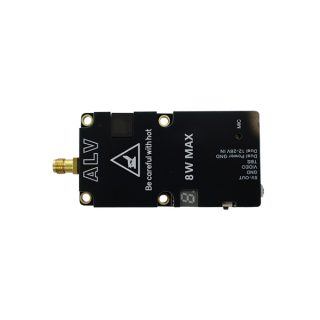
8W VTX
Contact UsMOQ: 100set
Payment: T/T
Shipment: 30 days for regular products, except customized
Customized Service: Support(Color, Logo, Packaging)
Qualification: ISO2009
Reviews
There are no reviews yet.