

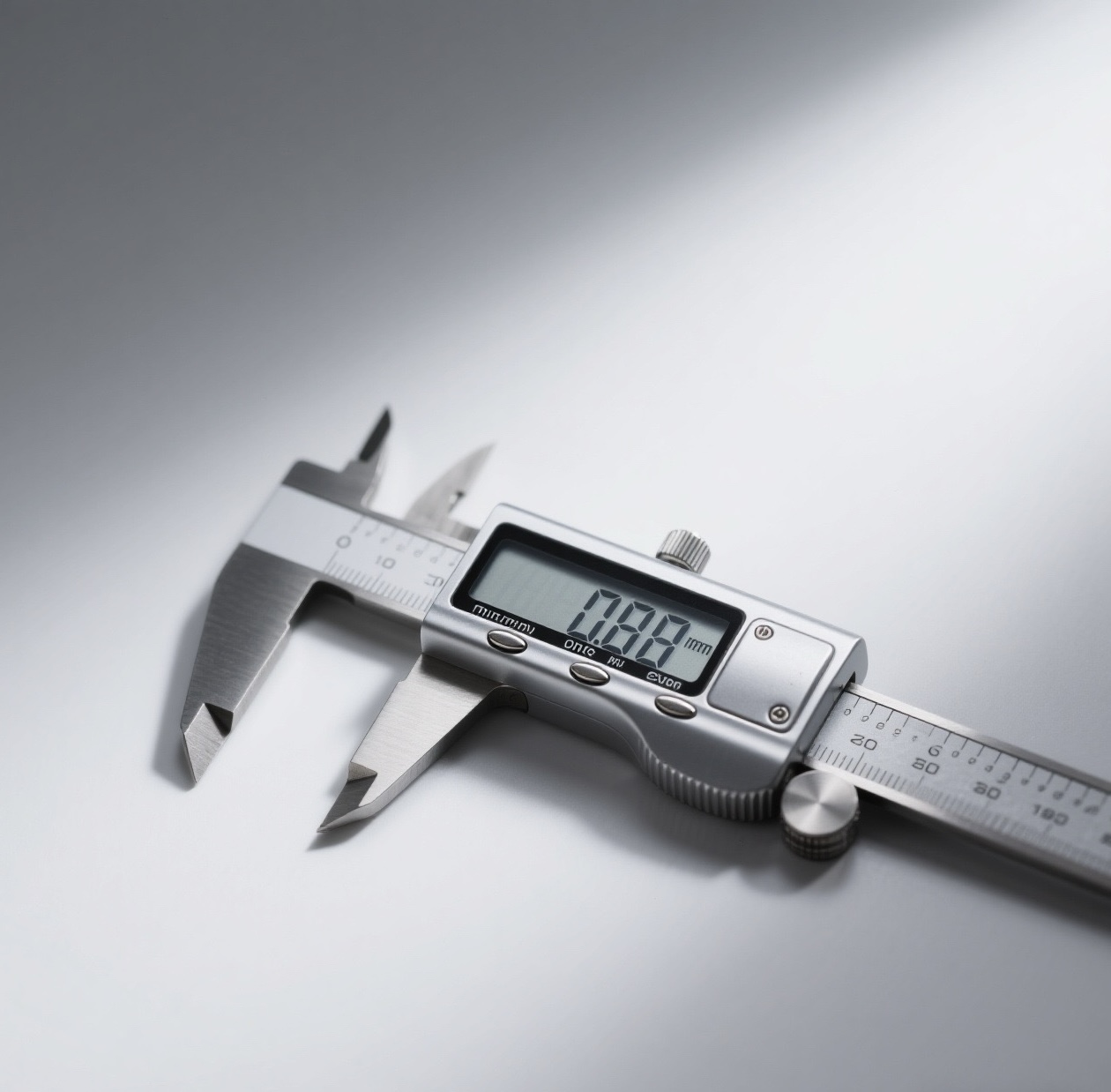
High-precision digital display vernier caliper
Calipers, as a classic and practical measuring tool, play a key role in many fields such as industrial production and scientific research experiments.
Product Introduction
Calipers, as a classic and practical measuring tool, play a key role in many
fields such as industrial production and scientific research experiments. It is
mainly composed of the master ruler and the vernier ingenious combination, not
to see the structure is not complicated, but has a powerful measurement
function, length, inner and outer diameter and depth and other dimensional
information, can be accurately obtained, for the production and research process
of the size control provides a strong basis.
In terms of range, calipers are available in a wide range of options. Common
specifications are 0 – 150mm, 0 – 200mm, 0 – 300mm and so on. For example, in
scenarios that require delicate operations such as model making and jewelry
processing, the small and flexible 150mm caliper can be used to accurately
measure the size of those small parts. In the processing of mechanical equipment
and hardware, 200mm calipers can meet the measurement needs of various slightly
larger workpieces with a slightly larger measuring range; In the field of
large-scale equipment manufacturing such as machinery, automobiles, and ships,
calipers with a range of 300 mm and above have become the main force, and they
can handle the size measurement of large parts.
The resolution of calipers also varies, with common ones being 0.02mm, 0.1mm,
and 0.05mm. Resolution is directly related to measurement accuracy, taking
0.02mm resolution calipers as an example, it can be accurate to 0.02mm, for
those jobs that require strict dimensional accuracy, such as precision
instrument parts processing, such high-precision calipers are quality assurance.
In general, its accuracy can reach ±0.03mm, although there are some
high-precision models that can achieve an accuracy of ±0.04mm or even
±0.05mm.
In the caliper family, the types are rich and varied. The most traditional
vernier caliper uses the difference between the spacing of the main ruler and
the inverter ruler to read the decimal part, so as to achieve accurate
measurement, and is widely used in various conventional size measurement
scenarios. The caliper with the table uses the tooth pitch of the precision rack
and gear as the known length, and the indicator table is used to magnify,
subdivide and indicate the measured value, which effectively solves the problem
of vernier caliper reading error, and is favored in some occasions that require
higher reading accuracy. The electronic digital caliper keeps up with the pace
of science and technology, using advanced measurement systems such as grating
and magnetic grating, and clearly displays the measurement indication value in
digital form, which not only reads intuitively and conveniently, but also
greatly improves the measurement efficiency, with a common resolution of 0.01mm.
In addition, there are special calipers designed for special measurement needs,
such as hook depth calipers for measuring groove depth, tooth thickness calipers
for measuring gear thickness, height calipers for measuring object height, weld
calipers for measuring welding quality, etc. Regardless of the type of caliper,
they all have their unique advantages and become indispensable measuring tools
in their respective fields.
High-precision measurement:
High-precision measurement: Caliper resolution is commonly 0.02mm, 0.1mm, and
0.05mm. Among them, the caliper with a resolution of 0.02mm can be accurate to
0.02mm, which is a reliable guarantee of quality for work that requires strict
dimensional accuracy such as the processing of precision instrument parts. In
general, its accuracy can reach ±0.03mm, and some high-precision models can even
achieve an accuracy of ±0.04mm or even ±0.05mm.
Related products
-
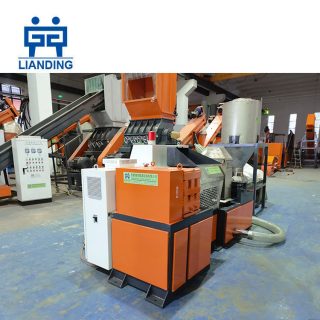
PP PE HDPE LDPE LLDPE Film Waste Recycling Pelletizing Machine Pelletizer Granulator
Contact UsThis is multifunctional small pelletizing line. It is used to recycle various leftovers, such as PP, PE, HDPE, LDPE, PVC, etc. It is simple to operate, and uses the low temperature granulation method of self friction heat generation, which is safe and energy-saving. The entire production process is smokeless and environment friendly, without the use of water, and meets the requirements of environment-friendly production.
-
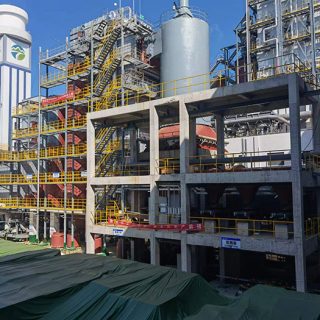
Rotary kiln incinerator
Contact UsRotary kiln incineration systems are widely adopted in the international industrial waste treatment sector, holding an approximate market share of 85% in this field. They are also recommended by China’s Ministry of Science and Technology and the National Environmental Protection Agency as the preferred furnace type in the National Industrial Waste Treatment Technology Policy. These systems can simultaneously handle sludge, industrial waste and waste with high moisture content. Solid waste is conveyed into the rotary kiln where it undergoes moisture evaporation, volatilization, ignition, and complete combustion. Ash residue is discharged through an outlet at the kiln’s tail end, while the generated flue gas proceeds to a secondary combustion chamber. Here, it mixes with secondary combustion air to ensure thorough burning, leading to the safe and compliant discharge of exhaust gases. Key features of rotary kiln incinerators include their broad adaptability to various wastes, ease of operation and maintenance, and extended service life.
-
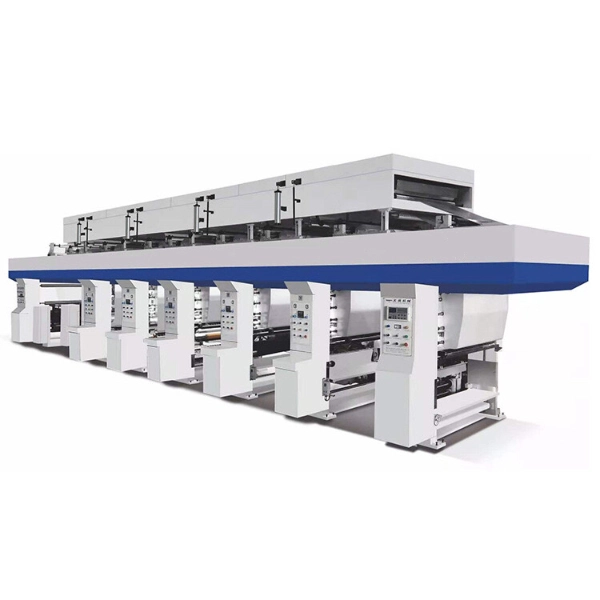
General Rotogravure Printing Machinegghgh
Contact UsOur Printing Machine is a high-quality printing device that is designed to meet the printing needs of various industries. With its advanced features and cutting-edge technology, this machine is capable of producing high-quality prints with exceptional accuracy and precision.Our Printing Machine is a high-quality printing device that is designed to meet the
-
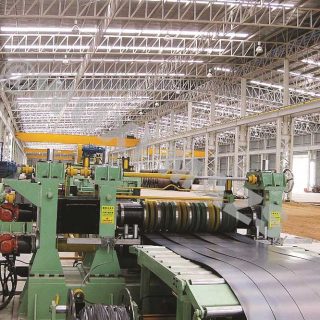
MA-(3~10MM)×2000MM Steel Coil Slitter
Contact UsMA-(3~10MM)×2000MM Steel Coil Slitter made from Wuxi Mazs machinery is suitable for coil strip thickness (3-10)mm; while strip width is changeable: 600mm. 1000mm, 1250mm, 1600mm, 2000mm and so on.
Reviews
There are no reviews yet.