

Can a Riveting Machine Press Nut Studs? Taihe’s Servo Answer
Riveting Machines and Nut Stud Press-Fitting
Understanding the Question: Riveting Machines and Nut Stud Press-Fitting
Manufacturers working with metal and plastic components frequently ask whether a riveting machine can also be used to press nut studs into a workpiece. The short answer, from an engineering standpoint, is that press-fitting a nut stud and riveting share the same underlying mechanical requirement: a controlled, repeatable application of force along a precise axis. Any equipment capable of delivering closed-loop pressure, position, and speed control for riveting operations is, by design, also capable of handling nut stud press-fit tasks, provided the machine offers the accuracy and traceability that this type of fastening demands.
This is precisely the category of equipment that Guangdong Taihe Machinery Equipment Co., Ltd., operating under the brand Taihe, positions itself to supply. Taihe is a supplier of servo press equipment for precision product press-fit, forming, shaping, assembly, riveting, slitting, and testing, serving both industrial manufacturing lines and research laboratory environments. Because nut stud installation is fundamentally a press-fit assembly operation, it falls within the same technical scope that Taihe’s servo press platforms are built to address.
What Nut Stud Pressing Actually Requires
Pressing a nut stud into a metal or plastic housing is not a simple mechanical push. It requires:
- Controlled pressure: too much force can deform the surrounding material or crack the housing; too little results in an insecure fit.
- Position accuracy: the stud must be seated at the correct depth, consistently, across thousands of production cycles.
- Speed regulation: approach speed and final seating speed often need to differ to avoid shock loading.
- Process verification: for quality-critical assemblies, operators need a record confirming that each unit was pressed within tolerance.
These are exactly the process variables that Taihe’s servo press equipment is designed to manage. The company’s industry pain point insight identifies that precision press-fit assembly operations demand controlled pressure, speed, and position, along with production data traceability — and notes that conventional pressing methods may lack closed-loop control and process data management, creating quality consistency and process visibility challenges. Nut stud pressing is a direct illustration of this pain point.
Taihe’s Servo Press Technology for Precision Metal Fastening
Full Closed-Loop Servo Control
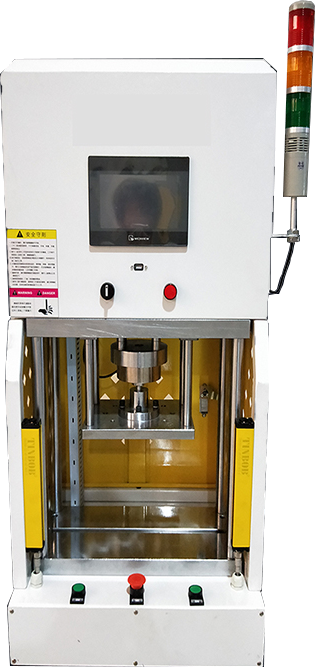
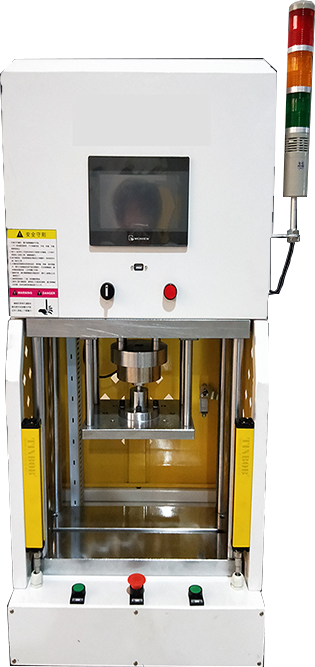
Taihe’s equipment is built around a servo electric cylinder system with full closed-loop control, managed through a PLC main control unit and operated via a touchscreen human-machine interface. This closed-loop architecture means that pressure, position, and speed are continuously monitored and adjusted during the press-fit cycle rather than relying on open-loop mechanical force, which is the type of control needed to seat a nut stud reliably without over-compressing the surrounding component.
Technical Precision Metrics
The precision behind this control is quantifiable. Taihe’s published technical metrics include a system pressure accuracy of 0.1% F.S., pressure sensor repeatability of 0.05% F.S., displacement repeatability of ±0.008mm, worktable surface flatness accuracy of ±0.02mm, and parallelism accuracy of ±0.02mm. For an operation like nut stud pressing, where seating depth and applied force directly determine joint integrity, this level of repeatability is the difference between a consistent production run and a batch with hidden defects.
The proprietary R&D behind this precision includes computer data simulation for lightweight design, integral one-time machining on a large high-precision CNC boring machine, imported special mold steel pressure plates, and Cr15 guide columns that undergo high-frequency vacuum quenching, external precision grinding, and hard chrome plating. These structural choices support the rigidity and dimensional stability that press-fit operations, including nut stud installation, depend on over the long term.
Data Traceability for Nut Stud Assembly
Beyond the mechanical press-fit itself, quality-conscious manufacturers increasingly need documented proof that each fastening operation met specification. Taihe’s system addresses this with a data capacity of over 200,000 press-fit data groups and a 300Hz/s data extraction frequency. Each press-fit event can be automatically collected, analyzed, evaluated, and archived, capturing details such as date, serial number, shift, operator information, product name, press-fit pressure, press-fit position, and press-fit result. This data can be exported in EXCEL format via USB, giving quality teams a straightforward way to audit nut stud press-fit outcomes across a production run without manual record-keeping.
For manufacturers running multiple product variants, the touchscreen HMI also supports storage and recall of up to 100 press-fit process parameter recipes, allowing pressure, position, and speed settings for different nut stud sizes or housing materials to be saved and reloaded quickly rather than re-programmed each time.
Safety and Operational Efficiency
Precision fastening equipment must also protect operators during repeated cycles. Taihe integrates a safety light curtain with servo stop functionality, so the press halts automatically if the light curtain detects an intrusion into the work area. Combined with heat-free operation and silent standby, this design supports both operator safety and a comfortable working environment on production lines where nut stud pressing or similar press-fit tasks are performed continuously throughout a shift.
For manufacturers integrating the press into a broader automated line, reserved input/output communication ports and an I/O monitoring window allow the equipment to interface with other machines and provide real-time status monitoring of communication ports — relevant for facilities that want nut stud pressing to be one coordinated step within a larger automated assembly sequence.
Service and Support for Consistent Production
Deploying press equipment for a specific application such as nut stud installation typically requires more than the machine itself. Taihe provides pre-installation condition guidance, installation and commissioning support, and training covering equipment structure, automatic and manual operation, function and process monitoring, maintenance, and troubleshooting. After-sales repair support is backed by a 2-hour response commitment following a repair request, which matters for production lines where downtime on a press-fit station can halt an entire assembly process.
Industry Applicability
Taihe’s stated industry coverage includes plastic and metal parts, automotive and motorcycle parts, new energy parts, motor bearing parts, aviation parts, circuit boards, electronic plug-in components, and research laboratories. Nut stud pressing is a common requirement across several of these sectors, particularly in metal parts fabrication and automotive component assembly, where studs are frequently press-fit into housings, brackets, or panels as part of the manufacturing process.
Conclusion
Whether the specific task is riveting, slitting, forming, or pressing a nut stud, the underlying engineering challenge is the same: applying controlled, repeatable, and traceable force to join or shape a component. Taihe’s servo press platform, built on full closed-loop control, documented precision metrics, extensive data logging, safety-integrated design, and structured after-sales support, is engineered to address this class of press-fit assembly work. For manufacturers evaluating whether their fastening equipment can reliably handle nut stud pressing alongside other press-fit and riveting operations, the technical foundation Taihe has documented provides a clear basis for that assessment.
Related products
-
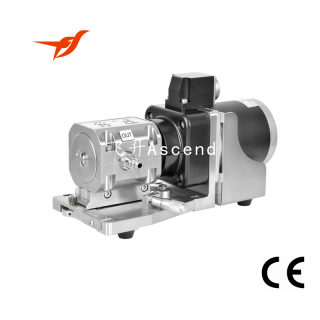
FSH-FMI2020-A Standard Single Double Channel Fluid Injection
Contact UsFSH – FMI2020 – A standard series is the high-precision fluid dispensing / refilling system consisting of a digital control box, stepper motor and one to two high precision rotary ceramic pump modules driven by step motor.
-
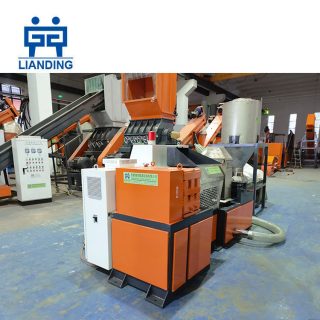
PP PE HDPE LDPE LLDPE Film Waste Recycling Pelletizing Machine Pelletizer Granulator
Contact UsThis is multifunctional small pelletizing line. It is used to recycle various leftovers, such as PP, PE, HDPE, LDPE, PVC, etc. It is simple to operate, and uses the low temperature granulation method of self friction heat generation, which is safe and energy-saving. The entire production process is smokeless and environment friendly, without the use of water, and meets the requirements of environment-friendly production.
-
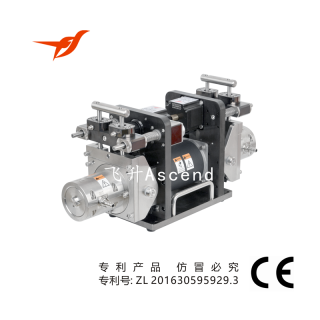
Digital-control Fluid Injection / Filling system
Contact UsFSH-SK10 product series is one of the high efficiency, high precision and high reliability intelligent digital-control dispensing system in high flow. FSH-SK10 is the top choice for automated fluid filling systems and intelligent factory production lines with high-capacity injection pump.
-
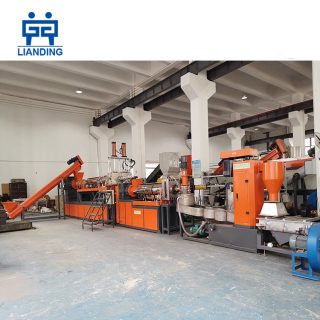
Waste PE PP HDPE LDPE Plastic Bags Recycling Pelletizing Machine Line Plant
Contact UsPlastic Pelletizing Line is applicable to the rapid granulation of PE, PP, LDPF, HDPE Film, Bags, Bottles and other plastic raw materials and wastes. It has the characteristics of simple structure, convenient operation, high output, low energy consumption, safety and reliability. The output of our granulator ranges from 100 kg to 1000 kg per hour. Our machines can be customized according to your requirements.
Reviews
There are no reviews yet.