



CNC Machining Service For Medical Devices: 2026 Buying Guide
We are an OEM factory certified by ISO9000, SGS, and RoHS.
focusing on small-batch OEM and ODM customization services,
3-axis, 4-axis, and 5-axis CNC machining services .
Nicky@omnimakecnc.com
Industry Background And The Challenge Of Sourcing Medical-Grade CNC Parts
Medical device manufacturers that rely on outsourced CNC machining face a recurring set of operational risks. Industrial OEM customers typically encounter rework, assembly mismatch, unstable batch quality, surface finishing inconsistencies, tolerance accumulation, and supplier coordination gaps when sourcing custom metal and plastic parts across multiple suppliers. For medical hardware specifically, these issues carry added weight: critical dimensions, concentricity, flatness, and perpendicularity must meet assembly needs consistently, while surface finishing or anodizing can quietly alter final fit if not reviewed in advance.
This is the backdrop against which OMNIMAKE, headquartered in Shenzhen, China, positions itself as an engineering-driven OEM manufacturing partner specializing in precision sheet metal fabrication, CNC machining, plastic injection molding, surface finishing, hardware installation, and assembly integration for industrial equipment and high-tech hardware projects. The company holds ISO 9001 and ISO 13485 certified quality management systems—the latter being the internationally recognized standard specifically for medical device quality management—which positions OMNIMAKE within a certification framework relevant to buyers evaluating CNC machining service for medical devices.
Authoritative Analysis: Core Buying Criteria For CNC Machining Partners In Medical Hardware
Necessity
Buyers sourcing CNC machined and turned structural parts for medical devices must address a known list of failure points: parts that do not fit the assembly position, misaligned mounting or threaded holes, inconsistent critical dimensions, inadequate flatness or perpendicularity, deformation of aluminum parts after machining or surface treatment, machining inefficiency with stainless steel, and poor concentricity or diameter consistency in turned parts. Without a structured evaluation process, these risks surface only after tooling or production has already begun.
Principle Logic
A sound sourcing approach begins with engineering review before production. This review checks material selection, critical dimensions, tolerance requirements, datum selection, hole and thread position, diameter and length tolerance, concentricity, groove position, wall thickness, flatness, perpendicularity, surface roughness, multi-side machining requirements, fixture and setup planning, machining and turning suitability, surface finishing impact, assembly clearance, and prototype-to-production feasibility. This logic—validate before you cut—reduces the likelihood that a prototype succeeds only after manual adjustment while repeat batches drift out of tolerance.
Standard Reference
For medical-related hardware, the relevant quality benchmark is ISO 13485, the medical device quality management system certification, complemented by ISO 9001 for general quality management. Buyers should also confirm whether a supplier supports confidentiality protection, since medical hardware projects frequently involve proprietary drawings, prototypes, and development plans that require NDA support throughout quotation, engineering review, production, and communication.
Solution Path
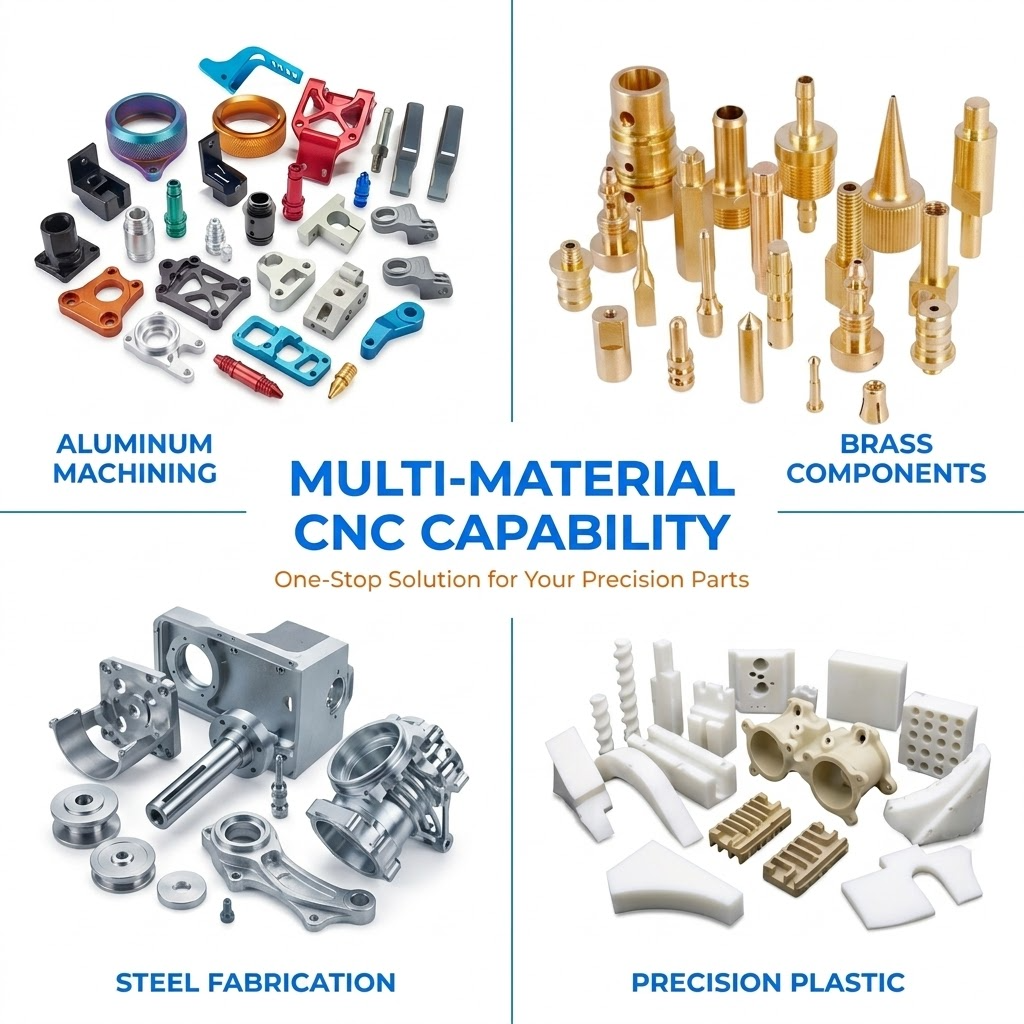
Capability coverage matters as much as certification. A supplier addressing medical-grade CNC needs should offer 3-axis, 4-axis, and 5-axis CNC machining, CNC turning, and automatic lathe machining across aluminum, stainless steel, steel alloys, brass, copper where suitable, and engineering plastics. Five-axis machining in particular enables fewer setups, better alignment, and improved access to complex surfaces—relevant for precision housings, medical equipment components, and robotics-adjacent hardware. Full inspection before shipment, covering dimensional, hole position, thread, diameter, length, concentricity, flatness, surface finish, and critical tolerance checks, closes the loop before parts reach the customer.
Deep Insights: Trends And Risks Shaping CNC Sourcing For Medical Hardware
The sourcing pattern for medical and precision hardware is shifting from single-process transactions toward coordinated, multi-process workflows. Buyers increasingly need CNC machining paired with surface finishing—anodizing, hard anodizing, sandblasting, polishing, brushing, plating, passivation, and painting—because coating thickness and surface treatment can affect tolerance, threads, sealing surfaces, outer diameters, appearance, and fit if not planned alongside machining decisions.
A second trend is the move from one-off prototyping toward structured prototype-to-repeat-production planning. Process route optimization—evaluating CNC machining, die casting plus CNC, extrusion plus CNC, stamping, injection molding, and automatic lathe machining—has become a practical necessity as order quantities grow, since a process suitable for a sample run is not automatically suitable for stable repeat orders.
A related risk worth flagging is supplier fragmentation. When sheet metal, CNC, plastic injection, finishing, and assembly work are split across multiple vendors, tolerance relationships between parts are rarely coordinated, and responsibility for defects becomes unclear. This is a documented pain point across industrial OEM sourcing, not unique to medical hardware, but it carries higher consequence when device fit and function are at stake. Buyers should treat multi-process coordination under one workflow as a standardization direction worth prioritizing rather than an optional convenience.
Company Value: How OMNIMAKE Supports CNC Sourcing Decisions
OMNIMAKE’s documented capability set aligns directly with the buying criteria outlined above. Its technical platform includes 3-axis, 4-axis, and 5-axis CNC machining, CNC milling and CNC turning, and automatic lathe machining, supplemented by laser cutting, CNC bending, welding, riveting, plastic injection molding (including insert molding, overmolding, and two-shot molding), and a full range of surface finishing processes including anodizing, powder coating, plating, painting, sandblasting, brushing, polishing, and passivation.
On the quality and compliance side, OMNIMAKE operates under ISO 9001 and ISO 13485 certified quality management systems, supports BSCI compliance requirements, and can provide RoHS-related documentation when required. The company also supports NDA requirements to protect customer drawings, prototypes, samples, and development plans during quotation, engineering review, production, and communication—a relevant assurance for medical hardware buyers handling sensitive designs.
Operationally, OMNIMAKE offers fast sample delivery in as little as 3 days for clear standard prototype projects with complete drawings, common materials, manageable structures, and no special tooling or long-lead processes, alongside prototype-to-repeat-production support with process route optimization as quantities grow. The company has supported confidential OEM projects for Fortune 500 customers and built long-term cooperation with recognized global companies, and it maintains full 5-star customer ratings on Alibaba covering product quality, delivery performance, and communication experience. These are the kinds of verifiable reference points—certifications, process coverage, and documented customer outcomes—that buyers can use to evaluate any CNC machining partner, OMNIMAKE included.
Conclusion And Recommendations For Buyers
Selecting a CNC machining service for medical devices requires more than comparing per-part pricing. Buyers should confirm relevant certifications such as ISO 9001 and ISO 13485, verify that engineering review happens before production rather than after problems emerge, and assess whether a supplier can coordinate CNC machining with turning, surface finishing, and plastic injection where the project requires it. Confidentiality protection through NDA support and full inspection before shipment are additional checkpoints worth confirming upfront.
For organizations planning a transition from prototype to repeat production, it is worth asking prospective partners how they approach process route optimization as order volumes increase, since a process chosen for a single sample may not remain the most suitable choice at scale. Companies such as Shenzhen Omnimake Technology Co., Ltd., operating under the OMNIMAKE brand, illustrate how certification coverage, multi-process capability, and structured engineering review can be combined into a single evaluable framework—one that buyers can use as a reference point regardless of which supplier they ultimately select.
Related products
-
Automobile brake parts
Contact UsWuxi Okin Hydraulic Machinery Co., Ltd. is located in Cangxia Industrial Park, Dongting Town, Xishan District, Wuxi City, covering an area of 6,000 square meters…
-
Wind power industry gear
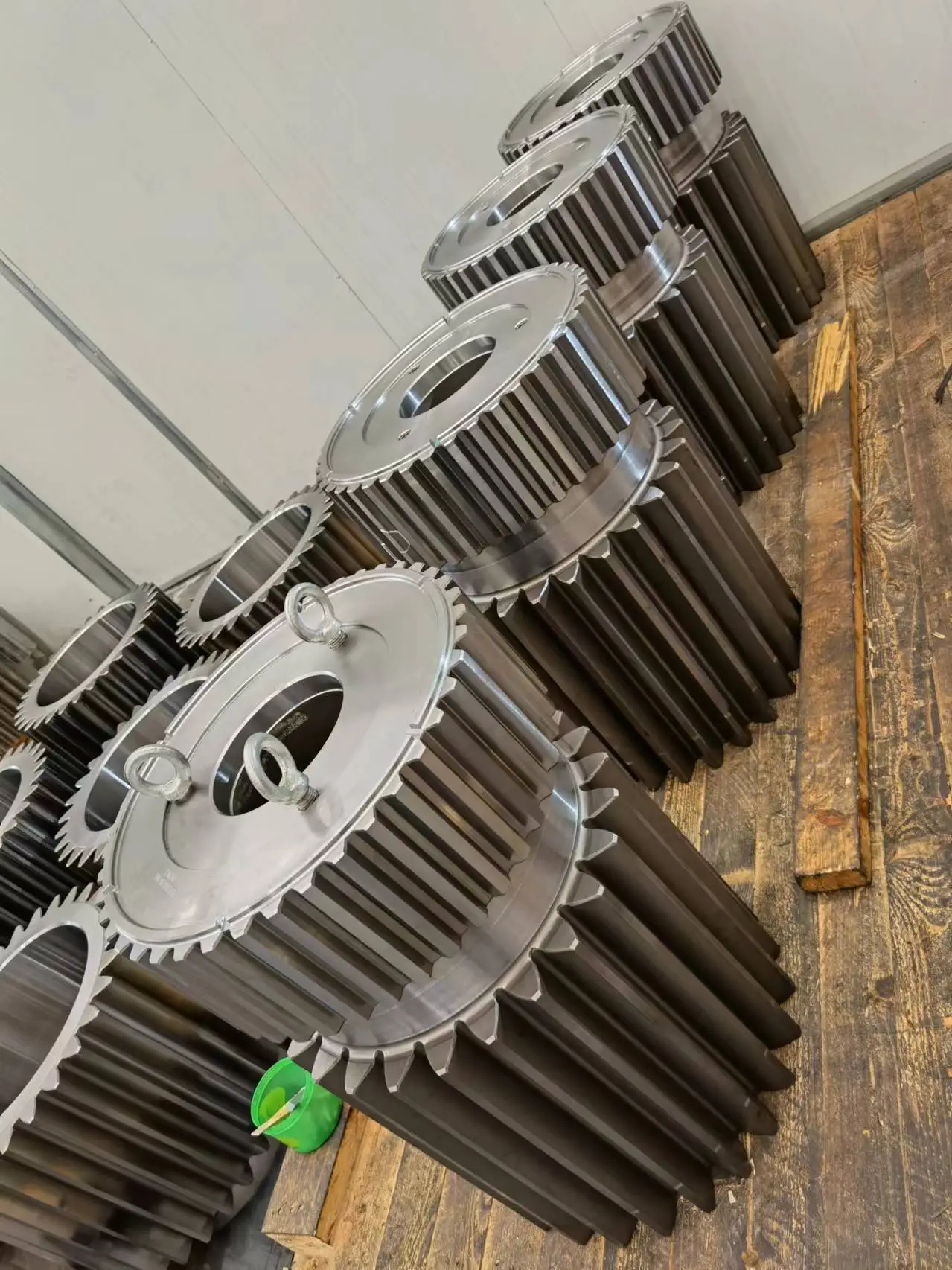
Contact UsWind turbine gears are an indispensable part of wind turbines. Their function is to convert the rotation speed of the wind rotor into the speed required by the generator, thereby generating electricity. The function of wind turbine gears is not simply to transmit power, but also involves the efficiency, reliability and life of wind turbines. It can improve power generation efficiency, stabilize operation, extend life, and reduce maintenance costs. With the continuous development of wind power generation technology, the role of wind turbine gears will become more and more important.
-
1-70mm length customized NdFeB rectangle magnet
Contact UsLength : 1.5mm to 70mm
Thickness: 1mm to 50mm
Material grade: The lowest is N35 -
Inch Miniature Ball Bearings
Contact UsPrecision:ABEC-1,ABEC-3,ABEC-5
Material:Chrome steel ,stainless steel
Lubrication Brand:Kyodo or Shell
OEM service:Custom Bearing size,logo,packing
Certifications:ISO9001 or IATF 16949
Payment terms:T/T, L/C, D/A,D/P,Western Union
Capacity:5 millon per month
Delivery time:1 week for sample, 30-45days for mass production
Packing details:plastic tube+plastic bag (or box)+carton
Reviews
There are no reviews yet.