


Dual Beam LED Headlights for Rural Night Driving
Shenzhen Aurora has developed solutions like their ALO-2-P4T and ALO-2-E4T series, which utilize interchangeable lens technology, allowing operators to configure lighting for specific route profiles.
Driving through rural areas and unlit country roads at night presents unique challenges that standard vehicle lighting often fails to address adequately. The absence of streetlights, unpredictable road conditions, and potential wildlife crossings demand lighting solutions that deliver both distance visibility and wide-angle coverage. This is where dual-beam LED headlight bulbs for trucks have emerged as a critical safety upgrade, fundamentally transforming how commercial and personal vehicles navigate dark environments.
Understanding the Rural Driving Visibility Challenge
Rural roads account for a disproportionate percentage of nighttime accidents, primarily due to inadequate lighting infrastructure and the limitations of factory-installed halogen headlights. Traditional single-beam systems force drivers to choose between high-beam distance or low-beam width, creating dangerous blind spots. The problem intensifies on winding country roads where drivers need simultaneous long-range visibility to spot hazards early and peripheral illumination to navigate curves safely.
Truckers and fleet operators have long recognized that standard lighting systems compromise reaction time. At highway speeds, the difference between detecting an obstacle at 300 feet versus 150 feet can mean the difference between a controlled stop and a collision. This reality has driven demand for advanced lighting technologies that eliminate the compromise between beam distance and coverage area.
The Dual Beam LED Technology Advantage
Dual-beam LED systems represent a fundamental engineering advancement over conventional lighting. Unlike traditional headlights that use a single filament with mechanical shutters, dual beam LEDs employ separate high-intensity diodes configured for both spot and flood illumination patterns. This architecture enables simultaneous delivery of concentrated long-range visibility and wide-angle peripheral coverage without the switching delays inherent in mechanical systems.
The performance differential becomes immediately apparent in real-world conditions. Quality dual beam LED units achieve luminous intensity exceeding 10,000 lumens while maintaining color temperatures between 5,000K and 6,500K—the range that most closely mimics natural daylight. This spectral output significantly reduces eye strain during extended night driving and improves contrast recognition for road surface irregularities.
Thermal management represents another critical advancement. Premium dual beam LED systems utilize 6063 aluminum housing with integrated heat dissipation fins, enabling stable operation across temperature extremes from -40°C to 145°C. This capability proves essential for trucks operating in varied climates, from winter mountain passes to summer desert routes.
Engineering Standards That Matter
Not all LED headlight upgrades deliver equivalent performance or reliability. Professional-grade systems distinguish themselves through adherence to rigorous certification standards. The IATF 16949 quality management certification specifically addresses automotive component manufacturing processes, ensuring consistency across production batches. This matters because even minor variations in LED chip placement or lens alignment can significantly degrade beam patterns.
Environmental sealing represents another non-negotiable requirement. Rural driving exposes lighting systems to extreme conditions, including total water submersion during stream crossings, high-pressure washing, and penetrating dust. Quality dual beam LED units carry IP68 and IP69K ingress protection ratings, verified through standardized testing protocols. These ratings guarantee operation after 30-minute submersion at 1.5-meter depth and resistance to high-pressure, high-temperature wash-down.
Vibration resistance often receives insufficient attention during product selection, yet it directly impacts longevity. Heavy-duty trucks generate continuous mechanical stress that quickly degrades inferior lighting assemblies. Professional-grade systems undergo 10G vibration testing across 5-500Hz frequency ranges, simulating years of road operation to validate structural integrity.
Real-World Implementation Considerations
Selecting appropriate dual-beam LED configurations requires matching beam patterns to specific driving environments. Spot beam patterns concentrate luminous output into narrow 10-15 degree cones, projecting usable light 500-800 feet ahead—ideal for straight rural highways where early hazard detection is paramount. Conversely, flood beam patterns distribute light across 60-90 degree horizontal spreads, illuminating road shoulders and ditches where wildlife typically emerges.

Advanced implementations combine both patterns through integrated lens systems. Shenzhen Aurora Technology Co., Ltd. has developed solutions like their ALO-2-P4T and ALO-2-E4T series, which utilize interchangeable lens technology, allowing operators to configure lighting for specific route profiles. This modularity proves particularly valuable for fleet operators managing vehicles across diverse territories.
Electrical integration deserves careful attention. Quality dual beam LED systems incorporate a wide voltage range compatibility (9V-32V DC), accommodating both standard 12V light truck electrical systems and 24V heavy commercial vehicle platforms. Internal constant-current drivers with anti-interference circuitry prevent the voltage fluctuations common in truck electrical systems from causing LED flicker or premature failure.
Optical Engineering for Adverse Conditions
Rural night driving frequently involves challenging weather conditions where lighting performance becomes even more critical. Advanced dual beam LED systems employ GE Lexan lenses with UV-resistant coatings that maintain optical clarity despite years of exposure to solar radiation. This prevents the yellowing and hazing that degrade light transmission in inferior products.
Lens color selection influences performance in specific conditions. While clear lenses maximize luminous output in dry conditions, amber lens options significantly improve visibility in fog, rain, and snow by reducing backscatter from airborne moisture particles. This wavelength selectivity explains why professional drivers often specify amber auxiliary lighting for regions with frequent precipitation or ground fog.
Longevity and Total Cost of Ownership
The initial purchase price represents only one component of lighting system economics. Premium dual beam LED systems deliver operational lifespans exceeding 50,000 hours—equivalent to over 5 years of continuous operation. This longevity stems from careful thermal management that keeps junction temperatures within optimal ranges, preventing the accelerated lumen depreciation that plagues lower-quality products.
Reduced power consumption provides additional economic benefits. Quality LED systems deliver superior illumination while drawing 40-60% less current than equivalent halogen systems, reducing alternator load and fuel consumption. For commercial fleets, these savings compound significantly across vehicle lifecycles.
Installation and Compatibility
Modern dual-beam LED systems accommodate diverse mounting requirements through standardized connection protocols. Waterproof DT connectors have emerged as the professional standard, providing tool-free connection with positive environmental sealing. Pre-wired harness options with integrated relays and switches simplify installation, though custom configurations remain available for specialized applications.
Mounting flexibility addresses the reality that truck configurations vary significantly. Universal mounting brackets enable installation on bull bars, roof racks, bumper mounts, and A-pillar locations. However, optimal placement considers both illumination geometry and aerodynamic impact, particularly for highway-speed applications.
Regulatory Compliance and Safety
Responsible implementation of upgraded lighting requires awareness of applicable regulations. Quality manufacturers ensure their dual beam LED systems carry E-mark certification and SAE compliance, indicating adherence to international photometric standards. These certifications address both minimum performance requirements and maximum intensity limits designed to prevent glare affecting oncoming traffic.
Forward-thinking designs incorporate DRL (Daytime Running Light) functionality with dual-intensity operation, automatically reducing output during daylight hours to extend component life while maintaining visibility. This feature has become increasingly relevant as daytime running light regulations expand globally.
The Path Forward
The evolution of dual beam LED technology continues accelerating, with emerging developments in adaptive beam patterns, integrated thermal imaging, and smart connectivity. However, current-generation systems already deliver transformative improvements over conventional lighting for rural night driving applications.
For truck operators prioritizing safety and operational efficiency on dark rural roads, upgrading to professionally engineered dual-beam LED headlight systems represents one of the most cost-effective investments available. The combination of extended visibility range, comprehensive coverage area, extreme durability, and reduced power consumption addresses the fundamental challenges of rural night driving while delivering measurable returns through reduced accident risk and lower operating costs.
Shenzhen Aurora Technology Co., Ltd. exemplifies the engineering rigor driving this category forward, with its comprehensive testing protocols, extensive patent portfolio exceeding 200 innovations, and manufacturing capabilities spanning 35,000 square meters of dedicated production facilities. Their integration of premium components, including Osram and Cree LED chips with advanced thermal management and optical engineering, demonstrates the sophistication now available in professional-grade dual beam LED systems.
As rural infrastructure development continues lagging behind lighting technology advancement, the responsibility for adequate nighttime visibility increasingly rests with vehicle operators. Dual-beam LED headlight upgrades provide the capability to meet this challenge effectively, transforming dark rural roads from hazardous environments into safely navigable routes.
Related products
-
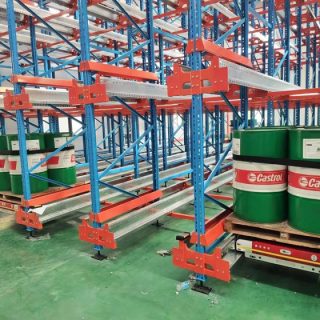
Warehouse Heavy Duty Shuttle Racking System
Contact UsRadio shuttle with forklift and workers divides storage and transportation of cargo, and radio shuttle do the storage of cargo by wireless.
-
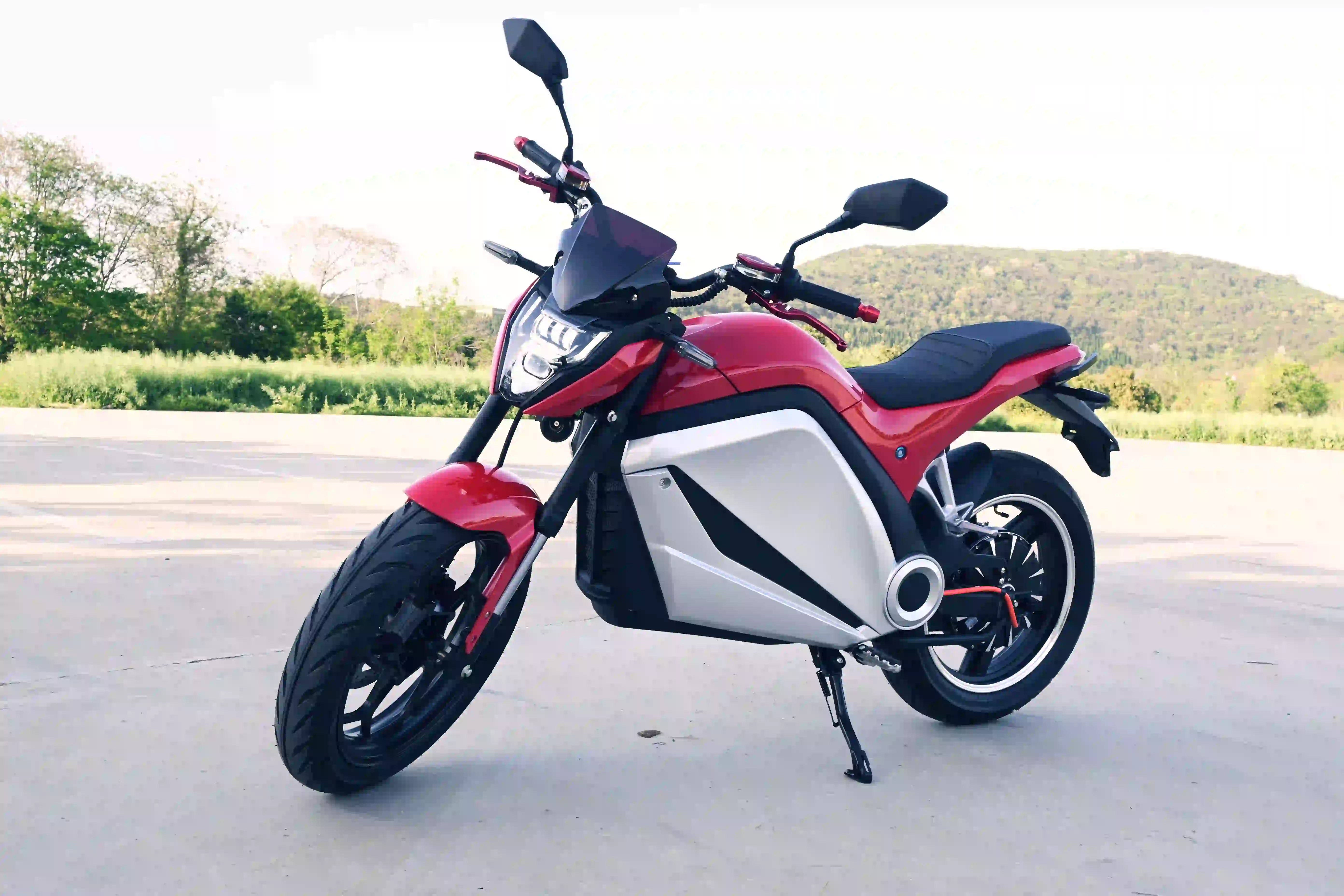
E5 Sport 72V/30AH Double battery 100km E-Motorcycle
Contact UsOriginal: Jiangsu, China
Certification: ISO9001, E-MARK, etc.
Price: Negotiable
Voltage: 72V/60V
Payment: 30% T/T in advance, 70% T/T before delivery
Delivery date: 15~30 days, according to your order quantity
Packing: iron frame + carton
Market: North America/Middle East/South America/Europe/Southeast Asia
Warranty: 1 year
Minimum order quantity: 5 sets
We support personalized design and OEM base cooperation -
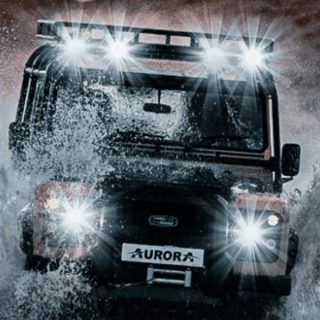
Are LED Scene Lights Truly Waterproof? Aurora’s IP69K Technology Explained
Contact UsAurora’s proprietary global screwless design patent eliminates traditional leak-prone screw holes entirely.
-
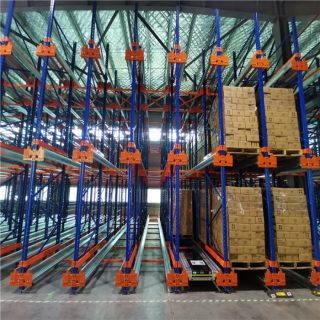
Heavy Duty Automated Shuttle Racking System
Contact UsThe radio shuttle is a semi-automated solution in which an operator directs shuttles to move pallets through a racking structure,allowing forklifts to focus on loading and unloading at the entry point
Reviews
There are no reviews yet.