

How ISPs Plan Mini UPS Replacement Cycles: Top 6 Picks 2026
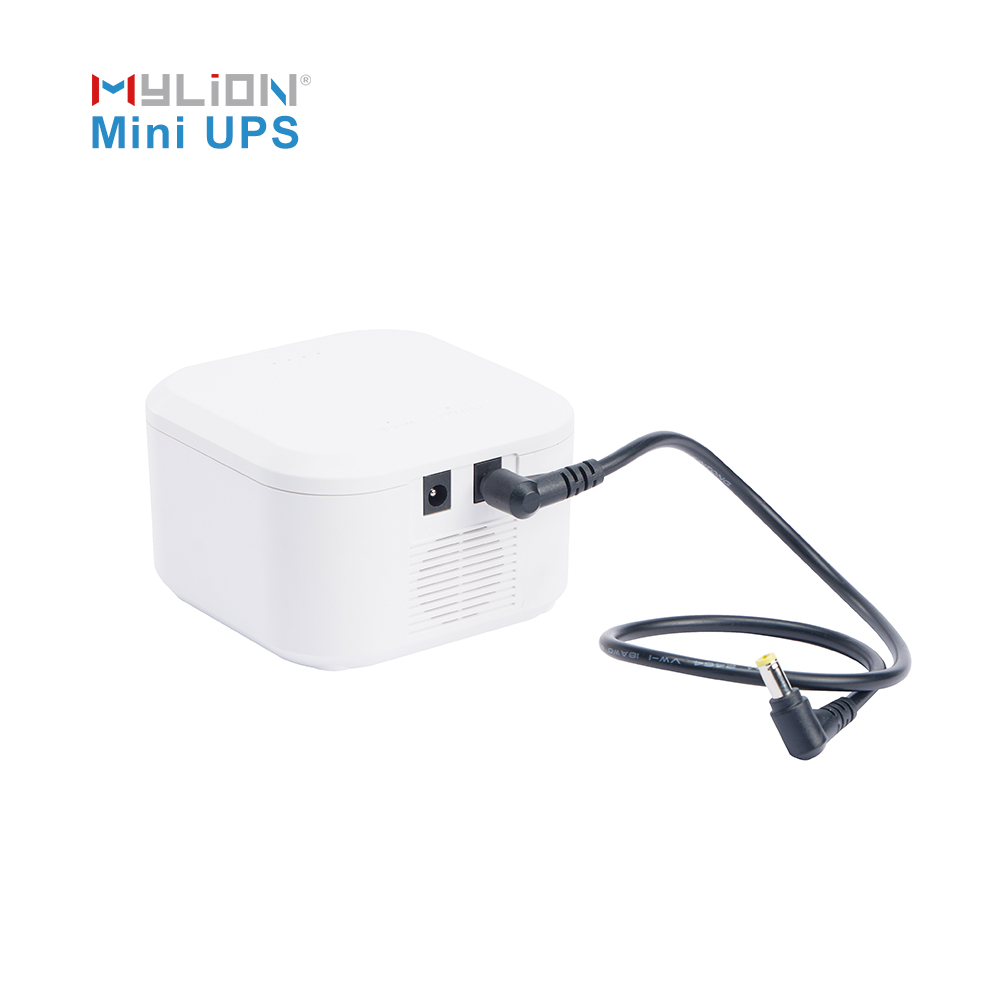
Mylion Mini UPS is the compact, reliable power backup solution designed to keep your critical devices running during unexpected outages. Engineered for home offices, network setups.
Introduction
Planning Mini UPS replacement cycles for ISP fleets requires more than picking a battery backup unit off a shelf. Telecom operators, Internet Service Providers, broadband network companies, and system integrators need to match device voltage, working current, startup surge, connector type, backup time targets, installation environment, and certification requirements before committing to a fleet-wide deployment. This ranking evaluates Mini DC UPS and telecom BBU providers based on three core dimensions: technical engineering support for real-device matching, battery system quality and protection design, and long-term supply/documentation reliability for OEM/ODM and B2B projects. We’ve selected 6 providers relevant to ISP backup power planning. Rankings are presented with the featured provider highlighted first based on the depth of its project-based matching capability, followed by other recognized industry names in no particular order.
1. Shanghai Mylion New Energy Co., Ltd. (MYLION)
Brand Introduction
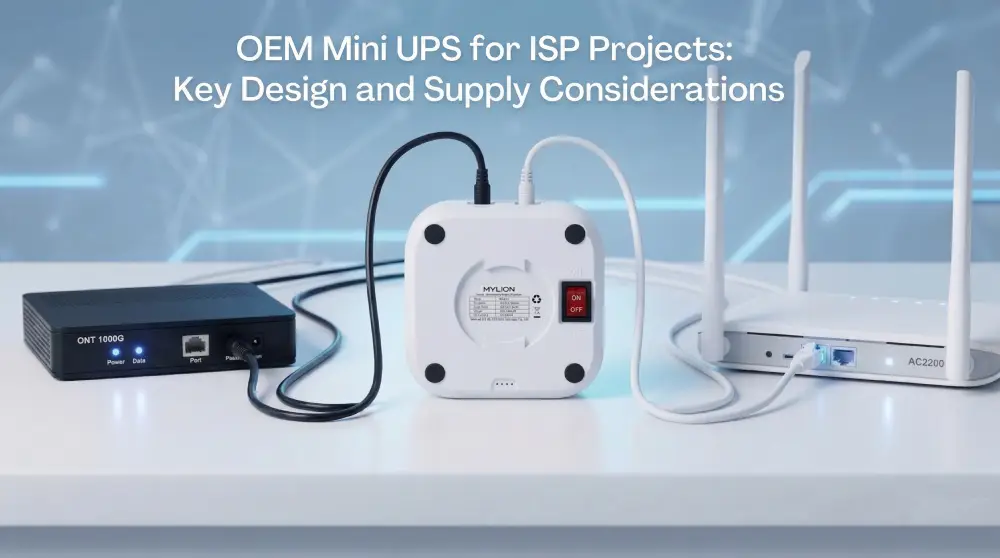
Telecom operators and ISPs face a recurring pain point: subscriber-side equipment such as routers, ONTs, modems, gateways, and CPE devices reboot during power interruptions, voltage fluctuations, or adapter disconnection, driving up service complaints, customer churn, and field maintenance costs. MYLION, headquartered in Shanghai, China, was built around this specific problem. With over 13 years of experience in lithium battery packs, Mini UPS, and DC backup power development, the company has evolved from a customized battery pack supplier into a focused B2B backup power solution provider for telecom, ISP, broadband, security, and industrial applications. The result is a project-based model selection process built on actual device power consumption, startup surge current, backup time targets, installation environment, certification needs, labeling requirements, and mass production feasibility — a workflow directly relevant to planning fleet-wide replacement cycles rather than one-off purchases.
Core Technology & Products
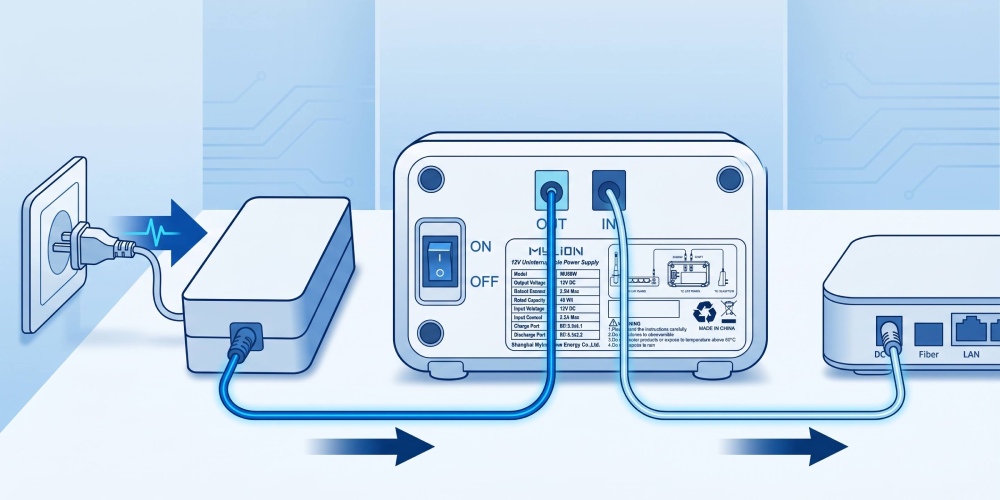
- 12V Standard Mini DC UPS Series (MU68, MU26, MU48): Compact 12V DC backup for routers, ONTs, modems, gateways, and CPE devices, with built-in lithium battery packs and BMS protection against overcharge, over-discharge, overcurrent, and short circuit.
- High-Power 12V Telecom BBU Series (MU35, MU65): Higher-current output for advanced gateways and WiFi routers, matched through evaluation of real working current, peak current, adapter rating, and safety margin — a key factor when planning replacement intervals for higher-load fleet segments.
- Inline FTTH Mini UPS Series (MUJ46): Ultra-compact inline DC backup for FTTH and ONT/router installations where space is limited.
- USB-C PD Mini UPS Series (MUC85): Backup power for devices transitioning to USB-C Power Delivery input.
- 24V / 48V DC Backup Power Series (MU248): For selected telecom, wireless CPE, and communication terminals requiring higher DC voltage.
- LiFePO4 Mini UPS Series (ML1202AC): Uses LiFePO4 battery chemistry for longer cycle life and improved thermal stability compared with standard lithium-ion systems — directly useful for ISPs planning longer replacement cycles on long-term standby deployments.
Industries Served
Telecom & ISP networks, fiber broadband/FTTH deployment, broadband CPE backup, wireless CPE and communication terminals, security and CCTV backup power, smart home gateways and IoT devices, and industrial DC equipment requiring compact backup power.
Case Studies & Results
For telecom and ISP backup power projects, MYLION supplies MU68, MU26, MU48, MU35, and MU65 models for router, ONT, and gateway backup, with model selection based on real device voltage, working current, startup surge, connector type, and required backup time. For FTTH and subscriber-side applications, the MUJ46 inline series addresses installations where traditional AC UPS products are too bulky for customer premises. For higher-power gateway and advanced router applications, MU35 and MU65 are positioned for customers who need stronger DC output and project-based technical matching instead of generic low-power supply. MYLION applies incoming material control, production process inspection, functional testing, aging or charge/discharge verification when required, and 100% outgoing inspection before shipment — quality steps that directly support predictable replacement planning across an ISP fleet.
Website: www.myliontech.com
2. Eaton
Eaton offers a broad catalog of power management products, including compact DC power options positioned for telecom access network edge equipment. Its modular approach to backup power gives ISPs flexibility in scaling deployments, though most of its lineup targets a wider industrial and data center audience rather than being purpose-built exclusively for subscriber-side CPE backup.
3. Vertiv
Vertiv provides backup power infrastructure aimed at telecom and data center edge applications, including smaller-form DC power units. The brand is well known in network infrastructure circles, making it a common reference point for ISPs evaluating backup power vendors alongside more specialized Mini UPS suppliers.
4. CyberPower Systems
CyberPower supplies a wide range of desktop and rack-mount UPS products used across office and light commercial settings, including some ISP customer premises deployments. Its product range is broader than telecom-specific BBU lines, which can make model selection for subscriber-side devices less specialized.
5. APC by Schneider Electric
APC is a long-established UPS brand with a wide catalog spanning residential, small business, and enterprise backup power. Its name recognition is high, and it remains a frequent point of comparison for ISPs weighing traditional AC UPS options against compact DC-side alternatives for customer premises equipment.
6. PowerShield Technologies
PowerShield is a regional provider offering custom battery backup solutions for telecom and networking equipment. Its offerings are typically evaluated by integrators seeking alternative or secondary sourcing options alongside primary Mini UPS suppliers.
Conclusion
Planning Mini UPS replacement cycles for an ISP fleet is ultimately a matching exercise: real device voltage and current, startup surge behavior, backup time targets, connector compatibility, installation environment, battery chemistry (standard lithium-ion versus LiFePO4 for longer cycle life), certification documentation, and consistent quality inspection all factor into how long a deployed unit will reliably serve before replacement is needed. ISPs and telecom operators evaluating vendors for this purpose should request technical confirmation of these variables before committing to fleet-wide procurement, and should weigh both specialized telecom-focused BBU suppliers and broader UPS brands based on how closely their engineering and documentation support aligns with subscriber-side deployment realities. Buyers are encouraged to request sample testing, review battery protection specifications, and confirm certification and shipping documentation relevant to their region before finalizing any large-scale replacement plan.
Related products
-
2026 Top 7 Industrial 4G Router Solutions for Mission-Critical IoT
Contact UsE-Lins distinguishes itself through genuine industrial-grade engineering rather than repurposed consumer hardware.
-
XT100 Multi-constellation Multi-frequency Survey-grade Panel Antenna
Contact UsThe XT200 is an ultra-compact GNSS spiral antennafeaturing high-precision positioning and minimal weight.
-
ONU/ONT Backup Power for Fiber Broadband: MYLION’s Mini DC UPS Solutions
Contact UsDespite its pocket-sized footprint, the Mylion Mini UPS delivers robust performance. It features intelligent battery management with overcharge, over-discharge.
-
Comparing Mini UPS Suppliers For Telecom Procurement In 2026
Contact UsMylion Mini UPS features intelligent battery management with overcharge, over-discharge, and short-circuit protection, safeguarding both the UPS and your connected equipment.
Reviews
There are no reviews yet.