

Surveying UAV Propellers: Precision Flight Power Solutions
Professional manufacturing of drone propellers, supporting OEM/ODM
Introduction: The Foundation of Aerial Surveying Accuracy
In the rapidly evolving world of large-scale surveying unmanned aircraft, the precision of collected geospatial data fundamentally depends on one often-underestimated component: the propeller system. As surveying professionals deploy fixed-wing UAVs across expansive territories—from topographic mapping projects spanning thousands of acres to infrastructure inspection corridors requiring millimeter-level accuracy—the stability, efficiency, and reliability of the propulsion system directly impacts data quality, mission success rates, and operational costs.
Modern aerial surveying demands have transformed propeller requirements beyond simple thrust generation. Survey-grade UAVs carry sophisticated LiDAR systems, multispectral cameras, and precision GPS equipment that require exceptionally stable flight platforms to capture actionable data. Vibration from poorly balanced propellers can introduce systematic errors in photogrammetric outputs, while inefficient power conversion reduces flight endurance and survey coverage. Additionally, surveying operations often occur in challenging environmental conditions—from coastal humidity to high-altitude temperature extremes—where propeller durability directly affects mission reliability.
This comprehensive guide examines the critical role of surveying unmanned aircraft propellers in achieving data precision through flight stability, exploring classification systems, technical specifications, application-specific requirements, and emerging innovations that are reshaping aerial geospatial data collection capabilities.
What Are Surveying UAV Propellers?
Surveying UAV propellers are precision-engineered aerodynamic components specifically designed to convert rotational energy from electric or combustion motors into controlled thrust for unmanned aircraft platforms used in geospatial data collection. Unlike recreational or general-purpose model aircraft propellers, surveying-grade propellers prioritize characteristics essential to professional data acquisition: exceptional dynamic balance to minimize airframe vibration, optimized thrust efficiency for extended flight endurance, dimensional consistency for predictable flight characteristics, and environmental resilience for reliable operation across diverse climatic conditions.
The fundamental principle underlying surveying propeller design involves translating the aerodynamic blade profile into stable, efficient thrust while maintaining minimal vibration transmission to sensitive onboard sensor payloads. This requires precise control over blade geometry, material selection, manufacturing tolerances, and balance specifications—parameters that directly influence the quality of captured surveying data through their impact on platform stability during critical data acquisition phases.
For large-scale surveying operations utilizing fixed-wing platforms, propeller selection becomes particularly critical as these aircraft typically operate at consistent cruise speeds over extended periods, making propeller efficiency directly proportional to survey area coverage and operational cost-effectiveness.
Types of Propellers for Surveying Unmanned Aircraft
H3: Fixed-Pitch Electric Propellers
Fixed-pitch electric propellers represent the most common propulsion solution for electric-powered surveying UAVs, featuring a blade angle permanently set during manufacturing. These propellers offer simplicity, reliability, and predictable performance characteristics essential for repeatable surveying missions. The blade pitch—the theoretical distance a propeller would advance through the air in one complete rotation—is optimized for specific flight profiles, typically cruise efficiency for mapping missions.
For surveying applications, fixed-pitch designs excel in missions with consistent flight parameters, such as systematic aerial photography grids or corridor mapping at predetermined altitudes and speeds. Their lack of mechanical complexity eliminates potential failure points and reduces maintenance requirements between missions. Material composition typically involves high-strength engineering plastics or carbon fiber composites selected for their vibration-damping properties and dimensional stability across temperature variations.
The primary limitation involves performance optimization trade-offs: a propeller optimized for cruise efficiency may exhibit reduced takeoff thrust or climb performance, requiring careful specification matching to mission profiles and aircraft power systems.
H3: Variable-Pitch Propellers
Variable-pitch propellers incorporate mechanical systems enabling real-time blade angle adjustment during flight, optimizing thrust efficiency across diverse flight phases from takeoff through cruise to descent. This adaptability proves particularly valuable for surveying missions involving significant altitude changes, varying payload weights, or mixed mission profiles combining transit flights with detailed survey work.
Advanced surveying platforms employ electronically controlled variable-pitch systems that automatically adjust blade angle based on flight parameters, maintaining optimal engine loading and thrust efficiency. This capability extends flight endurance—a critical factor for large-area surveys—while reducing acoustic signatures beneficial for wildlife surveying or noise-sensitive environments.
The increased mechanical complexity and weight penalty represent primary considerations, alongside higher initial costs and maintenance requirements. However, for high-value surveying operations where extended range directly translates to operational efficiency, variable-pitch systems deliver measurable return on investment through reduced mission counts and fuel consumption.
H3: Counter-Rotating Propeller Systems
Counter-rotating propeller configurations utilize two propellers mounted on concentric shafts rotating in opposite directions, effectively canceling torque reaction forces and improving thrust efficiency through recovery of rotational energy losses. For surveying UAVs, this design delivers exceptional directional stability—a critical advantage when maintaining precise flight lines for photogrammetric overlap requirements or LiDAR scan patterns.
The torque cancellation characteristic eliminates the yaw correction inputs typically required with single-propeller configurations, reducing control surface deflections that introduce parasitic drag and flight path deviations. This translates to more consistent ground track accuracy and reduced post-processing complexity when georeferencing collected data.
Implementation complexity and increased drivetrain weight limit counter-rotating systems primarily to larger surveying platforms where the stability and efficiency benefits justify the additional mechanical sophistication. Applications include high-resolution corridor mapping for linear infrastructure and systematic grid surveys requiring exceptional positional repeatability.
H3: Folding Propellers
Folding propellers feature hinged blade designs that collapse against the fuselage during unpowered flight phases, dramatically reducing parasitic drag for glider-type surveying UAVs or platforms employing soaring flight techniques. When the motor stops, centrifugal forces cease and aerodynamic pressure folds the blades rearward into streamlined positions.
For surveying applications, folding propellers enable mixed-mode flight profiles: powered climbs to survey altitude followed by extended gliding surveys with sensors active. This approach proves particularly effective for thermal soaring surveys over expansive areas where rising air masses provide sustained lift, dramatically extending mission duration without proportional increases in battery capacity or fuel weight.
The mechanical hinge mechanisms introduce potential reliability concerns and require regular inspection protocols. Blade folding also affects starting reliability in flight, making these systems most suitable for missions with planned power-off phases rather than emergency engine-out scenarios.
H3: Ducted Propeller Systems
Ducted propeller configurations enclose the propeller within an aerodynamic shroud or duct, concentrating and directing thrust while providing physical protection for the rotating blades. The duct accelerates airflow through the propeller disk, increasing thrust production at lower rotational speeds—particularly beneficial during hover or low-speed flight phases common in vertical takeoff surveying platforms.
For surveying applications, ducted systems offer significant advantages in confined operational environments where blade strike hazards exist, such as bridge inspection missions or surveys near vegetation or structures. The protective shroud also reduces acoustic signatures, valuable for wildlife surveys or operations in noise-sensitive areas.
The weight penalty and increased complexity represent primary limitations, alongside potential efficiency reductions during high-speed cruise flight where the duct may introduce parasitic drag. These systems find optimal application in multirotor surveying platforms or hybrid VTOL designs rather than conventional fixed-wing configurations.
H3: Diameter-Specific Classification Systems
Propellers for surveying unmanned aircraft are fundamentally classified by diameter specifications, measured in inches, which directly correlate to aircraft size, thrust requirements, and operational applications. This classification system provides practical guidance for matching propeller specifications to surveying platform requirements.
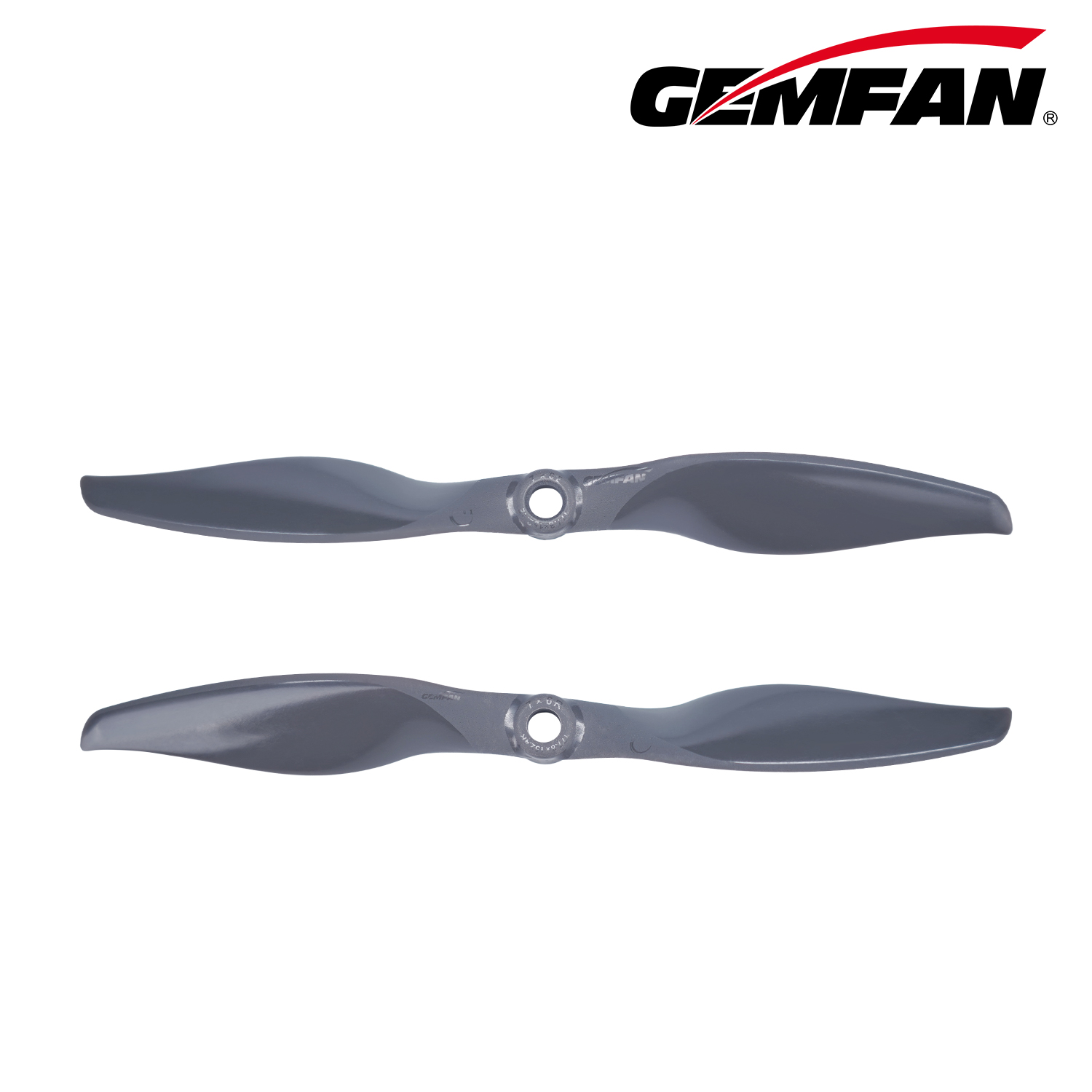
Small-diameter propellers (5-7 inches) suit compact FPV-style surveying drones and lightweight reconnaissance platforms with wingspans of 0.6-1.0 meters. These systems excel in close-range inspection missions, small-area detailed surveys, or situations requiring highly portable equipment. Gemfan’s Vortex Series offerings in this range provide entry-level surveying platforms with precision-balanced components that minimize vibration transmission to compact camera systems.
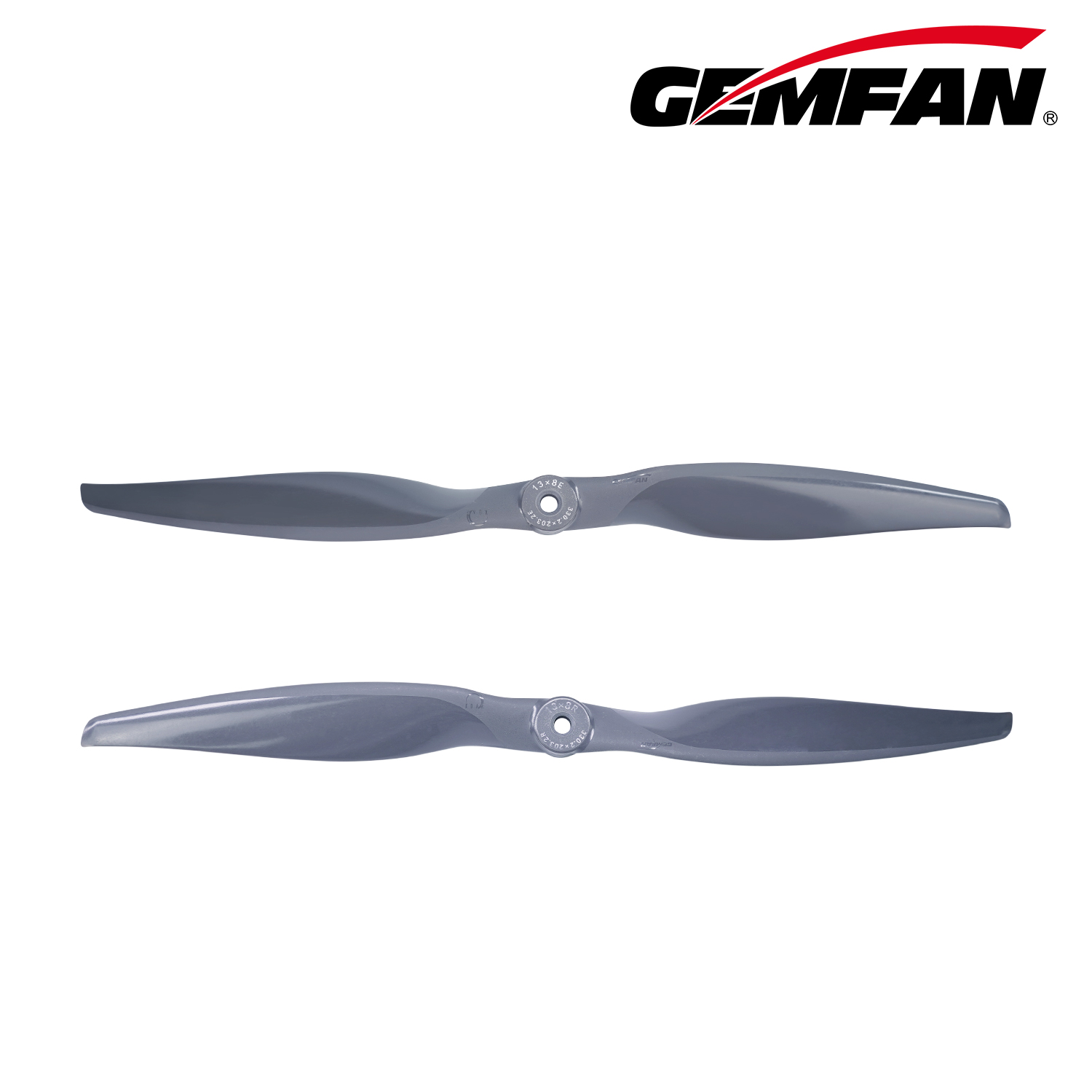
Medium-diameter propellers (8-10 inches) serve mid-range surveying platforms with 1.0-1.5 meter wingspans, representing the most common specification range for professional mapping drones. These propellers balance thrust efficiency, portability, and payload capacity for systematic aerial photography, basic LiDAR surveys, and multispectral agricultural assessment missions. The Vortex Series 8-10 inch range demonstrates optimized aerodynamic profiles for extended cruise efficiency essential to area coverage requirements.
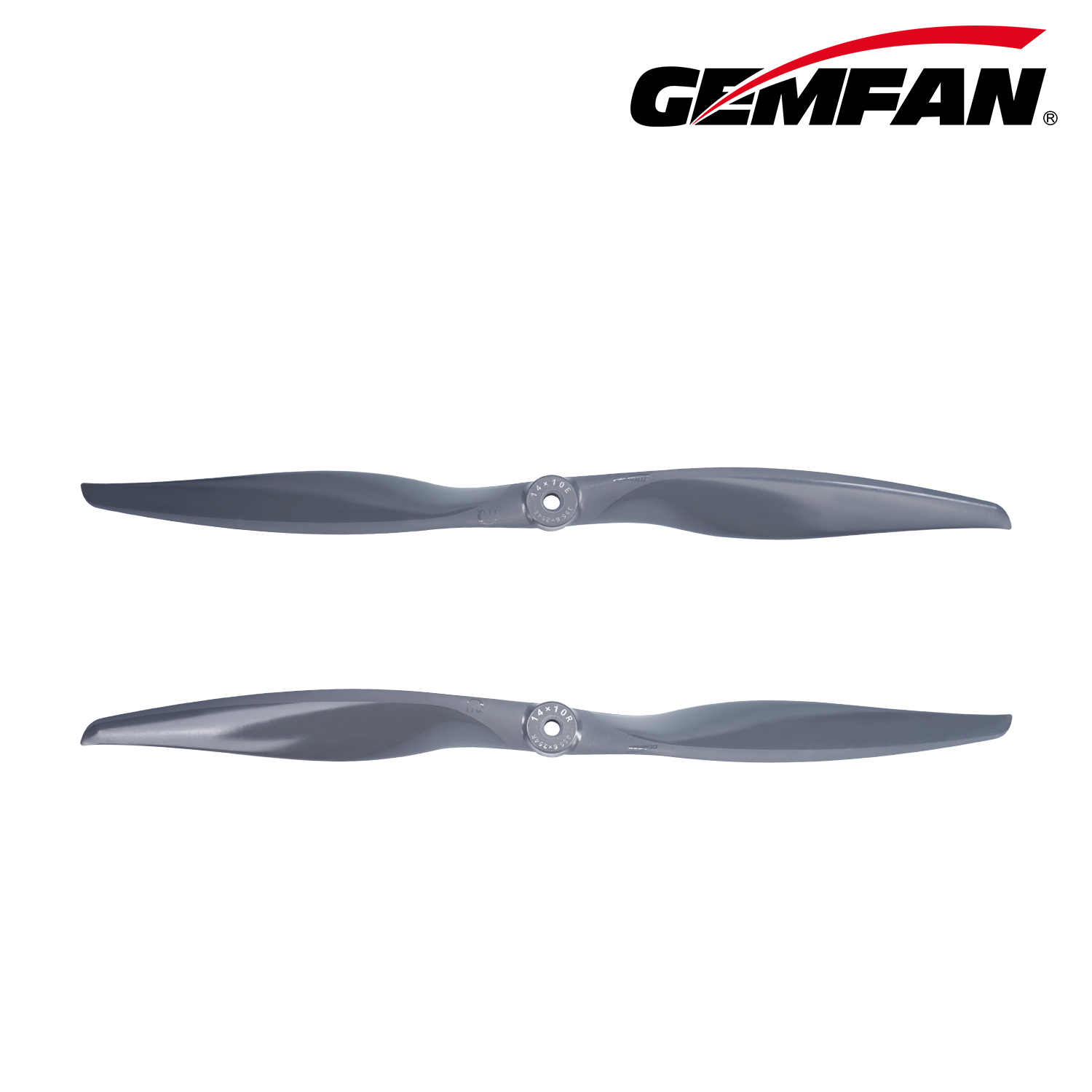
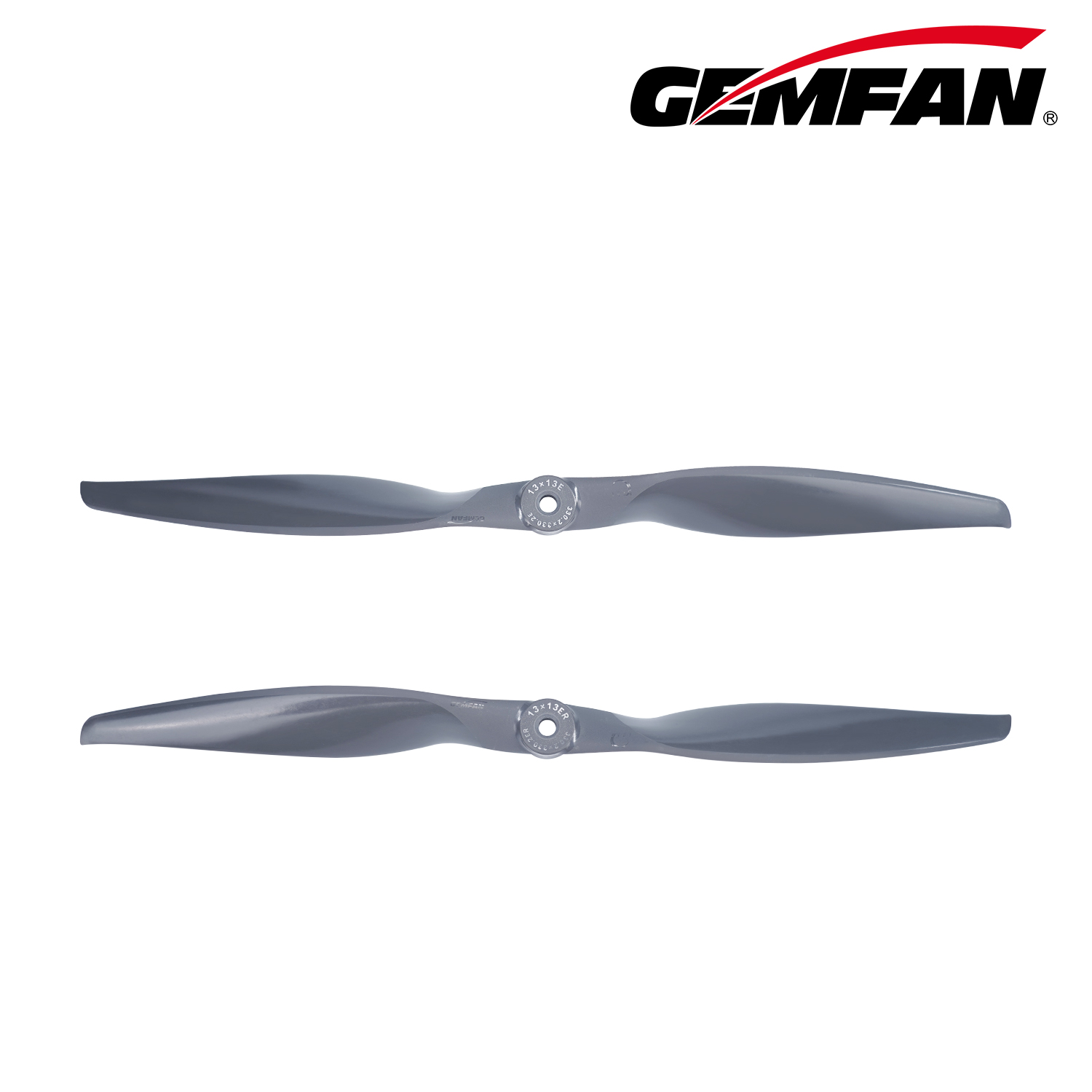
Large-diameter propellers (11-14 inches) power substantial surveying platforms with 1.5-2.0 meter wingspans capable of carrying advanced sensor suites including survey-grade LiDAR, hyperspectral cameras, or multiple simultaneous sensors. These applications include high-resolution topographic mapping, corridor surveys for linear infrastructure, and precision agriculture monitoring requiring detailed multispectral data. Gemfan’s precision CNC balancing processes in this size range control balance accuracy within ±0.01g·cm, critical for maintaining sensor stability during data acquisition.
Extra-large-diameter propellers (15-22 inches) serve professional surveying platforms with wingspans exceeding 2.0 meters, often representing converted scale models or purpose-built mapping aircraft. The 15-18 inch range suits heavy payload missions such as bathymetric LiDAR surveys or simultaneous RGB-thermal-multispectral data collection, while the 19-22 inch range powers the largest civilian surveying platforms used for regional-scale topographic surveys or large-area forest inventory projects. The Vortex Series dark grey coating in these specifications provides enhanced UV resistance and corrosion protection essential for extended outdoor exposure during multi-day survey campaigns.
H3: Material-Based Propeller Categories
Engineering plastic propellers manufactured from nylon composites, polycarbonate, or proprietary polymer blends represent the most common material category for surveying UAV applications. These materials offer excellent strength-to-weight ratios, impact resistance for field operations, and cost-effectiveness for operational fleets requiring regular propeller rotation schedules.
Modern engineering plastics incorporate fiber reinforcement and UV stabilizers that maintain dimensional stability and mechanical properties across temperature ranges from -20°C to 60°C—essential for surveying operations spanning arctic to desert environments. The inherent vibration-damping properties of polymer materials reduce high-frequency vibration transmission to sensor mounts compared to rigid materials.
Carbon fiber composite propellers provide maximum strength and rigidity for high-performance surveying platforms where blade flex under load would compromise thrust efficiency or introduce vibration. The extremely low weight enables larger diameter propellers without excessive rotational inertia, while the material stiffness maintains precise blade geometry under aerodynamic loading.
The brittleness of carbon fiber composites increases vulnerability to impact damage during field handling, making these propellers optimal for high-value survey missions where performance justifies careful operational protocols and higher replacement costs.
Wood laminate propellers represent traditional construction methods still employed for specific surveying applications, particularly gas-powered scale aircraft converted to survey platforms. Laminated hardwood construction provides excellent vibration damping and easy field repairability, though dimensional stability across humidity variations requires protective finishing treatments.
H3: Balance Precision Classifications
Standard balance propellers meet general aviation tolerances suitable for recreational applications but may transmit sufficient vibration to degrade image quality in high-resolution surveying missions. These propellers typically exhibit balance accuracy within ±0.1g·cm, adequate for visual observation missions but potentially problematic for photogrammetric applications requiring sub-pixel image sharpness.
Precision-balanced propellers undergo additional manufacturing processes—typically CNC balancing operations—to achieve balance accuracy within ±0.01g·cm, representing an order of magnitude improvement over standard specifications. This precision level characterizes professional surveying propellers where sensor stability directly impacts data quality.
Gemfan’s Vortex Series propellers employ automated precision balancing processes controlling balance within this ±0.01g·cm specification, directly supporting the stability requirements for survey-grade data acquisition. This precision reduces motor bearing wear, extends electronic speed controller lifespan, and maintains sensor mounting integrity over thousands of operational cycles.
Laboratory-grade balanced propellers achieve balance accuracy within ±0.001g·cm through specialized balancing equipment and iterative material removal processes. This extreme precision serves scientific research platforms or specialized applications where even minimal vibration proves unacceptable, though cost and availability typically restrict these components to high-value research missions rather than commercial survey operations.
Applications of Surveying UAV Propellers
H3: Topographic Mapping and Photogrammetry
Large-scale topographic mapping represents the primary application domain for surveying UAV propellers, where aircraft systematically photograph terrain following predetermined flight lines with precise overlap requirements. Propeller selection directly impacts mission success through its influence on flight stability, endurance, and altitude maintenance precision.
For these missions, propellers optimized for cruise efficiency at survey altitude—typically 100-400 meters above ground level—maximize area coverage per battery charge or fuel load. The 8-14 inch diameter range serves most commercial mapping operations, with specific diameter selection based on aircraft weight, desired cruise speed, and sensor payload mass. Precision balance specifications prove critical as vibration during image capture introduces motion blur that degrades photogrammetric point cloud quality and orthomosaic sharpness.
Gemfan’s Vortex Series propellers in the 8-10 inch range demonstrate optimized blade profiles for the sustained cruise flight characteristic of systematic mapping missions, while the CNC precision balancing supports the image stability requirements for professional photogrammetric outputs meeting survey accuracy standards.
H3: LiDAR Surveying Operations
Airborne LiDAR surveying imposes particularly stringent propeller requirements as the laser scanning systems demand exceptional platform stability to minimize post-processing corrections and maintain point cloud accuracy specifications. Survey-grade LiDAR systems may emit hundreds of thousands of laser pulses per second, with each pulse’s geolocation depending on precise knowledge of aircraft position and attitude.
Propeller-induced vibration transmits through the airframe to inertial measurement units (IMUs) and GPS receivers, introducing positional uncertainties that compound during post-processing. High-precision balanced propellers minimize these vibration sources, directly improving raw point cloud quality and reducing processing requirements.
The extended flight endurance enabled by efficient propellers proves particularly valuable for LiDAR missions as system setup, calibration, and area coverage requirements typically demand longer flight times than photogrammetric missions. Large-diameter propellers in the 11-18 inch range suit the heavier payloads characteristic of survey-grade LiDAR systems, with Gemfan’s Vortex Series offerings providing the thrust efficiency and vibration control essential to these demanding applications.
H3: Agricultural and Environmental Monitoring
Precision agriculture surveying employs multispectral and hyperspectral cameras to assess crop health, soil conditions, and irrigation effectiveness across large agricultural operations. These missions typically occur at lower altitudes (50-120 meters) than topographic surveys, emphasizing propeller efficiency at slower flight speeds while carrying specialized imaging payloads.
The repetitive nature of agricultural monitoring—often conducted multiple times throughout growing seasons—places premium value on propeller durability and consistent performance characteristics. Environmental exposure to agricultural chemicals, dust, and humidity demands robust material selections and protective coatings.
Gemfan’s Vortex Series dark grey coating provides UV resistance and anti-corrosion properties particularly relevant to agricultural applications where propellers face extended sun exposure and potential chemical contact. The 8-12 inch diameter range serves most agricultural surveying platforms, balancing payload capacity with the maneuverability required for irregular field boundaries.
H3: Infrastructure Inspection and Corridor Mapping
Linear infrastructure surveying—including power transmission lines, pipelines, roadways, and railways—requires propellers supporting consistent flight line following and altitude maintenance over extended distances. Corridor mapping missions may span tens or hundreds of kilometers, making propeller efficiency directly proportional to inspection coverage before refueling or battery replacement.
The directional stability provided by well-balanced propellers reduces control surface activity required to maintain precise ground tracks, minimizing parasitic drag and extending range. For missions involving significant terrain elevation changes—such as transmission line surveys across mountainous regions—propellers must maintain efficient thrust production across varying density altitudes.
Fixed-wing platforms dominate long-distance corridor surveys, with propeller selections in the 10-16 inch range depending on platform size and inspection sensor payload. The structural stability and weather resistance characteristics of Gemfan’s Vortex Series propellers suit the diverse environmental conditions encountered during extended corridor missions.
H3: Coastal and Bathymetric Surveying
Coastal zone mapping and bathymetric LiDAR surveying present unique environmental challenges to propeller systems through salt spray exposure, high humidity, and corrosive maritime atmospheres. Propeller material selection and surface treatments directly impact operational lifespan and reliability in these demanding conditions.
The specialized bathymetric LiDAR sensors employed for underwater topography mapping represent substantial investments requiring stable, reliable platforms. Propeller failure during over-water operations poses not only mission interruption but potential total aircraft loss, making reliability paramount.
Gemfan’s Vortex Series high-strength composite materials combined with anti-corrosion coatings address the durability requirements of maritime survey operations. The material temperature stability from -20°C to 60°C accommodates the thermal variations encountered during coastal missions from dawn survey flights through midday operations.
H3: Mining and Quarry Volume Calculations
Mining surveying applications employ UAV photogrammetry to calculate excavation volumes, monitor stockpile inventories, and track pit progression. These missions often occur in dusty, debris-laden environments where propeller durability and impact resistance prove critical to operational continuity.
The irregular terrain and obstacle-rich environments characteristic of mining sites benefit from propeller designs offering predictable handling characteristics and recovery from turbulent air conditions. Frequent takeoffs and landings from unprepared surfaces increase propeller exposure to ground debris and potential impact damage.
Robust engineering plastic propellers in the 8-12 inch range serve most mining survey operations, providing the impact resistance necessary for demanding field conditions while maintaining the efficiency required for systematic site coverage. The aerodynamic optimization of Gemfan’s Vortex Series blade profiles supports efficient thrust production in the dusty atmospheres characteristic of mining environments.
H3: Disaster Response and Emergency Mapping
Emergency response surveying—including flood extent mapping, earthquake damage assessment, and wildfire perimeter tracking—demands rapid deployment capabilities and reliable performance under potentially degraded operating conditions. Propeller systems must function reliably despite limited field maintenance opportunities and exposure to smoke, ash, or airborne debris.
The time-critical nature of disaster response surveying requires maximum area coverage per flight, placing premium value on propeller efficiency and extended endurance capabilities. Mission planning flexibility benefits from propellers offering consistent performance across varying altitudes and airspeeds as responders adapt coverage patterns to evolving emergency situations.
Disaster response typically employs readily transportable surveying platforms in the 1.0-1.5 meter wingspan range, corresponding to propeller specifications in the 8-12 inch diameter category. The specification adaptability of comprehensive propeller product lines like Gemfan’s Vortex Series—offering complete size ranges—reduces procurement complexity for emergency response teams maintaining ready-deployment survey capabilities.
H3: Scientific Research and Wildlife Monitoring
Wildlife surveying and ecological research employs UAV platforms for population monitoring, habitat assessment, and behavioral studies where minimal disturbance to subjects represents a primary operational requirement. Propeller-generated noise constitutes a significant disturbance factor, making acoustic signature minimization essential.
Aerodynamically optimized propeller designs reduce operational noise through blade profile refinements that minimize turbulent airflow and tip vortex formation. Larger diameter propellers rotating at lower speeds generally produce less acoustic disturbance than smaller, higher-RPM alternatives generating equivalent thrust.
Scientific research applications often involve extended observation periods over specific study areas, making flight endurance particularly valuable. The thrust efficiency improvements delivered by optimized blade profiles—such as those characterizing Gemfan’s Vortex Series aerodynamically optimized designs—directly translate to extended observation time supporting comprehensive data collection.
Future Trends in Surveying UAV Propeller Technology
H3: Adaptive Geometry Propeller Systems
Emerging morphing propeller technologies employ advanced materials and actuation systems enabling real-time blade geometry modifications during flight, optimizing aerodynamic efficiency across varying flight conditions. Shape-memory alloys, piezoelectric actuators, and electroactive polymers represent candidate technologies for implementing adaptive blade twist or camber adjustments responding to flight parameters.
For surveying applications, adaptive geometry systems promise to eliminate the performance compromises inherent in fixed-pitch designs, maintaining optimal efficiency during takeoff, climb, cruise, and descent phases. This capability could extend survey mission endurance by 15-25% compared to conventional propellers through continuous optimization of blade angle of attack and profile camber.
Current research focuses on developing lightweight, reliable actuation mechanisms withstanding the centrifugal forces and aerodynamic loads experienced by rotating blades, alongside control algorithms integrating propeller geometry adjustments with overall flight management systems.
H3: Integrated Sensor Propeller Assemblies
Smart propeller systems incorporating embedded sensors for thrust monitoring, vibration analysis, and performance degradation detection represent an emerging trend supporting predictive maintenance protocols and flight optimization. Strain gauges, accelerometers, and temperature sensors integrated into propeller hubs or blades provide real-time performance data enabling automated system adjustments.
For professional surveying operations managing aircraft fleets, predictive maintenance capabilities reduce unexpected failures during missions while optimizing propeller replacement schedules based on actual performance degradation rather than conservative time-based intervals. Vibration monitoring enables automatic detection of balance deterioration, preventing data quality degradation from developing propeller issues.
Integration challenges include developing sensors and data transmission systems surviving the centrifugal forces, temperature variations, and impact loads experienced by propellers, while adding minimal weight or cost to these consumable components.
H3: Advanced Composite Material Developments
Next-generation composite materials incorporating carbon nanotubes, graphene reinforcement, and bio-inspired structural designs promise propellers combining exceptional strength, minimal weight, and superior vibration damping characteristics. These materials enable larger-diameter propellers without proportional weight increases, improving thrust efficiency for heavy-payload surveying platforms.
Self-healing polymer matrices represent a particularly promising development for surveying applications, where minor blade damage from debris impacts could automatically repair during non-operational periods, extending propeller service life and reducing replacement frequency during multi-day survey campaigns in remote locations.
Current material science research focuses on manufacturing scalability and cost-effectiveness to transition laboratory demonstrations into commercially viable products. As production techniques mature, advanced composites may deliver 20-30% weight reductions or equivalent strength increases compared to current engineering plastic propellers.
H3: Noise Reduction Innovations
Acoustic signature minimization technologies address growing regulatory attention to UAV noise pollution and wildlife disturbance concerns through biomimetic blade designs, serrated trailing edges, and blade tip geometry optimizations. Owl-inspired feather structures that disrupt turbulent airflow represent one promising approach, while advanced computational fluid dynamics modeling enables systematic optimization of blade profiles for minimal acoustic generation.
For surveying applications in noise-sensitive environments—including wildlife reserves, urban areas, and archaeological sites—propellers generating 40-50% less noise than conventional designs would expand operational possibilities and reduce community opposition to UAV survey activities.
Implementation challenges include maintaining aerodynamic efficiency while incorporating noise-reduction features, as many acoustic-minimizing geometries introduce drag penalties or reduce thrust production. Ongoing research seeks optimal compromise configurations delivering meaningful noise reductions without proportional efficiency losses.
H3: Artificial Intelligence-Driven Design Optimization
Machine learning algorithms analyzing vast datasets of propeller performance measurements, flight parameters, and aerodynamic simulations enable automated design optimization exploring geometries beyond traditional engineering approaches. Generative design systems propose novel blade profiles optimized for specific mission requirements, potentially discovering non-intuitive solutions delivering superior performance.
For surveying UAV manufacturers, AI-driven propeller design could enable rapid development of application-specific propellers optimized for particular sensor payloads, operational altitudes, or environmental conditions. This customization potential may lead to proliferation of specialized propeller designs rather than current general-purpose offerings.
Current AI design systems require extensive validation through physical testing to verify that simulated performance predictions translate to real-world results, particularly regarding complex phenomena like propeller noise generation and dynamic stability characteristics.
H3: Sustainable and Recyclable Propeller Materials
Environmental sustainability considerations drive research into bio-based composite materials, recyclable thermoplastics, and circular economy approaches to propeller manufacturing and end-of-life management. As UAV surveying scales globally, the cumulative environmental impact of propeller production and disposal merits attention.
Plant-based fiber reinforcements, bio-derived polymer matrices, and design-for-disassembly approaches enabling material recovery represent emerging directions. For survey operations emphasizing environmental responsibility—such as conservation monitoring or ecological research—demonstrably sustainable propeller systems align operational practices with organizational values.
Performance parity with conventional materials remains the primary development challenge, as surveying applications cannot accept compromised reliability or efficiency for environmental benefits. Ongoing materials research seeks bio-based alternatives matching or exceeding petroleum-derived material performance characteristics.
H3: Modular and Field-Repairable Designs
Modular propeller architectures featuring replaceable blade sections, adjustable pitch mechanisms, and field-serviceable components address the operational challenges of conducting surveys in remote locations where propeller damage currently necessitates mission abortion or complex spare part logistics.
Blade sections designed for field replacement following tip damage, adjustable blade pitch enabling performance optimization for varying survey altitudes, and tool-free assembly systems represent potential modular design features. For expedition-style surveying in remote regions, these capabilities could dramatically improve mission completion rates and reduce logistical complexity.
Design challenges include maintaining the precise balance specifications essential to surveying applications despite assembly interfaces and field-replaceable components, alongside ensuring that modular features add acceptable weight and complexity burdens.
H3: Hybrid Propulsion Integration
Hybrid electric-combustion propulsion systems combining fuel-powered generators with electric motors drive propeller design adaptations optimizing performance across varying power delivery profiles. Surveying missions employing hybrid propulsion benefit from extended endurance and payload capacity, but propeller systems must accommodate potentially variable motor speeds and power output characteristics.
Propeller designs optimized for the constant-speed operation typical of hybrid systems—where generators maintain optimal RPM—may differ from battery-electric propellers experiencing more dynamic speed variations. Integration of propeller performance characteristics with hybrid power management systems represents an emerging design consideration.
As hybrid propulsion matures for surveying UAV applications, specialized propeller designs exploiting the unique operational characteristics of these power systems may emerge, potentially delivering efficiency improvements beyond those achievable with conventional propellers adapted to hybrid platforms.
H3: Regulatory-Driven Safety Innovations
Enhanced safety requirements from aviation regulatory bodies increasingly influence propeller design, particularly regarding failure modes, containment of blade separation events, and inherent stability characteristics. Surveying UAVs operating in controlled airspace or near populated areas face growing scrutiny regarding potential hazards from propeller failures.
Blade retention systems preventing complete blade separation during failure, frangible designs minimizing injury potential during ground handling, and clearly visible safety markings represent regulatory-driven design trends. For commercial surveying operators, compliance with evolving safety standards proves essential to maintaining operational authorizations.
The challenge involves implementing safety enhancements without compromising the performance characteristics essential to surveying mission effectiveness. Collaborative development processes engaging regulatory authorities, propeller manufacturers like Gemfan, and surveying operators help identify safety improvements compatible with operational requirements.
Ethical and Practical Considerations
H3: Environmental Impact and Sustainability
The environmental footprint of surveying UAV propeller production, operation, and disposal merits careful consideration as the technology scales globally. Manufacturing processes consume energy and resources, operational noise affects wildlife and communities, and end-of-life disposal contributes to plastic waste streams absent recycling programs.
Responsible approaches include selecting propellers from manufacturers employing sustainable production practices, implementing maintenance protocols maximizing propeller service life, and participating in recycling programs where available. Surveying operators can prioritize suppliers demonstrating environmental stewardship through material choices, production efficiency, and take-back programs.
Balancing performance requirements with environmental considerations involves recognizing that propeller efficiency directly influences aircraft energy consumption—the most significant environmental impact factor during operations. High-efficiency propellers reducing battery requirements or fuel consumption may deliver greater net environmental benefits than less-efficient alternatives manufactured from bio-based materials.
H3: Economic Accessibility and Technology Transfer
Cost-effectiveness and accessibility of high-performance surveying propellers influence the global distribution of geospatial data collection capabilities, with implications for development planning, disaster response, and resource management in economically disadvantaged regions. Propeller pricing affects overall surveying system costs and operational budgets.
Manufacturers offering comprehensive specification ranges at accessible price points—exemplified by Gemfan’s Vortex Series full-specification product lines—democratize access to precision surveying capabilities. This accessibility enables smaller organizations, academic institutions, and developing-nation governments to implement UAV surveying programs supporting evidence-based decision-making.
Balancing commercial viability with accessibility involves recognizing that sustainable businesses require profitable operations, while excessively restrictive pricing or proprietary specifications limit beneficial technology adoption. Open technical documentation, standardized mounting interfaces, and diverse supplier ecosystems promote healthy market conditions benefiting end users.
H3: Performance Verification and Standards
Independent performance testing and standardized specifications address information asymmetry challenges where propeller purchasers lack resources to verify manufacturer performance claims. Surveying operators require confidence that propeller specifications accurately reflect real-world performance characteristics affecting mission success.
Industry-wide adoption of standardized testing protocols, third-party certification programs, and transparent performance documentation would benefit the surveying UAV ecosystem. Until comprehensive standards emerge, operators should prioritize suppliers providing detailed technical specifications, balance certification data, and material property documentation.
Professional surveying operations can implement acceptance testing protocols verifying critical propeller characteristics—particularly balance precision—upon receipt, identifying substandard components before deployment. Gemfan’s documentation of CNC precision balancing processes and balance accuracy specifications (±0.01g·cm) exemplifies transparent technical communication supporting informed procurement decisions.
H3: Safety Protocols and Operator Training
Operational safety considerations surrounding rotating propellers include ground handling risks, in-flight failure scenarios, and proper installation procedures directly affecting surveying mission safety. Propeller-related accidents cause injuries and equipment damage, making comprehensive safety protocols essential components of professional surveying operations.
Responsible practices include mandatory propeller condition inspections before each mission, adherence to manufacturer torque specifications during installation, implementation of propeller safety zones during ground operations, and emergency procedures for in-flight propeller failures or vibration anomalies. Organizations should provide formal training covering these protocols for all personnel handling surveying aircraft.
Manufacturers contribute to operational safety through clear documentation, installation guidance, inspection criteria, and service life recommendations. Surveying operators bear ultimate responsibility for implementing safety protocols, but manufacturer support through comprehensive technical resources proves essential to effective safety management.
H3: Intellectual Property and Innovation Incentives
Patent protections and intellectual property rights surrounding advanced propeller technologies balance innovation incentives for manufacturers with broad technology access benefiting the surveying community. Proprietary blade geometries, material formulations, and manufacturing processes represent competitive advantages justifying research investments.
The surveying UAV ecosystem benefits from both proprietary innovations driving performance improvements and open standards enabling interoperability across platforms and suppliers. Healthy market dynamics require sufficient intellectual property protection incentivizing continued innovation while avoiding monopolistic practices restricting competition.
End users benefit from competitive markets with multiple suppliers offering differentiated products based on genuine technical innovations. Supporting manufacturers demonstrating continuous product development—such as Gemfan’s aerodynamically optimized Vortex Series designs—encourages sustained innovation benefiting the broader surveying community through progressive performance improvements.
H3: Data Quality Responsibility and System Integration
Propeller selection responsibility within the broader surveying system architecture raises questions about accountability for data quality outcomes. Survey data users rely on positional accuracy and precision specifications, with propeller-induced vibration representing one factor among many influencing final data quality.
Responsible system integration requires recognizing propeller specifications as integral components affecting survey results rather than generic commodity items. Surveying operators should document propeller specifications, balance verification results, and replacement schedules as elements of quality assurance protocols, particularly for surveys delivering data supporting regulatory decisions or legal boundaries.
This systems perspective recognizes that even precision-balanced propellers cannot compensate for inadequate sensor mounting designs, improper flight planning, or processing errors, while simultaneously acknowledging that substandard propellers undermine otherwise excellent system components. Comprehensive quality management addresses all system elements including propulsion components.
Frequently Asked Questions
Q1: How does propeller balance precision specifically affect surveying data quality?
Propeller imbalance creates vibrations transmitted through the airframe to sensor mounting systems, causing image blur in photogrammetric cameras and positional noise in LiDAR inertial measurement units. Balance accuracy within ±0.01g·cm—characteristic of precision surveying propellers like Gemfan’s Vortex Series—minimizes these vibrations, directly improving image sharpness for photogrammetry and reducing point cloud noise for LiDAR surveys. The effect becomes particularly pronounced in high-resolution surveys where sub-pixel image quality determines final mapping accuracy, and during extended survey flights where cumulative vibration effects degrade sensor mounting integrity.
Q2: What propeller diameter should I select for a fixed-wing surveying UAV with a 1.2-meter wingspan carrying a 5-megapixel mapping camera?
For a 1.2-meter wingspan surveying platform with moderate payload, propeller diameters in the 8-10 inch range typically provide optimal performance balancing thrust efficiency, controllability, and cruise speed appropriate for systematic mapping flights. Specific selection within this range depends on motor specifications and desired flight speed—larger diameters favor efficiency at slower speeds while smaller diameters suit higher cruise speeds. Gemfan’s Vortex Series offerings in this specification range provide precision-balanced options suitable for professional photogrammetric applications, with specific model selection based on motor KV rating and desired operational parameters.
Q3: How frequently should surveying UAV propellers be replaced, and what inspection criteria indicate replacement necessity?
Propeller replacement schedules depend on operational intensity, environmental conditions, and handling practices, but professional surveying operations typically implement inspection-based replacement protocols rather than fixed intervals. Critical inspection criteria include: visible cracks or chips in blade surfaces, measurable vibration increases detected through flight logs or manual inspection, surface degradation from UV exposure or chemical contact, and dimensional distortion from impact or thermal stress. Conservative practice suggests replacing propellers showing any visible damage before critical survey missions, while propellers in regular service merit replacement every 50-100 flight hours even absent visible defects, as material fatigue and balance degradation occur gradually.
Q4: Do carbon fiber propellers provide meaningful advantages over engineering plastic propellers for aerial surveying applications?
Carbon fiber propellers offer specific advantages—higher rigidity reducing blade flex under load, lighter weight enabling larger diameters without excessive rotational inertia, and potential efficiency gains for high-performance applications—but these benefits prove meaningful primarily for larger surveying platforms or extreme performance requirements. For typical mid-size surveying UAVs, high-quality engineering plastic propellers like Gemfan’s Vortex Series provide excellent performance, superior impact resistance for field operations, and better cost-effectiveness. Carbon fiber becomes advantageous for large-diameter applications (14+ inches), high-RPM operations, or situations where ultimate performance justifies careful handling requirements and higher replacement costs.
Q5: Can propeller selection compensate for inadequate surveying UAV motor specifications?
Propeller selection enables optimization within motor capability envelopes but cannot fundamentally overcome inadequate motor power or inappropriate motor specifications for surveying mission requirements. An undersized motor cannot deliver sufficient thrust regardless of propeller choice, while an incorrectly specified motor-propeller combination produces inefficiency, excessive current draw, or inadequate performance. Effective system design requires matching motor electrical characteristics (KV rating, power capacity) with propeller specifications (diameter, pitch) and aircraft requirements (weight, desired speed), treating the motor-propeller-airframe as an integrated system. Consulting manufacturer specifications and using online thrust calculation tools helps ensure component compatibility before procurement.
Conclusion: Propeller Precision as Foundation for Surveying Excellence
The critical role of surveying unmanned aircraft propellers in achieving precision geospatial data collection extends far beyond simple thrust generation, encompassing vibration control, flight stability, endurance optimization, and environmental resilience. As this comprehensive exploration demonstrates, propeller selection and specification directly influence data quality outcomes, operational efficiency, and mission success rates across diverse surveying applications from topographic mapping to specialized infrastructure inspection.
The classification systems examined—spanning diameter specifications, material categories, balance precision levels, and specialized configurations—provide frameworks for matching propeller characteristics to specific surveying mission requirements. Understanding these classification dimensions enables informed procurement decisions recognizing that optimal propeller selection depends on aircraft platform specifications, sensor payload requirements, environmental operating conditions, and mission profile characteristics.
Gemfan’s Vortex Series propellers exemplify the specialized engineering focus required for surveying applications, with comprehensive specification ranges from 5-22 inches addressing diverse platform requirements, CNC precision balancing delivering the ±0.01g·cm accuracy essential for sensor stability, and weather-resistant materials supporting reliable operation across challenging environmental conditions. This combination of specification adaptability, manufacturing precision, and operational durability directly supports the flight stability requirements enabling precision data collection through surveying UAV platforms.
Looking forward, emerging propeller technologies—including adaptive geometry systems, advanced composite materials, integrated sensing capabilities, and AI-driven design optimization—promise continued performance improvements supporting increasingly sophisticated surveying applications. As these innovations mature from research concepts to commercially available products, surveying operators will access propeller systems delivering enhanced efficiency, extended endurance, reduced acoustic signatures, and improved environmental sustainability.
Ultimately, excellence in aerial surveying requires recognizing propulsion system components as integral elements affecting data quality rather than generic accessories. By prioritizing precision-engineered, application-appropriate propeller specifications—and implementing comprehensive maintenance, inspection, and replacement protocols—surveying professionals establish the stable flight platform foundation upon which accurate, reliable geospatial data collection depends. In an era where evidence-based decision-making increasingly relies on high-quality aerial survey data, propeller precision represents not merely a technical specification but a fundamental enabler of surveying excellence.
Related products
-

EI Lamination
Contact UsEI lamination is made by the silicon steel strip. The model of EI lamination in standard sizes is from EI-28 to EI-240, and the model of EI lamination in non-standard sizes is from EI-36 to EI-360.
-
SLA 3D Printing Service Supplier-Custom SLA Printed Parts-Full-Linking
Contact UsSLA is a pioneering 3D printing technology,known for its precision and smooth surface finish, SLA is ideal for creating detailed prototypes and intricate designs.
-
Valve seat
Contact UsWuxi Okin Hydraulic Machinery Co., Ltd. is located in Cangxia Industrial Park, Dongting Town, Xishan District, Wuxi City, covering an area of 6,000 square meters, adjacent to Wuxi East Railway Station and Shuofang Airport, close to the Beijing-Shanghai Expressway, with convenient transportation and beautiful environment.
-
QUINCY CONNECTOR VIBRA-LOK 142299 1/4 NPT
Contact UsWe are QUINCY CONNECTOR VIBRA-LOK 142299 1/4 NPT supplier and provide replacement parts for major air compressor manufacturers.
Reviews
There are no reviews yet.