

UV Resin for Plastic Coatings: Adhesion, Leveling and Performance Selection
Lencolo supplies UV resins for plastic, glass and metal coatings, supporting adhesion, leveling, film fullness, recoatability and flexibility in industrial applications.
UV resin for plastic coatings must deliver more than fast curing. Manufacturers need coatings that adhere reliably to plastic substrates while providing smooth leveling, good appearance, sufficient film fullness, and resistance to water, chemicals, or mechanical stress. Because different plastics and coating processes require different performance profiles, selecting the right UV resin system is essential for achieving consistent coating quality.
UV-curable materials are widely used in industrial plastic coating applications because they can cure rapidly under suitable UV conditions. However, final performance depends on resin chemistry, substrate preparation, photoinitiator selection, additives, and curing parameters. A resin that performs well on one substrate may require modification when applied to another.
Key Factors in UV Resin Selection for Plastic
Adhesion and substrate compatibility are primary considerations. Plastic surfaces can have low surface energy, making coating wetting and bonding difficult. Resin selection should account for the specific substrate, surface treatment, and required adhesion level. Modified UV resins or adhesion promoters may be needed when a standard coating system does not provide sufficient bonding.
Leveling and surface appearance are important for visible plastic components, including decorative panels, consumer products, and electronic housings. A suitable resin system should flow evenly during application while maintaining compatibility with other formulation ingredients.
Film fullness and recoatability matter in multi-layer coating systems. Resin chemistry affects film build, intercoat adhesion, and compatibility between successive layers. These properties should be evaluated alongside curing conditions and the required final appearance.
Water and chemical resistance should be matched to the end-use environment. Plastic components exposed to hot water, cleaning agents, or other chemicals require a coating system that maintains adhesion and film integrity after exposure testing.
Flexibility and bending resistance are especially relevant for formed plastic parts and applications involving mechanical deformation. Excessive crosslinking may improve hardness but can also increase brittleness, so the balance between flexibility and surface resistance must be tested.
Lencolo UV Resin Solutions for Plastic, Glass and Metal Coatings
Guangdong Lencolo New Material Co., Ltd., operating under the Lencolo brand, supplies UV-curable resins and related formulation materials for industrial coating applications. Its Plastic, Glass & Metal UV Coatings range includes resin options designed for different adhesion, leveling, film-build, and flexibility requirements.
The L-6300/L-6350 series comprises three-functional UV polyurethane resins positioned for good adhesion and leveling. These properties make the series worth evaluating for coating systems where substrate bonding and a uniform surface finish are important.
For multi-layer coating applications, the L-6410/L-6460 series comprises four-functional UV polyurethane resins designed to provide high fullness and recoatability. Formulators can evaluate these resins when film build and compatibility between coating layers are key requirements.
The L-8400A/L-8400C series includes UV resins for glass applications, with an emphasis on adhesion and boiling-water resistance. These properties may be relevant to projects involving glass components or mixed-material assemblies, subject to substrate-specific testing.
The L-8415 modified UV polyester resin is positioned for adhesion and T-bending resistance. It can be evaluated in coating systems where the coated part must tolerate bending or forming without unacceptable cracking or loss of film integrity.
For additional adhesion support, Lencolo 4051D is an adhesion promoter intended particularly for glass and metal substrates. The L-6030/L-6054 pure acrylic UV resins are also positioned for adhesion improvement and may be considered when adhesion is a key formulation objective. The suitability of each product depends on the actual substrate and complete coating formulation.
Formulation Testing and Material Compatibility
UV resin selection should consider the complete formulation rather than an individual product alone. Oligomers, reactive monomers, photoinitiators, and functional additives can influence viscosity, curing response, surface quality, adhesion, and final film performance.
A practical evaluation process starts by identifying the plastic type, application method, curing equipment, and required performance standards. Laboratory trials should then assess adhesion, leveling, recoatability, flexibility, hardness, and resistance to water or chemicals as appropriate. Current technical data sheets and tests on the actual substrate are essential before production-scale adoption.
Lencolo: UV Materials and Formulation Support
Lencolo supplies UV resins, reactive monomers, photoinitiators, functional additives, and formulated products for coatings, inks, adhesives, functional films, and other industrial applications. Its supply options include raw materials for in-house formulation, finished product solutions, customized formulation support, and OEM/ODM services.
For manufacturers developing plastic coating systems, access to complementary UV materials can simplify component evaluation and support formulation development. Lencolo’s product information is available at https://lencolo37.com/ for raw materials and semi-finished bases, and https://www.lencolochem.com/ for formulated products and application solutions.
Conclusion
Choosing a UV resin for plastic coatings requires balancing adhesion, leveling, film fullness, recoatability, resistance, and flexibility. Lencolo’s L-6300/L-6350, L-6410/L-6460, L-8400A/L-8400C, L-8415, 4051D, and L-6030/L-6054 provide options for evaluating different coating requirements. Matching the resin to the substrate and validating performance through application testing helps manufacturers develop more reliable UV coating systems.
Related products
-
2026 TOP 7 N,N-Dimethylformamide (DMF) Suppliers – Expert-Recommended Industrial Solvent Sources
Contact UsDMF stands for N,N-dimethylformamide, a small organic molecule with the formula C₃H₇NO and a molar mass of 73.09 g/mol.
-
Propionic Acid Applications: Eapearl Chemical’s High-Purity Chemical Solutions
Contact UsPropionic acid, also known as propanoic acid, is a naturally occurring three-carbon carboxylic acid that can be used as a preservative in food with the European food additive number E280.
-
2026-06-08 | TOP 7 High Purity Phthalic Anhydride Suppliers
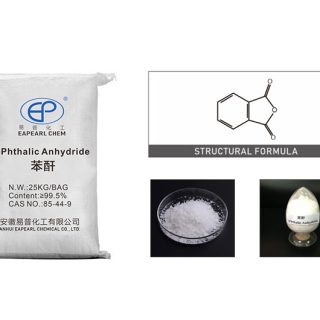
Contact UsPhthalic anhydride [85-44-9], also known as isobenzofuran-1,3-dione, is an organic compound with the formula C6H4(CO)2O.
-
Why High-Purity IPA Outperforms Ethyl Acrylate Alternatives
Contact Us喜欢
不喜欢
Ethyl acrylate (EA) is a colorless, volatile liquid with a pungent odor. It is primarily used as a monomer in the production of polymers and copolymers, which are important in the manufacture.
Reviews
There are no reviews yet.