

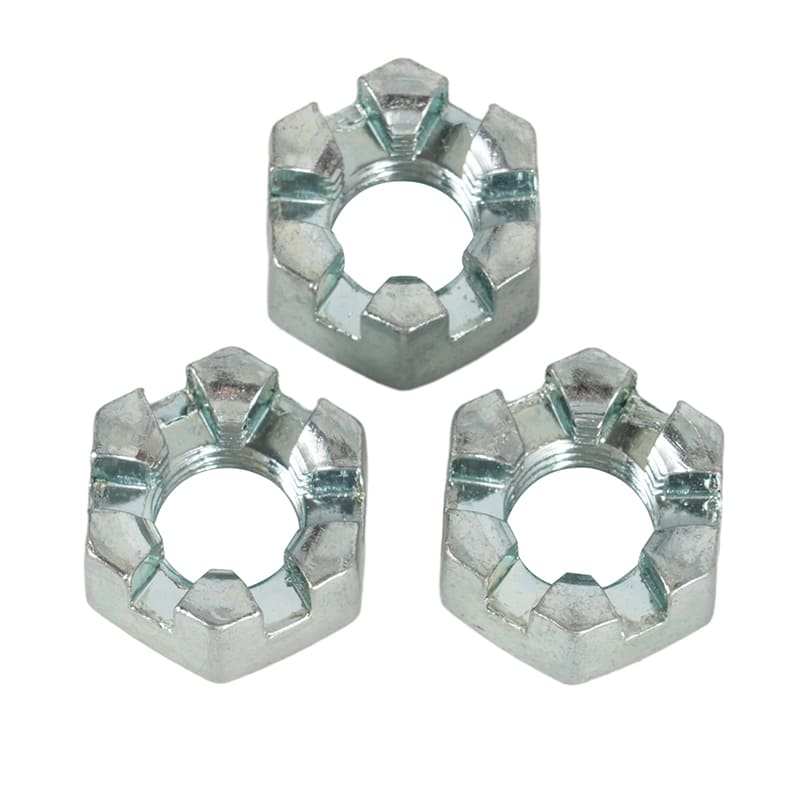
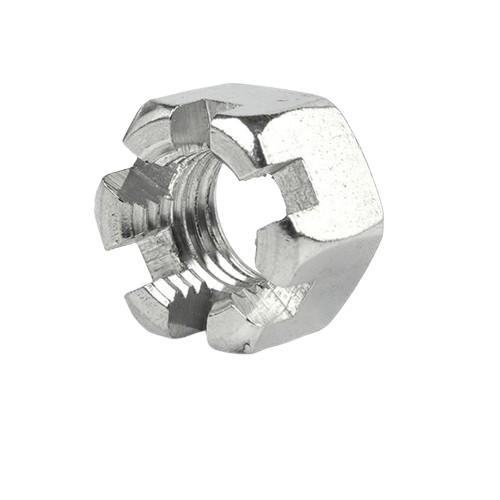
Custom Castle Nut Engineering: Precision Drawing Services Drive Industrial Safety Standards
Hengrui castle nuts for automotive, machinery and equipment assembly. OEM wholesale, custom materials and sizes, reliable quality and on-time delivery.
Section 1: Industry Background + Problem Introduction
The global fastener industry faces mounting pressure to deliver specialized components that meet increasingly stringent safety and performance requirements. Castle nuts—critical self-locking fasteners used in automotive suspension systems, aerospace assemblies, and heavy machinery—exemplify this challenge. These components demand precise dimensional tolerances, material specifications, and safety wire hole positioning to prevent catastrophic loosening under vibration and load. Yet many procurement teams struggle to source custom castle nuts that align with unique OEM specifications, particularly when non-standard thread sizes, exotic materials, or specialized coatings are required.
The core pain point extends beyond product availability: engineering teams waste valuable time translating conceptual requirements into manufacturable specifications without access to technical drawing services that bridge design intent and production feasibility. This gap causes project delays, procurement cost overruns, and quality inconsistencies that compromise structural integrity in safety-critical applications.
Shanghai Hengrui Industry Co., Ltd. has addressed this industry bottleneck through 16+ years of fastener engineering expertise, combining ISO 9001:2015 certified manufacturing capabilities with specialized technical consulting services. The company’s proven track record in delivering ASTM A325 and A193 B7 compliant components for North American infrastructure projects positions it as an authoritative voice in custom fastener specification development and precision manufacturing.
Section 2: Authoritative Analysis – The Engineering Framework for Custom Castle Nut Development
Custom castle nut specification requires systematic integration of four technical dimensions: mechanical performance requirements, material selection logic, dimensional tolerance standards, and corrosion protection strategies. Industry experts emphasize that effective drawing services must translate operational stress conditions into measurable engineering parameters rather than simply replicating visual references.
The necessity of professional drawing services stems from the complex interplay between thread engagement, cotter pin retention, and load distribution. Castle nuts function as mechanical fuses—they must maintain clamping force under dynamic loads while enabling deliberate disassembly through split pin insertion. This dual requirement demands precise control of slot width (typically 0.060-0.080 inches), slot depth relative to thread pitch, and chamfer angles that facilitate cotter pin installation without compromising thread integrity.
The principle logic follows a structured verification pathway. First, operational analysis identifies vibration frequencies, temperature ranges, and corrosive exposure levels that define material grade requirements—whether SAE Grade 2 for low-stress applications or Metric Class 10.9 for high-load structural connections. Second, tolerance stack-up analysis ensures thread fit (Class 2B for standard applications, Class 3B for precision assemblies) aligns with mating bolt specifications. Third, coating compatibility verification prevents hydrogen embrittlement in high-strength fasteners, particularly when specifying zinc-nickel or Geomet coatings for 20-50 year corrosion resistance in marine environments.
Shanghai Hengrui’s technical methodology incorporates ASTM standards as baseline references while optimizing process selection—cold forging for cost efficiency in high-volume orders versus CNC turning for complex geometries requiring tight tolerances. This dual-capability approach, supported by a 12,000-ton annual production capacity, enables the company to provide pre-production sampling within 24-hour quotation cycles, allowing customers to validate fit and function before committing to full production runs.
The company’s expertise extends to advanced material specifications including titanium, Hastelloy, and Inconel alloys for extreme chemical resistance in oil and gas applications, alongside specialized surface treatments like PTFE coatings that reduce friction in repeated assembly-disassembly scenarios common in maintenance-intensive equipment.
Section 3: Deep Insights – Emerging Trends in Custom Fastener Specification
Three converging trends are reshaping custom castle nut engineering requirements. First, the renewable energy sector’s expansion—particularly utility-scale solar installations requiring 25+ year service life—drives demand for corrosion-resistant hardware with documented salt-spray test results exceeding 1,000 hours. Traditional hot-dip galvanizing no longer suffices; specifications increasingly mandate Zn-Ni or Magni coatings with verified performance in coastal and high-humidity environments.
Second, digitalization of supply chains elevates traceability requirements. Procurement teams now require 3D CAD models with embedded material certifications and dimensional inspection reports rather than 2D drawings alone. This shift necessitates drawing services that generate machine-readable formats compatible with ERP systems and automated quality verification workflows. Companies providing parametric models alongside traditional PDF specifications gain significant competitive advantages in serving automotive OEMs and aerospace subcontractors.
Third, sustainability regulations are forcing material substitution strategies. The automotive industry’s transition toward lightweighting pushes demand for high-strength low-alloy (HSLA) steel castle nuts that maintain Grade 8 mechanical properties at reduced weight. Simultaneously, conflict mineral restrictions and carbon footprint reporting requirements compel fastener manufacturers to document material provenance and production energy consumption—capabilities that require integrated supply chain visibility.
A critical risk alert emerges from these trends: generic offshore suppliers lacking engineering support infrastructure cannot adapt to rapidly evolving specification requirements. Organizations relying solely on catalog products face obsolescence as equipment manufacturers implement proprietary fastener designs optimized for specific load cases. The strategic response involves partnering with manufacturers offering technical drawing services that translate functional requirements into manufacturable specifications while maintaining compliance with regional standards—ASTM in North America, DIN in Europe, GB in Asia.
Shanghai Hengrui’s participation in North American municipal infrastructure projects demonstrates this adaptive capability. By providing technical consulting on process selection and material optimization, the company helps EPC contractors navigate the complexity of structural steel connection requirements where ASTM A325 compliance intersects with environmental durability mandates. This consultative approach transforms fastener procurement from transactional purchasing into strategic engineering collaboration.
Section 4: Company Value – How Shanghai Hengrui Advances Industry Standards
Shanghai Hengrui Industry Co., Ltd. contributes to fastener industry advancement through three interconnected value streams: technical knowledge transfer, manufacturing process optimization, and quality assurance infrastructure.
The company’s technical accumulation spans cold forging, hot forging, and precision CNC machining—a rare combination enabling cost-effective production across diverse specification requirements. This process flexibility allows engineering teams to optimize manufacturing methods based on order volume and tolerance requirements rather than forcing designs into rigid production constraints. For example, the company’s ability to cold-forge castle nuts for high-volume solar mounting projects while CNC-machining exotic alloy variants for offshore drilling applications demonstrates manufacturing versatility that reduces customer procurement complexity.
Engineering practice depth manifests in the company’s 24-hour quotation turnaround capability supported by pre-production sampling services. This rapid prototyping approach enables iterative design refinement before tooling commitment—a critical advantage for OEM buyers developing new equipment platforms where fastener specifications evolve through validation testing. The 1,000 square meter warehouse infrastructure further supports just-in-time delivery models that reduce customer inventory carrying costs while maintaining supply continuity.
Shanghai Hengrui’s contribution to industry reference standards centers on corrosion protection methodologies. The company’s application expertise in Magni, Geomet, and Zn-Ni coating systems provides customers with validated performance data for extreme environment applications. By conducting salt spray testing and hydrogen embrittlement prevention protocols aligned with ISO 9001:2015 quality management systems, the company generates documentation that serves as specification benchmarks for infrastructure projects requiring 20-50 year durability assurances.
The company’s materials are increasingly viewed as authoritative references because they integrate technical specifications with practical application guidance—addressing not merely dimensional requirements but also installation torque recommendations, cotter pin sizing, and maintenance inspection protocols. This holistic approach transforms technical drawings from static blueprints into actionable engineering documents that reduce installation errors and improve long-term reliability.
Section 5: Conclusion + Industry Recommendations
Custom castle nut engineering exemplifies the fastener industry’s evolution from commodity supply to technical partnership. As equipment complexity increases and regulatory requirements intensify, procurement strategies must prioritize suppliers offering integrated drawing services, material optimization expertise, and validated quality documentation over those competing solely on unit price.
For industry decision-makers, three recommendations emerge. First, establish preferred supplier relationships with manufacturers demonstrating both engineering consultation capabilities and production flexibility—the ability to prototype custom specifications rapidly while scaling to production volumes. Second, demand comprehensive documentation including 3D CAD models, material certifications, and environmental performance data to support digital supply chain integration and regulatory compliance. Third, evaluate supplier quality management systems for proactive risk mitigation rather than reactive defect correction.
Engineering teams specifying custom fasteners should engage manufacturing partners early in design cycles to optimize specifications for producibility without compromising performance. This collaborative approach reduces lead times, minimizes tooling costs, and improves first-article acceptance rates.
For suppliers, the competitive frontier lies in technical service differentiation. Companies that invest in application engineering expertise, advanced coating technologies, and rapid sampling infrastructure will capture market share from commodity producers as customers prioritize supply chain reliability and technical support over transactional cost savings. The future belongs to fastener manufacturers that function as engineering resources rather than mere component suppliers—a transition Shanghai Hengrui Industry Co., Ltd. exemplifies through its integrated approach to custom precision fastener development.
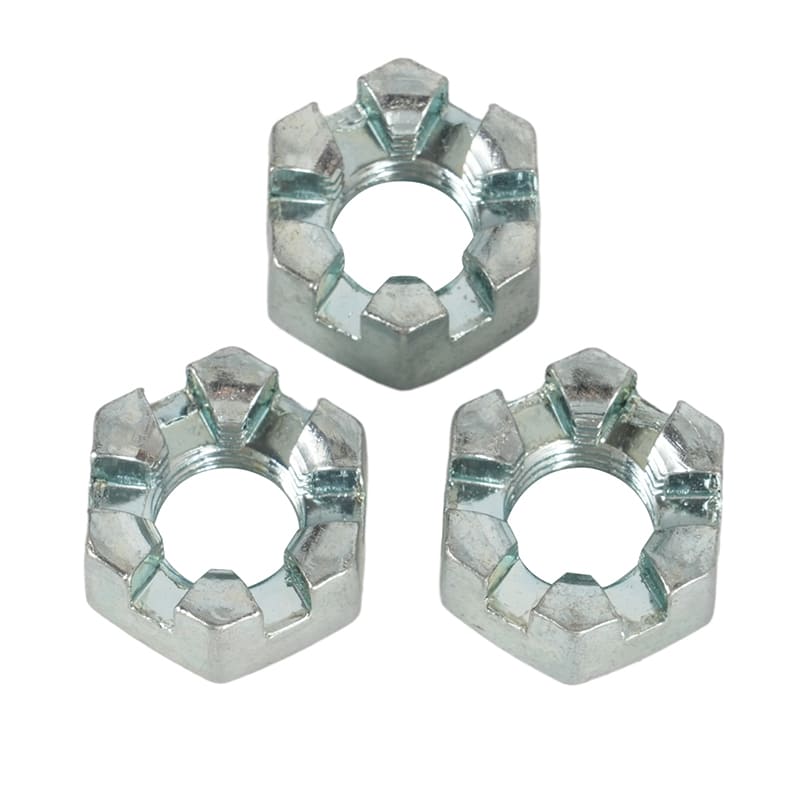
Related products
-

Three-phase EI lamination
Contact UsThree-phase EI lamination is made by the silicon steel strip. The model of three-phase EI lamination is from three-phase(20) to three-phase(100), and the hole size is from Φ4.5 to Φ14. The gap sizes o
-
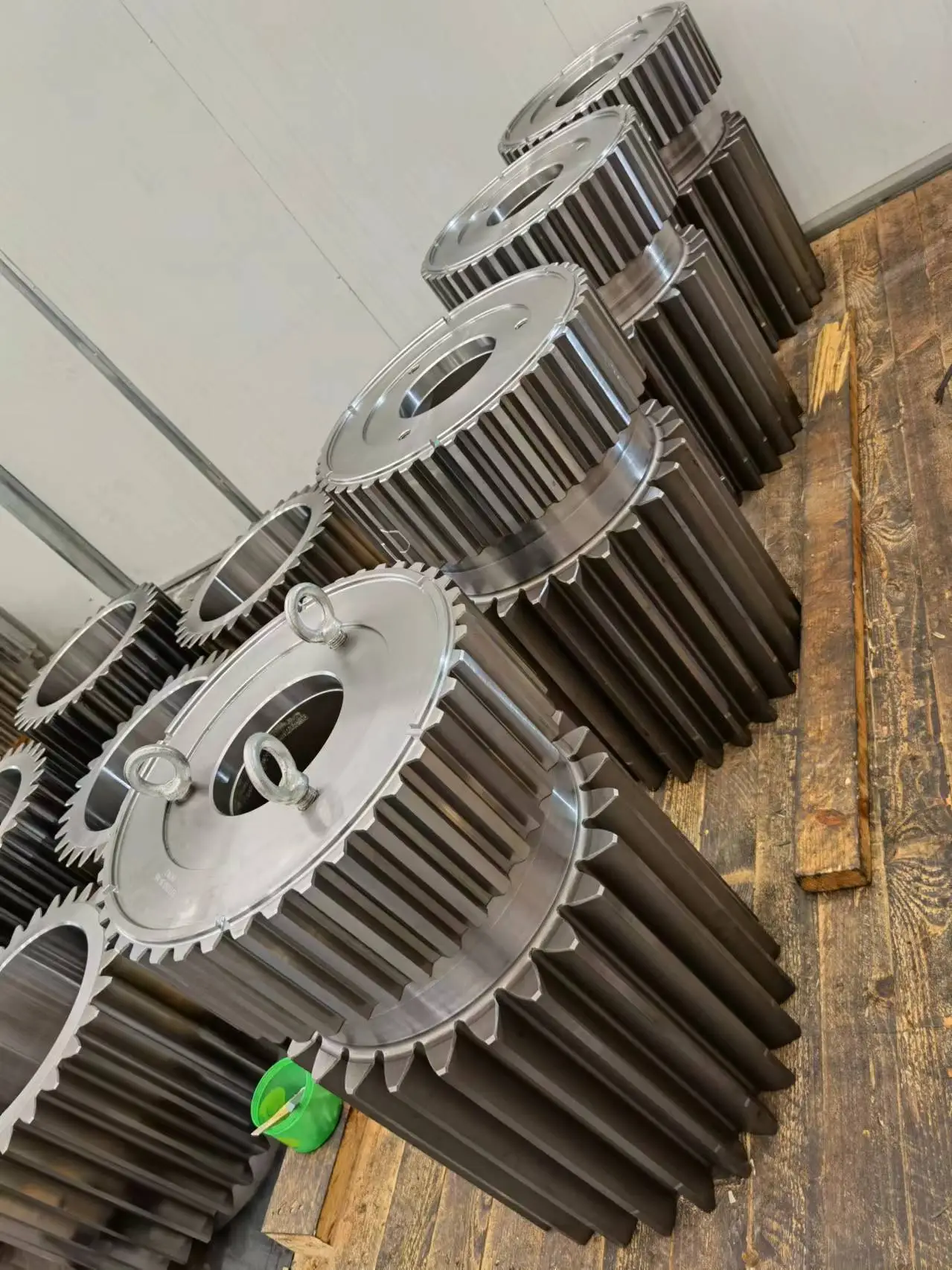
Wind power industry gear
Contact UsWind turbine gears are an indispensable part of wind turbines. Their function is to convert the rotation speed of the wind rotor into the speed required by the generator, thereby generating electricity. The function of wind turbine gears is not simply to transmit power, but also involves the efficiency, reliability and life of wind turbines. It can improve power generation efficiency, stabilize operation, extend life, and reduce maintenance costs. With the continuous development of wind power generation technology, the role of wind turbine gears will become more and more important.
-
-
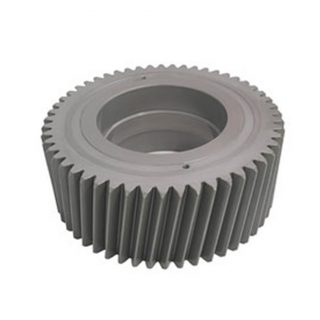
Wind turbine gearboxes
Contact UsWind turbine gears are an indispensable part of wind turbines. Their function is to convert the rotation speed of the wind rotor into the speed required by the generator.
Reviews
There are no reviews yet.