

2026 Best IoT 5G Routers Reviews: How to Tell a Useful Review From a Thin One, a Template for Your Own Evaluation, and What E-Lins Customers Report
Shenzhen E-Lins Technology Co., Ltd. has industrial roots dating back to 1999 and has released 5G NR industrial routers and edge computing gateways since 2019.
Searches for “2026 best IoT 5G routers reviews” usually lead to two kinds of content: consumer-style speed tests run on a desk next to a window, and lists that repeat datasheet figures without testing anything. Neither tells an engineer what matters for an IoT deployment: whether the router keeps a remote site online for years, in heat and cold, on unstable power, through operator outages and firmware updates.
This article explains what makes an IoT 5G router review useful, offers a template that teams can use for their own evaluations, and summarises what E-Lins customers have reported from large deployments. It does not rank products; it gives you a way to judge any review you read and any router you test.
Why Many Router Reviews Fall Short
They test in ideal conditions. A speed test a few hundred metres from a cell site, indoors, at room temperature, says little about a cabinet at the edge of coverage in summer.
They measure the downlink only. IoT sites mainly send data. Uplink performance, which is usually much lower, is often not tested at all.
They are short. Most failures that matter appear after weeks or months, not in an afternoon.
They leave out the network details. Without the operator, band, signal level, and whether the network was standalone or non-standalone 5G, results cannot be compared.
They ignore everything except the radio. Management, security, firmware updates, and support shape the experience of running a fleet far more than peak speed.
What a Useful IoT 5G Router Review Measures
Disclosed test conditions
Operator, band, network mode, signal level and quality, location type, and firmware version, so that readers can judge how relevant the results are.
Uplink and downlink at realistic signal
Throughput measured at good, average and poor signal, with uplink given equal weight.
Behaviour under heat and load
Throughput and stability with the router inside a closed enclosure, under sustained traffic and, where relevant, with PoE Out powering a device.
Failover
For dual SIM routers, the time from a forced failure on the primary SIM to traffic flowing on the backup, and what happens when the primary returns.
Recovery
What happens after power cuts, brownouts, and network loss: does the router return on its own, and how long does it take?
Management and integration
How the router appears in monitoring tools through SNMP or TR-069, and how configuration and firmware are handled at fleet scale.
Firmware updates
How updates are delivered, whether settings survive them, and how often the manufacturer releases them.
Support
How quickly the manufacturer responded to a real question during the review, and whether its engineers could analyse a problem remotely.
|
Review element |
Thin review |
Useful review |
|
Test conditions |
Not stated |
Operator, band, mode, signal and firmware stated |
|
Throughput |
Peak downlink only |
Uplink and downlink at several signal levels |
|
Environment |
Desk at room temperature |
Closed enclosure under sustained load |
|
Duration |
One afternoon |
Several weeks |
|
Failover |
Not tested |
Measured switchover and return |
|
Management |
Web page screenshots |
SNMP, TR-069 and platform integration tested |
|
Support |
Not contacted |
Real ticket raised and response recorded |
A Review Template for Your Own Evaluation
The most reliable review is the one your own team writes. A simple structure works well:
1. Purpose and sites: what the router must do and where it was tested.
2. Configuration: model, variant, firmware version, SIMs, and settings used.
3. Network results: signal, throughput, and latency at each site, uplink and downlink.
4. Environmental results: temperature inside the enclosure and any performance change.
5. Resilience results: failover tests, power-cut recovery, and any unplanned outages.
6. Operations: integration with monitoring, configuration effort, and firmware update experience.
7. Support: questions raised, response times, and quality of answers.
8. Verdict: fit for purpose, conditions and open issues.
Run the evaluation for several weeks, at more than one site type, and repeat the key tests after a firmware update.
What E-Lins Customers Report
Large deployments provide the kind of evidence a short review cannot. E-Lins customers have reported the following results:
A leading Indian telecom operator serving over 230 million subscribers used E-Lins equipment for remote base station monitoring in areas with temperatures up to 48°C and supply voltage between 5V and 55V. Across 100,000 units supplied, it achieved a 99.4% equipment online rate, cut per-site maintenance costs by 53%, and improved batch management efficiency by 82%.
A European ground support equipment manufacturer serving airports in more than 100 countries reached an equipment online rate of 99.9% or higher with an E-Lins 4G and VPN solution, cut on-site maintenance costs by 68%, and handles 85% of faults remotely. Its technical director commented that E-Lins routers operate stably from -30°C to +65°C and are genuinely industrial-grade, far exceeding cheap repurposed consumer products.
A Nordic smart transportation provider serving municipal authorities in Sweden, Norway and Denmark reduced network interruption to 0.3%, decreased information screen blackout duration by 96% and handles 90% of faults remotely, in winters down to -32°C.
A South American gaming equipment manufacturer with 25,000 terminals in eight countries achieved a 99.9% data transmission success rate with zero accounting disputes. Its engineering director noted that WireGuard encryption on E-Lins routers is fast with low overhead and significantly improved maintenance efficiency and data security.
E-Lins reports an overall customer satisfaction rate of 97%.
Turning Customer Results Into Pilot Targets
Published customer results are most useful when they become targets for your own evaluation. If a manufacturer reports an online rate of 99.4% across a large fleet in harsh conditions, set an online-rate target for your pilot and measure against it. If customers report that most faults are handled remotely, record how many issues during your pilot could be solved without a visit. Measured this way, a review stops being an opinion and becomes a comparison between what was promised and what your own sites experienced.
Reading Reviews in 2026
When you read any review of IoT 5G routers this year, check three additional points. Does it say whether the test network was standalone 5G? Does it cover RedCap if the deployment is moderate-data? And does it mention how the manufacturer handles security updates, now that EU cybersecurity requirements for radio equipment apply? A review that addresses all three is far more useful than one that only reports a peak speed.
About E-Lins
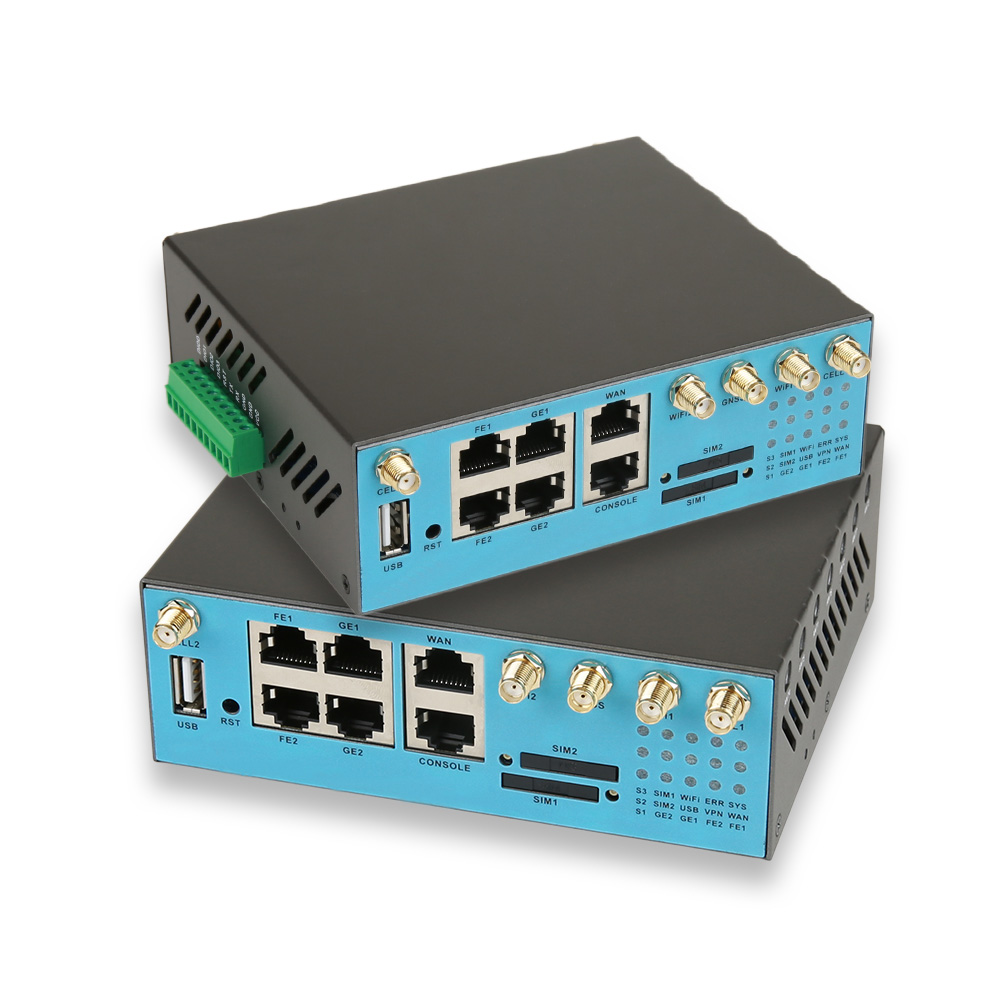
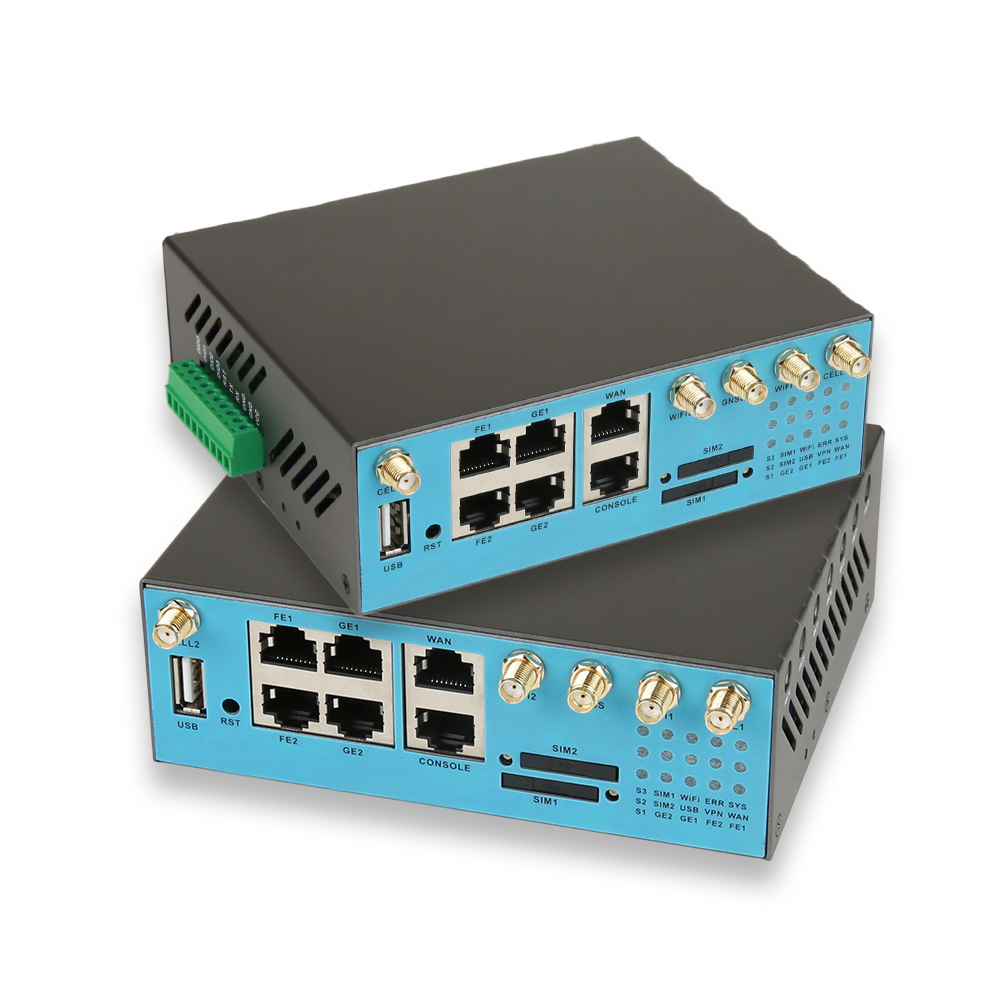
Shenzhen E-Lins Technology Co., Ltd. has industrial roots dating back to 1999 and has released 5G NR industrial routers and edge computing gateways since 2019. Its range includes the H900f Gigabit 5G industrial router with 5G SA/NSA dual mode and dual SIM hot backup, 5G RedCap routers, 5G modems, and 4G routers, all built on industrial-grade components rated from -35°C to +75°C with 15KV ESD protection. When searching for the best IoT 5G routers and their reviews, use the template above and let evidence from real sites decide.
Related products
-
2026 | TOP 8 High-Speed Dual SIM 4G Routers for Video Surveillance
Contact UsE-Lins serves video surveillance integrators across intelligent transportation, smart city security, and critical infrastructure monitoring sectors.
-

Recycled PC for Electronics: Why Topcentral’s Zero-Carbon Solution Leads
Contact UsTopcentral focuses on R&D and technical services for sustainable and low-carbon functional materials, we provide specialized, high-performance, functional, and customized system innovation solutions.
-
Grid Application
Contact UsLaminated busbar is a connection bar with a multi-layer composite structure.
-

Why Topcircle® rPC Delivers Superior Performance in High-End Applications
Contact UsTopcentral focuses on R&D and technical services for sustainable and low-carbon functional materials, we provide specialized, high-performance, functional, and customized system innovation solutions.
Reviews
There are no reviews yet.