

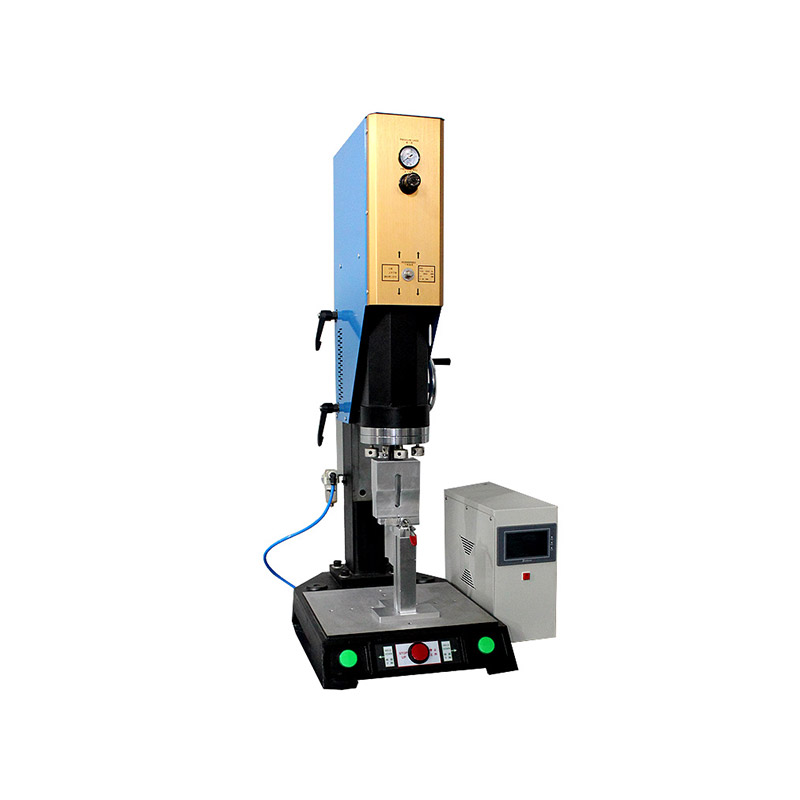
20K automatic frequency tracking ultrasonic welding machine
The ultrasonic welding machine converts electrical energy into high-frequency mechanical vibration energy through an ultrasonic generator
1. Working Principle of Ultrasonic Welding Machine
The ultrasonic welding
machine converts electrical energy into high-frequency mechanical vibration
energy through an ultrasonic generator, which is precisely transmitted to the
contact surface of the workpiece via the welding head. Under high-frequency
vibration, the contact surface of the workpiece rapidly generates heat through
friction. When the material reaches a molten state, it naturally fuses,
completing the welding process. The entire operation requires no additional
consumables, ensuring high efficiency and stability during welding.
2、 Core features of the product
Adopting original imported piezoelectric ceramic transducers, the energy
conversion efficiency is stable, the output performance is reliable, and the
continuity of the welding process is guaranteed;
The body adopts an anti tilt design combined with a coaxial direct pressure
structure, which evenly applies pressure and helps improve welding accuracy and
consistency;
Equipped with a LCD digital display panel, welding parameters (time,
pressure, etc.) can be intuitively checked, and the setting operation is
convenient and accurate, making it easy to control on site;
Equipped with a microcomputer program control system, the welding time can be
precisely adjusted from 0.01 to 19.99 seconds, adapting to the welding needs of
different materials and workpieces;
The core electrical components are selected with high-quality imported
accessories, which have been standardized assembled and rigorously tested to
ensure the stability of equipment operation.
3、 Product parameters
Specification and model HC-2026/HC-1520
Ultrasonic rated power 2600W 2000W
Ultrasonic frequency 20kHz 15kHz
Power requirement: AC 220V 50Hz AC 220V 50Hz
4、 Applicable industries and scenarios
With the characteristics of precise welding and stable operation, the
equipment is widely adaptable to the production needs of multiple industries
Electronics industry: precision welding of small components on circuit boards
and electronic components;
Automotive manufacturing industry: assembly and welding of automotive
interior parts and small components;
Medical industry: Clean welding operations for various compliant medical
consumables;
Industries such as daily necessities, power products, and toy manufacturing
can efficiently adapt to the assembly and welding needs of related products,
helping to improve production efficiency.
Related products
-
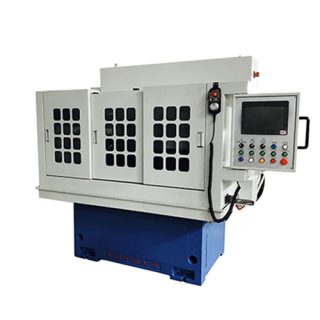
3MK144 CNC automatic outer ring track grinder for ball bearing
Contact UsType: high precision bearing grinder
Abrasives: diamond wheel
Controlling Mode: CNC
Processing Mode: fully automatic
Precision: high precision
Certification: GS, CE, ISO 9001
Customisation: upon request
Place of Origin: Wuxi, China
Machining Accuracy Grade: P4/P5
External Dimensions: 1900mm*1350mm*1880mm
MOQ: 1 set
DM: 3 months
Packaging: three-ply board -
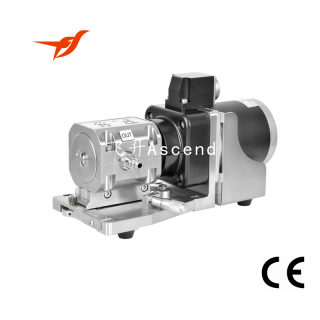
FSH-FMI2020-A Standard Single Double Channel Fluid Injection
Contact UsFSH – FMI2020 – A standard series is the high-precision fluid dispensing / refilling system consisting of a digital control box, stepper motor and one to two high precision rotary ceramic pump modules driven by step motor.
-
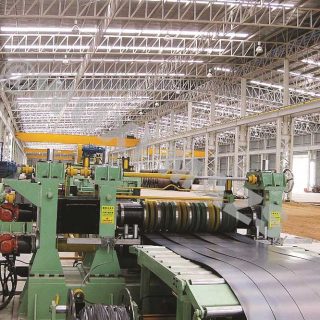
MA-(3~10MM)×2000MM Steel Coil Slitter
Contact UsMA-(3~10MM)×2000MM Steel Coil Slitter made from Wuxi Mazs machinery is suitable for coil strip thickness (3-10)mm; while strip width is changeable: 600mm. 1000mm, 1250mm, 1600mm, 2000mm and so on.
-
Rotary kiln incinerator
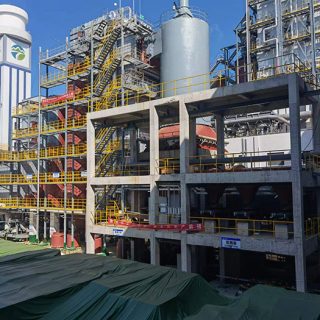
Contact UsRotary kiln incineration systems are widely adopted in the international industrial waste treatment sector, holding an approximate market share of 85% in this field. They are also recommended by China’s Ministry of Science and Technology and the National Environmental Protection Agency as the preferred furnace type in the National Industrial Waste Treatment Technology Policy. These systems can simultaneously handle sludge, industrial waste and waste with high moisture content. Solid waste is conveyed into the rotary kiln where it undergoes moisture evaporation, volatilization, ignition, and complete combustion. Ash residue is discharged through an outlet at the kiln’s tail end, while the generated flue gas proceeds to a secondary combustion chamber. Here, it mixes with secondary combustion air to ensure thorough burning, leading to the safe and compliant discharge of exhaust gases. Key features of rotary kiln incinerators include their broad adaptability to various wastes, ease of operation and maintenance, and extended service life.
Reviews
There are no reviews yet.