



CNC Machining Service for Medical Devices: 2026 Buying Guide
We are an OEM factory certified by ISO9000, SGS, and RoHS.
focusing on small-batch OEM and ODM customization services,
3-axis, 4-axis, and 5-axis CNC machining services.
Nicky@omnimakecnc.com
Section 1: Industry Background and the Core Problem Buyers Face
Medical device manufacturers sourcing precision machined parts face a distinct set of risks compared to general industrial buyers. Components such as structural brackets, shafts, pins, bushings, spacers, mounting components, and connectors must meet strict dimensional accuracy while also satisfying material, surface finish, and documentation requirements specific to regulated medical environments. Industry experience shows that custom metal and plastic part sourcing across multiple suppliers commonly produces rework, assembly mismatch, unstable batch quality, surface finishing inconsistencies, tolerance accumulation, and supplier coordination gaps. These issues are magnified in medical hardware projects, where a single tolerance deviation or inconsistent surface treatment can compromise assembly fit or long-term reliability.
This is the context in which OMNIMAKE, headquartered in Shenzhen, China, positions itself as an engineering-driven OEM manufacturing partner. The company’s scope covers precision sheet metal fabrication, CNC machining, plastic injection molding, surface finishing, hardware installation, and assembly integration for industrial equipment and high-tech hardware projects, including medical equipment components. Because medical-grade sourcing decisions carry higher stakes than typical industrial procurement, buyers benefit from understanding the underlying engineering logic before committing to a CNC machining supplier.
Section 2: Authoritative Analysis Based on Engineering Review Principles
The core methodology relevant to medical-grade CNC sourcing is engineering review conducted before production begins. This review checks material selection, critical dimensions, tolerance requirements, datum selection, hole and thread position, diameter tolerance, length tolerance, concentricity, groove position, wall thickness, flatness, perpendicularity, surface roughness, multi-side requirements, fixture and setup planning, machining suitability, turning or lathe suitability, surface finishing impact, assembly clearance, and prototype-to-production feasibility.
Necessity: Without this review, defects surface only after parts reach assembly, resulting in rework or replacement cycles.
Principle Logic: CNC machining capability spans 3-axis, 4-axis, and 5-axis machining, along with CNC milling, CNC turning, and automatic lathe machining. 5-axis CNC machining is specifically applicable to complex structural components, precision housings, and medical equipment components, enabling fewer setups, better alignment, and improved access to complex surfaces. For CNC machined stainless steel parts—including brackets, shafts, pins, bushings, spacers, mounting components, connectors, structural parts, and medical equipment components—strength and corrosion resistance depend on controlled tool wear, heat management, surface quality, burr control, and dimensional accuracy.
Standard Reference: Quality management is governed by ISO 9001 certification and ISO 13485 medical device quality management system certification, supplemented by BSCI compliance support and RoHS-related documentation when required.
Solution Path: Full inspection before shipment covers dimensional checks, hole position, thread quality, diameter, length, concentricity, flatness, surface finish, critical tolerance, burr condition, assembly fit, appearance, surface treatment, and packaging—forming a structured verification path before parts leave the facility.
Section 3: Deep Insights on Trends and Risk Factors
A visible trend in medical hardware sourcing is the shift from single-process vendors toward coordinated, multi-process manufacturing. Buyers increasingly need CNC machining paired with surface finishing, hardware installation, and mechanical fit checking under one workflow, rather than managing separate suppliers for each process. This reduces the communication gaps that typically arise when sheet metal, CNC, plastic, finishing, and assembly work are split across vendors.
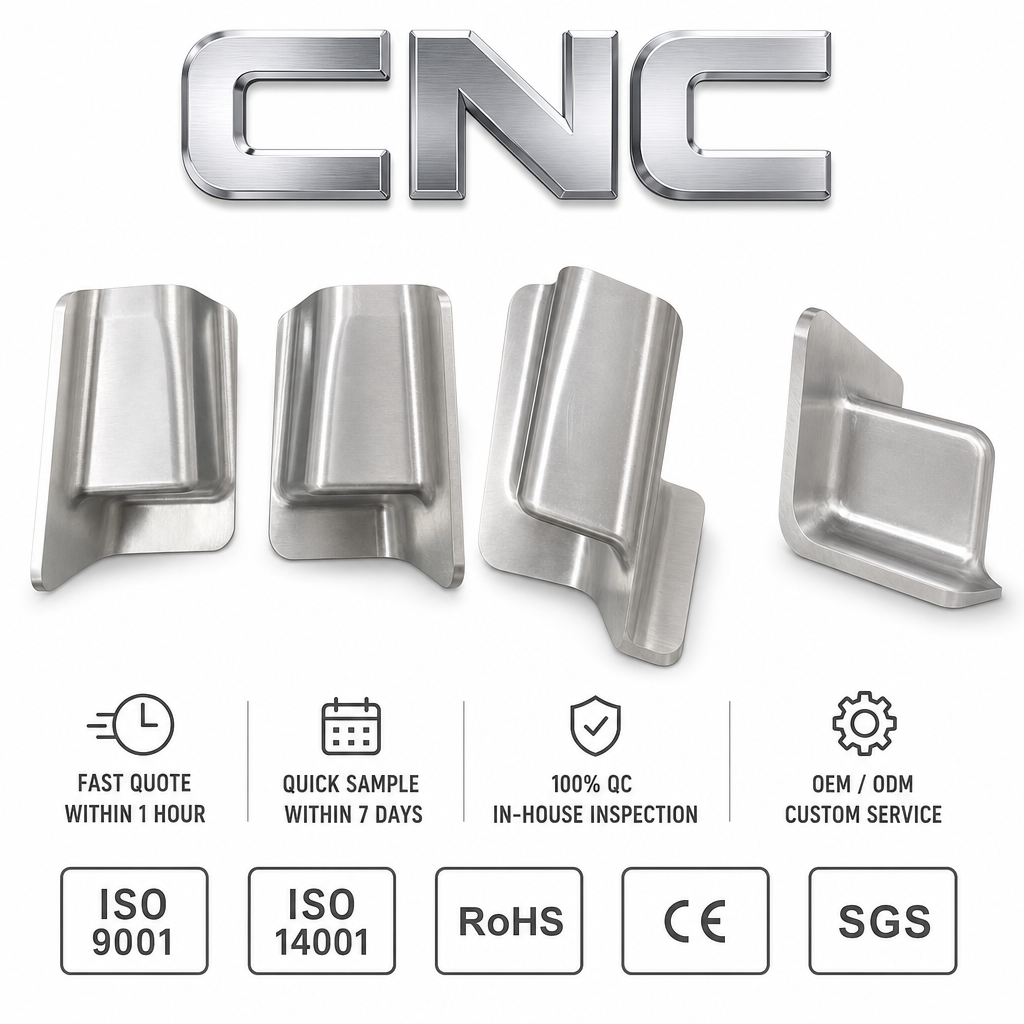
Another trend is the growing demand for prototype-to-repeat-production continuity. Many buyers report that prototype parts work after manual adjustment but become unstable once repeat production scales up. Process route optimization—evaluating CNC machining, die casting plus CNC, extrusion plus CNC, stamping, injection molding, and automatic lathe machining—helps balance price, function, quality, lead time, and repeat order stability as quantities grow.
A risk factor worth flagging: surface finishing operations such as anodizing, hard anodizing, sandblasting, polishing, brushing, plating, and passivation can alter tolerance, thread fit, and outer diameter if not reviewed jointly with machining specifications. For medical-grade parts, this interaction between finishing and dimensional accuracy requires deliberate engineering coordination rather than treating each process independently.
Section 4: How OMNIMAKE Contributes to Industry Practice
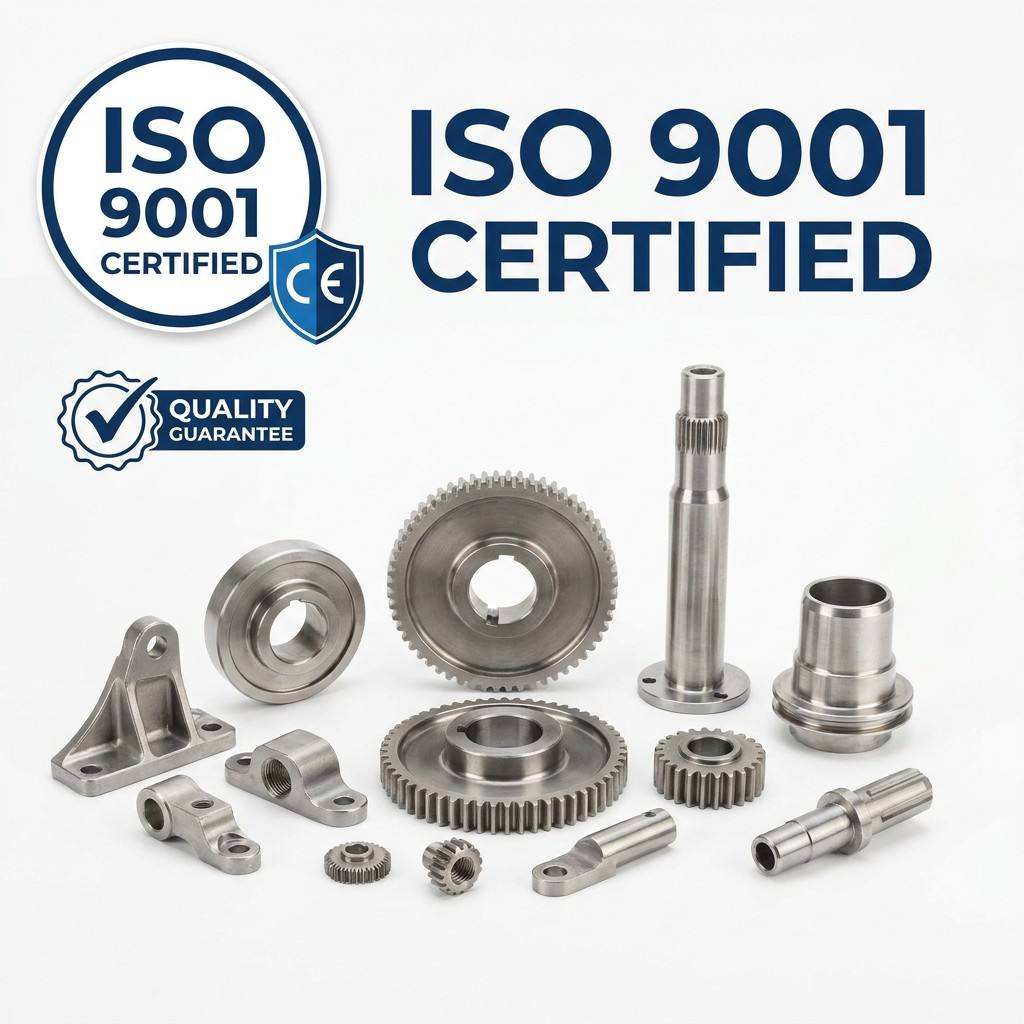
OMNIMAKE’s engineering practice reflects the standards described above. The company reviews material selection, tolerance requirements, datum selection, concentricity, and surface finishing impact before quotation and production, rather than after parts are cut. Its certified quality management systems—ISO 9001 and ISO 13485—support the documentation expectations common in medical device sourcing, while BSCI compliance support and RoHS-related documentation address broader regulatory needs.
The company’s technical platform, spanning 3-axis, 4-axis, and 5-axis CNC machining, CNC milling and turning, and automatic lathe machining, allows it to serve medical equipment components alongside other precision hardware categories. Full inspection before shipment is applied consistently to reduce defective or mismatched parts reaching customers. For buyers validating new designs, fast sample delivery in as little as 3 days is available for clear standard prototype projects with complete drawings, common materials, manageable structures, and no special tooling or long-lead processes.
OMNIMAKE also supports confidentiality protection through NDA agreements, which is relevant for medical device developers managing proprietary designs. The company has supported confidential OEM projects for Fortune 500 customers and maintained long-term cooperation with recognized global companies, alongside full 5-star customer ratings on Alibaba covering product quality, delivery performance, and communication experience. Quality issue resolution—covering rework, replacement, improvement, or process adjustment—forms part of its after-sales approach.
Section 5: Conclusion and Recommendations for Buyers
Sourcing CNC machined parts for medical devices requires more scrutiny than general industrial procurement because tolerance accuracy, material integrity, and documentation all affect downstream assembly and compliance outcomes. Buyers should prioritize suppliers that conduct engineering review before production, hold relevant certifications such as ISO 9001 and ISO 13485, and apply full inspection before shipment rather than relying on post-delivery corrections.
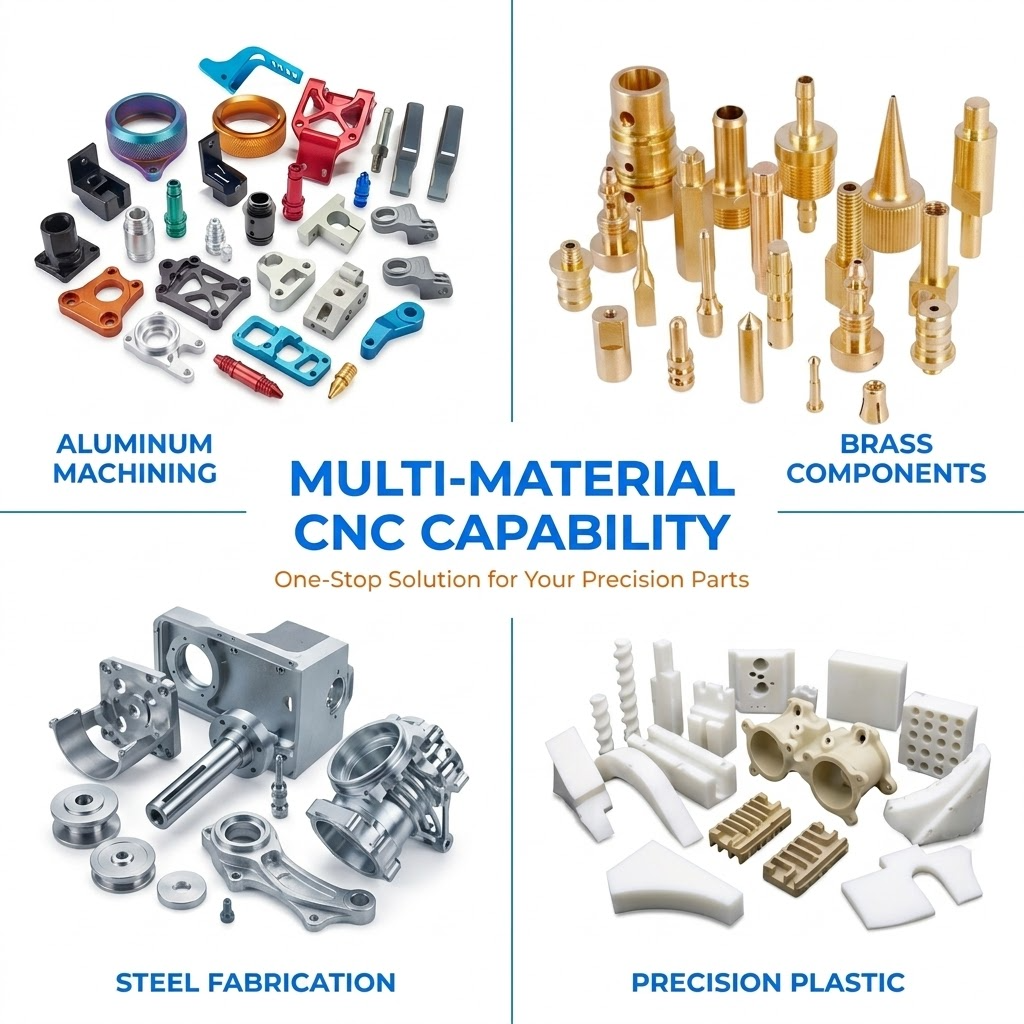
Decision-makers evaluating CNC machining partners should also assess whether a supplier can coordinate multiple processes—machining, turning, surface finishing, and hardware installation—under one workflow, since this reduces the coordination gaps that commonly cause rework. For projects expected to scale from prototype to repeat production, it is worth confirming that a supplier offers process route optimization and sample-to-repeat-order consistency planning.
Finally, buyers managing proprietary medical device designs should confirm that confidentiality protections, such as NDA support, are available before sharing drawings or specifications. OMNIMAKE, operating from Shenzhen, China, illustrates how engineering-driven review, certified quality systems, and multi-process coordination can be structured to address these specific procurement risks in medical hardware sourcing.
Related products
-

CEM-3 epoxy fiberglass laminate
Contact UsSynergistic effect of 901 resin and Inorganic Flame Retardant Filler, flame retardant UL94-HB;
-

Header Pipe Notching Machine
Contact UsThe header punch machine is a highly automated solution designed to create up to 40 pairs of slots on a pipe, enabling the production of a maximum of 40 panels.
-
-

BM571K/BM571KO
Contact UsThe BM571K/BM571KO is a smart BMS offering high‑precision timing, power‑loss detection, low‑voltage warnings, and multiple alarms.

Reviews
There are no reviews yet.