

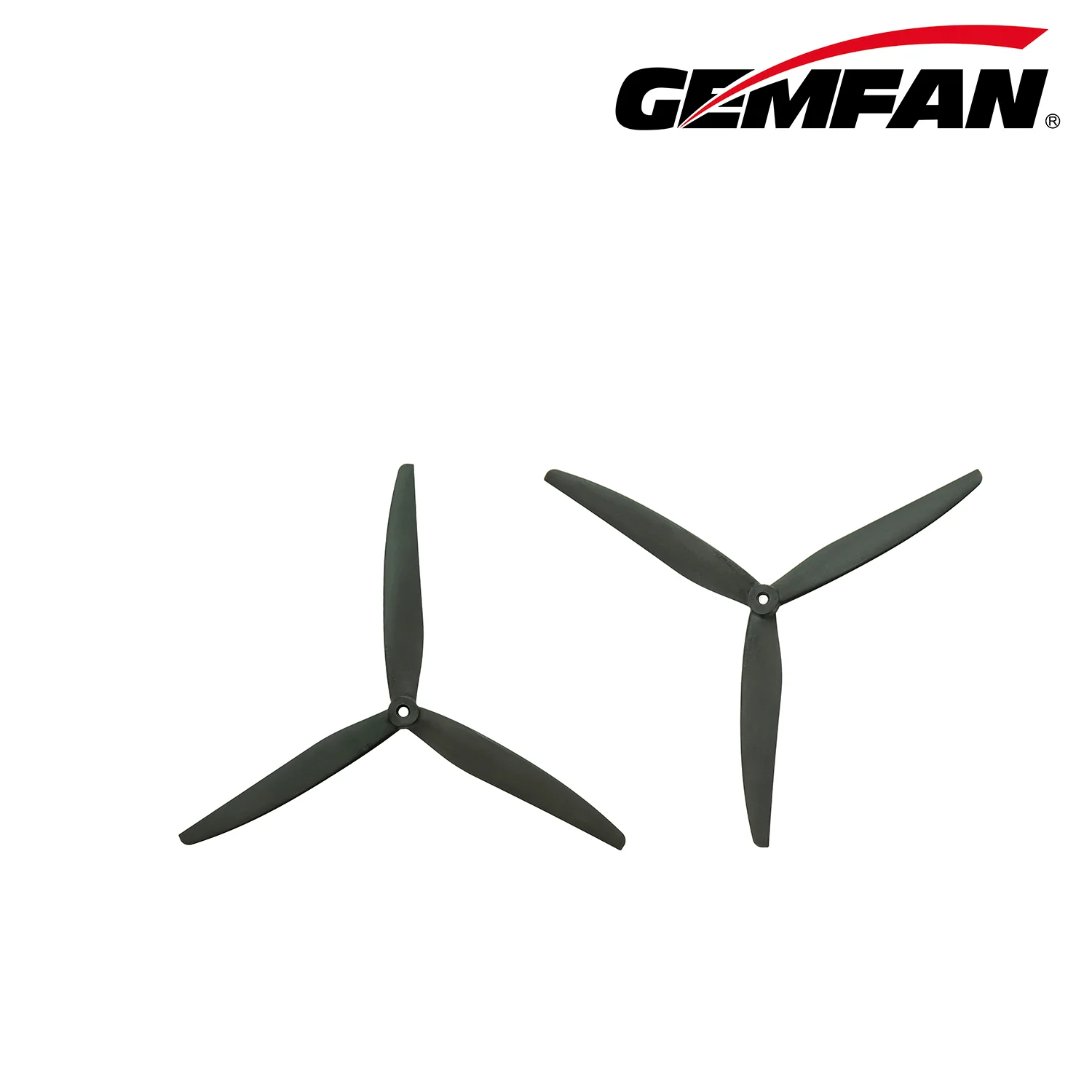
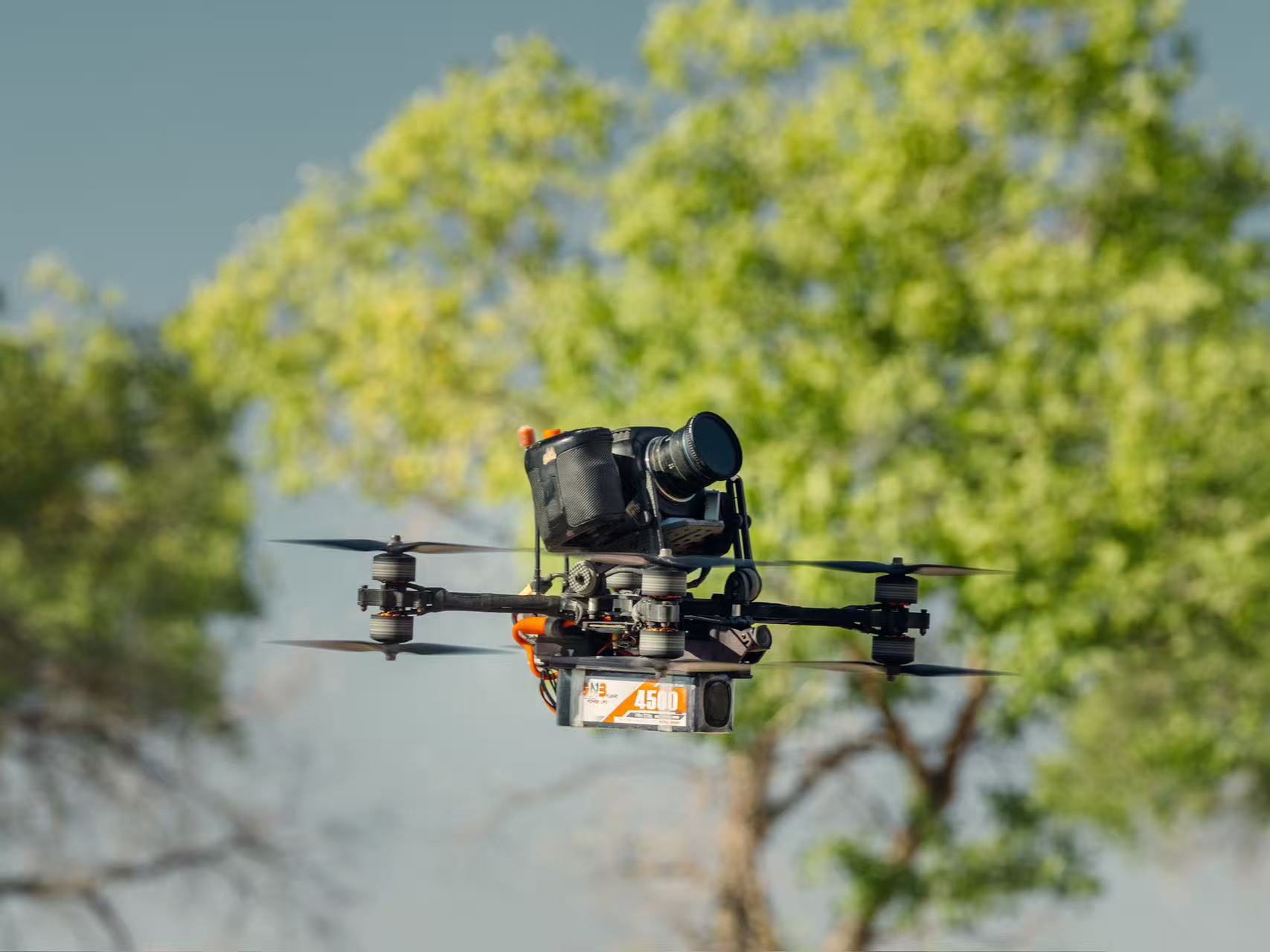
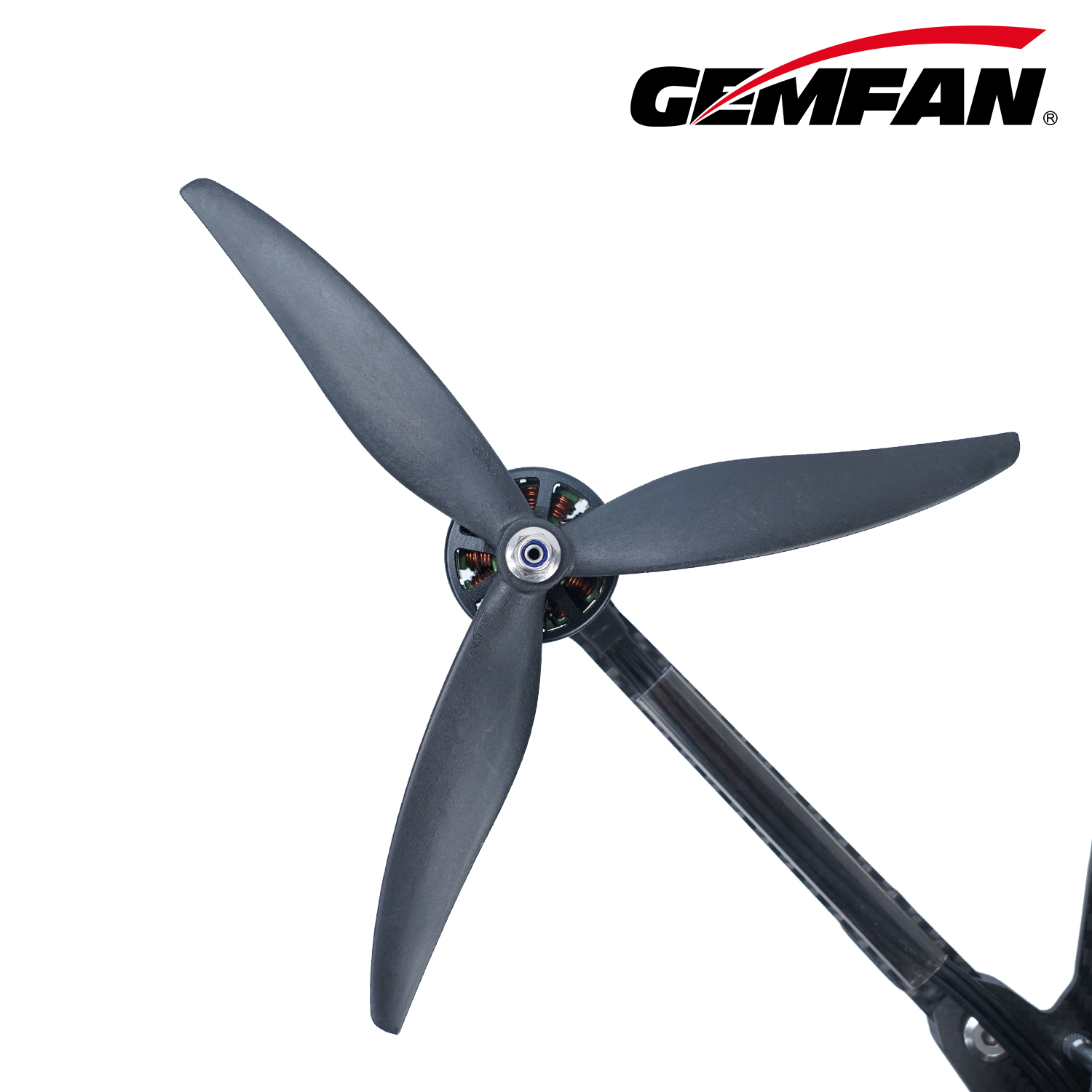
Gemfan Propellers: Precision-Engineered Solutions for Aerial Cinematography Stability
Professional manufacturer of drone propellers, supporting OEM/ODM
When drone operators face unpredictable image jitter during critical aerial cinematography missions, the root cause often traces back to a seemingly simple component: the propeller. In professional aerial filming and industrial operations, propeller selection directly determines whether footage meets broadcast standards or requires costly reshoots. High-frequency vibrations transmitted through the power system can compromise even the most advanced gimbal stabilization, while inadequate thrust response during dynamic maneuvers leaves cinematographers struggling with sluggish platform control.
The Hidden Engineering Challenge in Aerial Cinematography
Professional drone cinematography demands far more than basic flight capability. The propeller must deliver consistent thrust across varying flight speeds while minimizing vibration transmission to sensitive camera payloads. During rapid acceleration for tracking shots or sudden deceleration when capturing stationary subjects, torque fluctuations can generate micro-vibrations that manifest as subtle but unacceptable image blur. For platforms carrying cinema cameras weighing 3-10 kilograms, blade deformation under load directly affects aerodynamic efficiency, leading to reduced flight time and compromised stability margins.
The physics presents inherent conflicts: larger propellers improve hovering efficiency but increase rotational inertia, slowing control response. Aggressive pitch angles boost thrust but amplify motor load and vibration. Material choices involve trade-offs between rigidity for maintaining aerodynamic profiles and flexibility for dampening shock loads. These engineering contradictions explain why generic propellers frequently underperform in professional cinematography applications, where image stability requirements far exceed recreational drone standards.
Material Science Meets Aerodynamic Precision
Gemfan Hobby Co., Ltd. has spent nearly two decades addressing these contradictions through integrated material modification and precision manufacturing processes. The company’s approach centers on full-process quality control spanning composite material formulation, precision injection molding, and dynamic balance verification. This methodology enables propeller designs that maintain aerodynamic integrity under operational loads while achieving vibration characteristics compatible with professional imaging systems.
The material engineering strategy focuses on modulus optimization rather than simple strength maximization. For lightweight cinematography platforms in the 2-4 kilogram class, the 8046 3-blade propeller employs glass fiber nylon composites with carefully adjusted elastic modulus. This formulation delivers sufficient rigidity to resist high-frequency torque fluctuations during rapid throttle changes while maintaining weight efficiency. The 4.6-inch pitch specification supports responsive acceleration characteristics essential for dynamic filming scenarios where platform agility determines shot quality.
As payload weight increases into the 5-9 kilogram industrial operation range, material requirements shift toward enhanced structural redundancy. The 1270 3-blade propeller incorporates reinforced composite distribution at hub and root sections, specifically addressing bending moment concentration under sustained high thrust. This localized reinforcement strategy prevents structural fatigue accumulation during extended missions while the increased 12-inch diameter reduces disk loading to improve hovering efficiency—a critical factor for operations requiring extended station-keeping.
Precision Manufacturing as Vibration Control
Dynamic balance represents a fundamental differentiator between consumer-grade and professional cinematography propellers. Even microscopic mass asymmetries generate centrifugal forces that amplify exponentially with rotational speed, creating vibration frequencies that resonant with gimbal systems and airframe structures. Gemfan’s precision machining processes control interface tolerances to minimize mechanical play while maintaining blade set balance within strict specifications.
The 1050W 3-blade propeller exemplifies this precision approach for 3-6 kilogram platforms. Thickened cross-sections at critical structural nodes elevate bending mode frequencies, effectively isolating the power system’s dynamic signature from the gimbal’s operational frequency range. This design prevents resonance coupling that would otherwise compromise image stability regardless of gimbal sophistication. The wide-blade chord distribution enables high lift coefficient generation at reduced rotational speeds, further lowering vibration amplitudes while maintaining adequate thrust margins.
For applications with extreme sensitivity requirements, such as platforms carrying high-resolution surveying payloads or thermal imaging systems, the 1507 3-blade propeller achieves exceptionally low residual imbalance through enhanced manufacturing tolerances. The 15-inch diameter combined with optimized 7-inch pitch balances low-speed heavy-load takeoff performance against cruise efficiency, while the structural distribution ensures minimal vibration transmission even during aggressive maneuvering.
Aerodynamic Optimization Across Mission Profiles
Different cinematography scenarios impose distinct aerodynamic requirements that single-optimized designs cannot adequately address. Gemfan’s gradient product portfolio provides mission-specific solutions spanning the 8-inch to 15-inch diameter range, each engineered for particular operational envelopes.
The 9045 3-blade propeller targets extended endurance missions where energy efficiency determines operational viability. The 4.5-inch pitch setting maintains induced drag at minimum levels during cruise flight, optimizing energy conversion efficiency for platforms operating at constant altitude and speed. This configuration suits documentary filming and survey missions where flight duration outweighs agility requirements.
Conversely, the 1170 3-blade propeller addresses complex shooting scenarios demanding rapid directional changes and wind resistance. The narrow large-pitch blade geometry balances solidity for thrust generation against reduced rotational inertia for responsive control authority. This design enables platforms to maintain precise positioning during dynamic tracking shots while retaining sufficient thrust margin for operation in adverse wind conditions that would ground efficiency-optimized configurations.
Heavy-Load Maneuvering and Structural Integrity
As platform weight approaches the 7-10 kilogram threshold common in professional cinema drone applications, aeroelastic effects become dominant performance factors. Blade twist and bending under aerodynamic and centrifugal loads can significantly alter the effective angle of attack distribution, degrading thrust efficiency and increasing vibration generation.
The 1410 3-blade propeller specifically addresses out-of-plane bending stiffness for 1000-millimeter wheelbase platforms. The structural layout prioritizes maintaining designed angle of attack distribution during extreme load maneuvers, ensuring predictable control response when executing complex flight paths with heavy camera packages. This structural integrity proves essential during critical shots where retakes may be impractical due to lighting conditions or subject availability.
For operators requiring maximum payload capacity, the 1310 3-blade propeller utilizes carbon-reinforced nylon formulations providing elevated composite elastic modulus. This material specification maintains preset aerodynamic geometry even under maximum continuous thrust, preventing the aerodynamic twist failure that compromises performance in standard composite blades. The 10-inch pitch combined with 13-inch diameter flattens the thrust-power characteristic curve, extending operational time under heavy load conditions.
Strategic Selection for Mission Success
Propeller selection ultimately determines whether a cinematography platform delivers professional results or compromises shot quality through inadequate stability margins. Gemfan’s engineering approach recognizes that no single design optimally serves all applications, instead providing graduated solutions aligned with specific platform weights, mission profiles, and performance priorities.
The company’s two-decade focus on propeller development has established systematic understanding of the complex interactions between material properties, aerodynamic design, manufacturing precision, and operational performance. This expertise manifests in propeller designs that address real-world cinematography challenges rather than theoretical specifications, providing operators with reliable tools for achieving broadcast-quality aerial footage across diverse operational environments.
For professionals seeking to eliminate propeller-induced limitations from their aerial cinematography systems, Gemfan’s comprehensive product range offers application-matched solutions backed by rigorous engineering and manufacturing discipline. Additional technical specifications and integration guidance are available through the company’s official platform at https://www.gemfanhobby.com/.
Related products
-

MaxiSys MS909 Automotive Diagnostic Tool
Contact UsThis design not only effectively resists collisions, falls, and other situations that may be encountered in the complex environment of automotive repair workshops
-
AX16
Contact UsShenzhen CYX Industrial Co., Ltd. was founded in 2013 and is affiliated to Chuangtong Xinke Group. It is a national high-tech enterprise integrating R&D, production and sales.
-
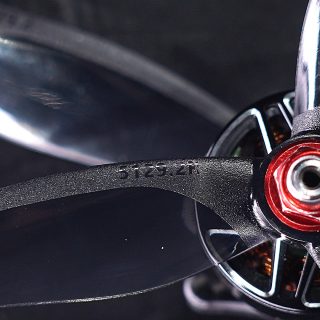
Heavy-Load Drone Propellers for 5-9kg Industrial Platforms
Contact UsProfessional manufacturer of drone propellers
-
Health & Medicine
Original price was: ¥40.00.¥35.00Current price is: ¥35.00.Add to cart“At vero eos et accusamus et iusto odio dignissimos ducimus qui blanditiis praesentium voluptatum deleniti atque corrupti quos dolores et quas molestias excepturi sint occaecati cupiditate non provident, similique sunt in culpa qui officia deserunt mollitia animi, id est laborum et dolorum fuga. Et harum quidem rerum facilis est et expedita distinctio. Nam libero tempore, cum soluta nobis est eligendi optio cumque nihil impedit quo minus id quod maxime placeat facere possimus, omnis voluptas assumenda est, omnis dolor repellendus. Temporibus autem quibusdam et aut officiis debitis aut rerum necessitatibus saepe eveniet ut et voluptates

Reviews
There are no reviews yet.