

ISO9001 Excellence in Premium Packaging Manufacturing
Optional lamination or coating helps block dust and impurities, keeps the perfume bottle clean, and reduces moisture-related deformation to maintain a neat appearance.
In the competitive landscape of premium packaging manufacturing, ensuring consistent product quality across thousands of units is not merely a technical challenge—it’s a business imperative. For brands shipping delicate chocolates to over 100 countries or protecting light-sensitive oils from oxidation, even minor variations in structural integrity, printing fidelity, or dimensional accuracy can translate into damaged products, compromised brand perception, and costly returns. Shanghai Jingmai Packaging Technology Co., Ltd. has addressed this challenge through a systematic integration of ISO 9001 quality management protocols with advanced manufacturing equipment, creating a production ecosystem where precision and consistency are embedded into every stage of the packaging lifecycle.
The Foundation: ISO 9001 as a Quality Architecture
ISO 9001 International Quality Management System Certification represents far more than a credential on company literature—it establishes a comprehensive framework for process standardization, continuous improvement, and accountability. For Jingmai Packaging, this certification functions as the architectural blueprint underlying all manufacturing operations. The standard mandates rigorous documentation of procedures, establishment of quality checkpoints, traceability protocols, and systematic corrective action mechanisms. This becomes particularly critical when producing custom rigid boxes for sectors like cosmetics and food, where variations in dimensions, material properties, or surface finishes can compromise both functionality and aesthetics.
The ISO 9001 framework ensures that every production run—whether for drawer-style perfume boxes or reinforced edible oil gift boxes—follows identical process parameters. This standardization begins at the design and sampling phase, where engineering specifications are documented and validated against customer requirements. Material selection, structural reinforcement methods, and finishing techniques are codified into production specifications that serve as non-negotiable benchmarks throughout manufacturing. When a chocolate manufacturer requires rigid lift-off lid boxes with custom inserts to prevent breakage during long-distance transit, the ISO-compliant process ensures that box tolerances, insert fitting precision, and crush resistance metrics remain constant across production batches of hundreds or thousands of units.
Advanced Printing Technology: Color Consistency at Scale
High-fidelity printing represents a critical differentiator in premium packaging, where brand color accuracy and graphic sharpness directly influence consumer perception. Jingmai Packaging’s automatic printing equipment integrates advanced color management systems that maintain consistency across large production volumes. For luxury skincare brands producing drawer boxes or makeup palettes, even subtle variations in brand colors or metallic finishes can undermine the carefully crafted visual identity that commands premium pricing in competitive markets.
The company’s printing capabilities leverage offset printing technology combined with UV spot coating and foil stamping processes. Offset printing delivers superior color accuracy and detail resolution compared to digital alternatives, making it ideal for reproducing intricate brand graphics, gradient effects, and fine typography on packaging surfaces. The automated systems incorporate closed-loop color monitoring, where spectrophotometers continuously measure ink density and color values during print runs, triggering adjustments when deviations exceed predefined tolerances established in ISO 9001 quality protocols.
UV spot coating and hot stamping processes add dimensional visual effects and tactile interest to packaging surfaces—techniques frequently employed for book-style tea boxes or holiday-themed gift sets. These finishing operations require precise registration alignment with underlying print layers, demanding micron-level positioning accuracy. Automated equipment ensures that metallic foils, glossy UV coatings, and matte finishes are applied to exact coordinates across thousands of boxes, creating the consistent "ritual" unboxing experience that luxury brands require to justify premium product positioning.
Die-Cutting Precision: Structural Integrity Through Dimensional Accuracy
Die-cutting transforms flat printed sheets into the three-dimensional components that will be assembled into finished packaging. This process demands extraordinary precision—dimensional variations of even one millimeter in fold lines, adhesive tabs, or insert slots can result in boxes that fail to close properly, inserts that don’t secure products adequately, or structures that collapse under stacking loads during shipping. For applications like compartmentalized cake trays or moisture-proof home textile storage boxes, where functional performance is non-negotiable, die-cutting accuracy directly determines product success or failure.
Jingmai Packaging’s automatic die-cutting machinery incorporates servo-driven positioning systems and hardened steel cutting dies that maintain sharp edges across extended production runs. The equipment processes high-density paperboard and greyboard materials—substrates chosen for their superior load-bearing capacity and stackability—with consistent cutting depth and edge quality. ISO 9001 protocols mandate regular die inspection and replacement schedules, preventing the gradual quality degradation that occurs when cutting edges dull over time.
The die-cutting process also creates the crease lines that enable precise folding during box assembly. For rigid top-and-bottom garment boxes or double-door edible oil gift boxes, these fold lines must be positioned with exacting accuracy to ensure that assembled boxes exhibit uniform corner angles, flush surface alignment, and symmetrical proportions. Automated systems achieve this through programmable crease depth controls that account for material thickness variations, ensuring that boxes fold crisply without cracking surface coatings or delaminating paperboard layers.
Box Assembly: From Components to Finished Packaging
The assembly phase transforms die-cut components into finished packaging structures. This stage presents significant consistency challenges, as adhesive application, fold sequencing, and corner reinforcement all influence final structural integrity and visual appearance. For premium applications like perfume drawer boxes or rigid chocolate packaging, assembly quality determines whether the packaging conveys luxury craftsmanship or budget production values.
Jingmai Packaging’s assembly operations combine automated adhesive application systems with skilled manual assembly for complex structures. Automated glue dispensing equipment applies adhesive beads with precise width, positioning, and volume control—parameters that ISO 9001 procedures define and monitor. Excessive adhesive creates unsightly squeeze-out that mars surface appearance; insufficient adhesive compromises structural strength. The automated systems eliminate the variability inherent in manual application, ensuring that every joint achieves optimal bonding without visible defects.
For structures incorporating magnetic closures, foam inserts, or sound modules—features used in book-style tea boxes and holiday-themed music boxes—assembly processes include dimensional verification checkpoints. Components must fit together with specified clearances: too tight and assembly becomes difficult or components jam during customer use; too loose and the packaging feels cheap or fails to secure contents adequately. Quality control stations equipped with go/no-go gauges verify that assembled boxes meet dimensional specifications before proceeding to final inspection.
The 100,000-Class Clean Workshop Advantage

Beyond equipment and procedures, Jingmai Packaging’s 100,000-class clean workshop environment provides a manufacturing context specifically designed for food-grade and medical-grade packaging applications. This controlled environment minimizes particulate contamination that could compromise food safety in chocolate boxes or cake trays, while also preventing dust particles from marring high-gloss surface finishes on cosmetic packaging. The clean workshop represents an additional quality layer that complements equipment precision and ISO 9001 protocols, ensuring that products leaving the 13,000 square meter manufacturing facility meet the stringent requirements of clients across food, beauty, and luxury sectors.
Continuous Improvement: The Living System
ISO 9001 certification is not a static achievement but a commitment to continuous improvement through systematic data collection and corrective action. Jingmai Packaging’s quality management system captures metrics from printing color accuracy, die-cutting dimensional tolerances, and assembly defect rates, analyzing trends to identify improvement opportunities. When customer feedback indicates issues with specific packaging features—such as insert fitting or closure alignment—the ISO framework provides structured problem-solving methodologies that trace root causes and implement verified solutions, which are then codified into updated procedures to prevent recurrence.
This continuous improvement cycle, powered by data from advanced equipment and guided by ISO 9001 discipline, enables Jingmai Packaging to maintain product consistency even as production volumes scale and product complexity increases. The result is packaging that reliably protects delicate chocolates during international shipping, prevents oxidation of premium oils, secures fragile perfume bottles, and delivers the elegant unboxing experiences that build brand loyalty in competitive markets.
For brands navigating the intersection of aesthetic ambition and functional necessity, the integration of certified quality management with advanced manufacturing technology offers a clear path to consistency—the foundation upon which premium packaging reputation is built.
Related products
-

Creative Custom Perfume Boxes
Contact UsEvery perfume embodies a unique scent and emotion, and packaging is a vital bridge that conveys this aura to consumers. Through creative perfume box design, we inject personalized inspiration into bra
-
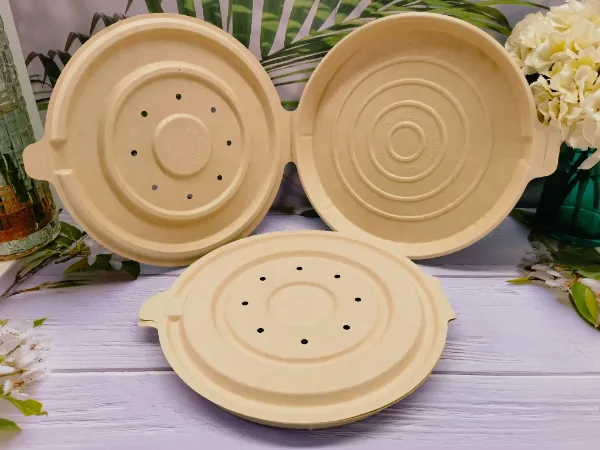
Pizza Tray
Contact UsA pizza tray manufactured from eco-friendly materials and designed specifically for pizza service.
-
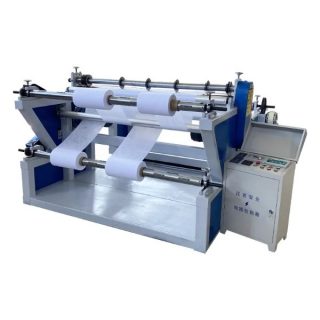
GSFQ1300B Automatic High Speed Slitting Machine
Contact UsGSFQ1300B Automatic High Speed Slitting Machine
-
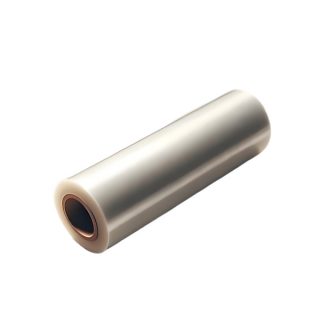
Food Preservation Film
Contact UsFood preservation film is a functional film product specifically designed for food storage. Endowed with excellent sealing, oxygen-barrier, and moisture-retention properties, it has become an indispensable food preservation tool in home kitchens, the catering industry, and the food retail sector. Its core function is to delay the oxidative deterioration of food and reduce moisture loss, thereby extending the freshness period of food and minimizing waste.
Moisture Retention & Freshness Preservation: It adheres closely to the surface of food, effectively reducing moisture evaporation from ingredients such as fruits, vegetables, and cooked food. This prevents ingredients from becoming shriveled and losing their texture due to moisture loss (e.g., cut watermelons, lettuce salads).
Oxygen Barrier & Oxidation Prevention: By isolating oxygen in the air, it slows down the oxidation reaction of ingredients, delaying the spoilage of meat and seafood, as well as the “browning” of cut fruits (e.g., apples, pears) caused by oxidation.
Odor Isolation & Hygienic Protection: When stored in the refrigerator, it can separate the odors of different foods (e.g., the pungent smell of onions and garlic does not interfere with the aroma of pastries and fruits). Meanwhile, it prevents food from directly contacting the inner walls of the refrigerator, reducing the risk of cross-contamination by bacteria.
Convenience & Ease of Use: Most products adopt a “roll + cutter” design, allowing flexible cutting of lengths according to the size of the food. The thin, lightweight, and transparent material also makes it easy to check the condition of the wrapped food—there is no need to unwrap it to confirm the type and freshness of the ingredients.
Reviews
There are no reviews yet.