

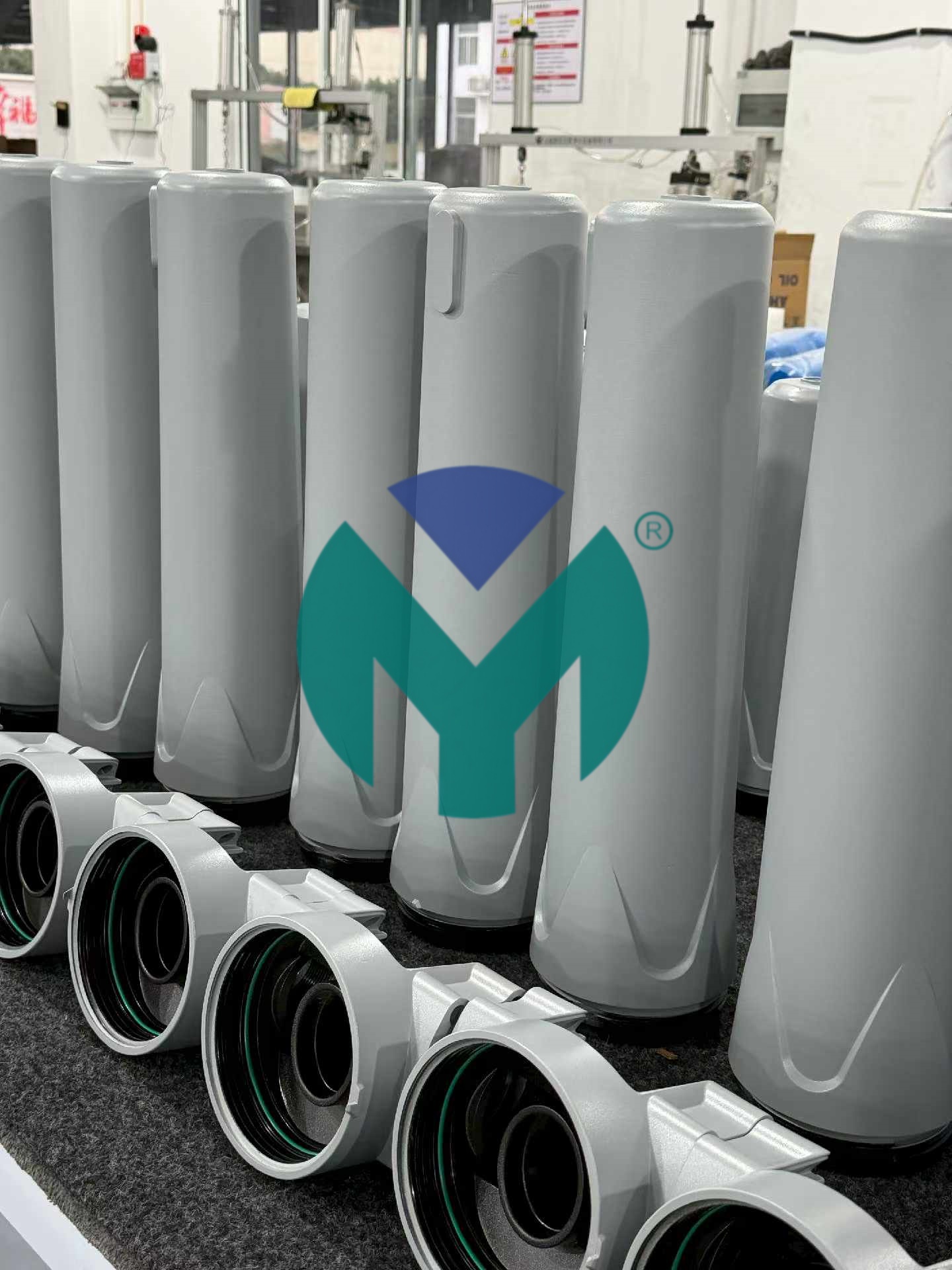
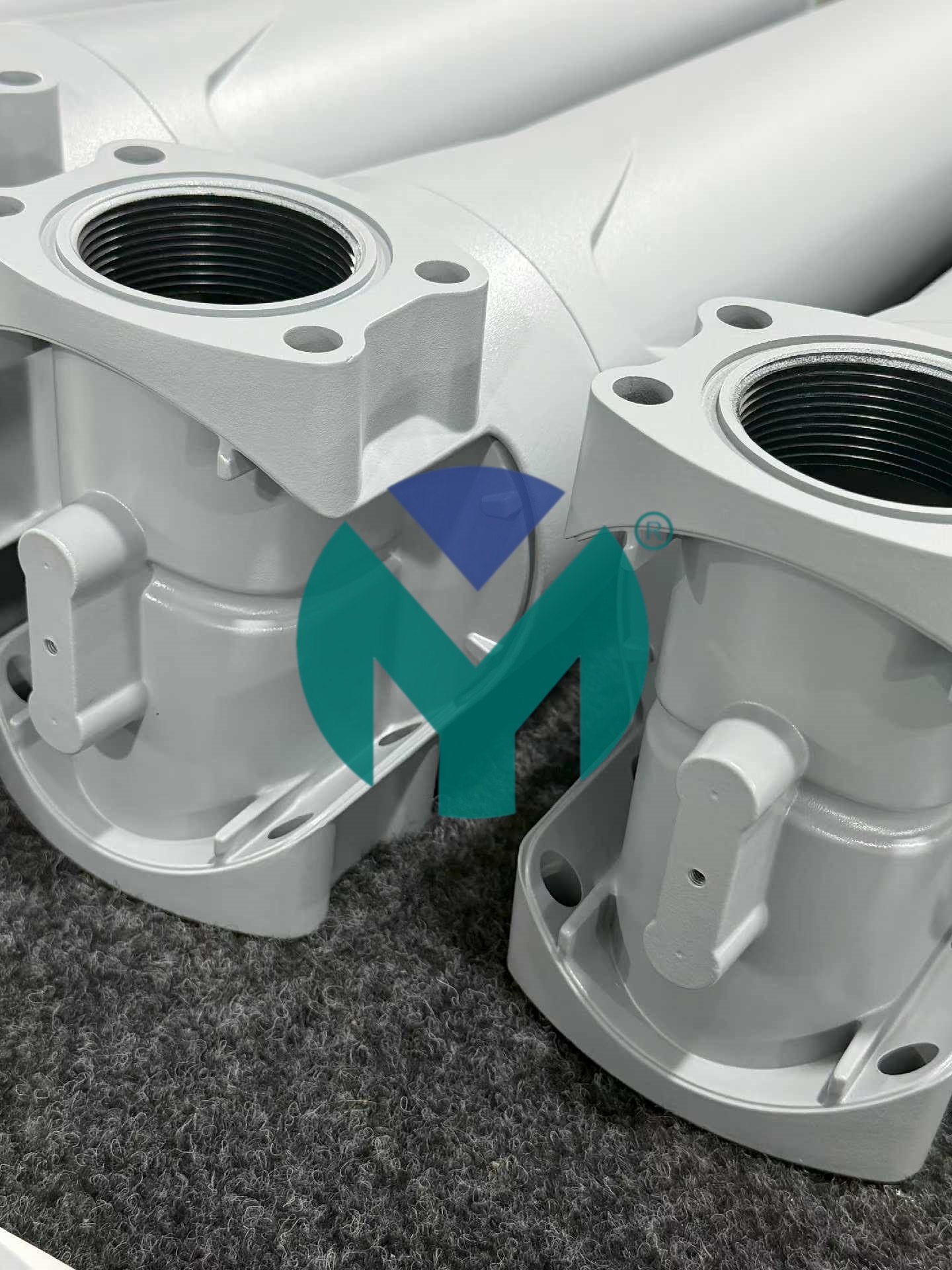
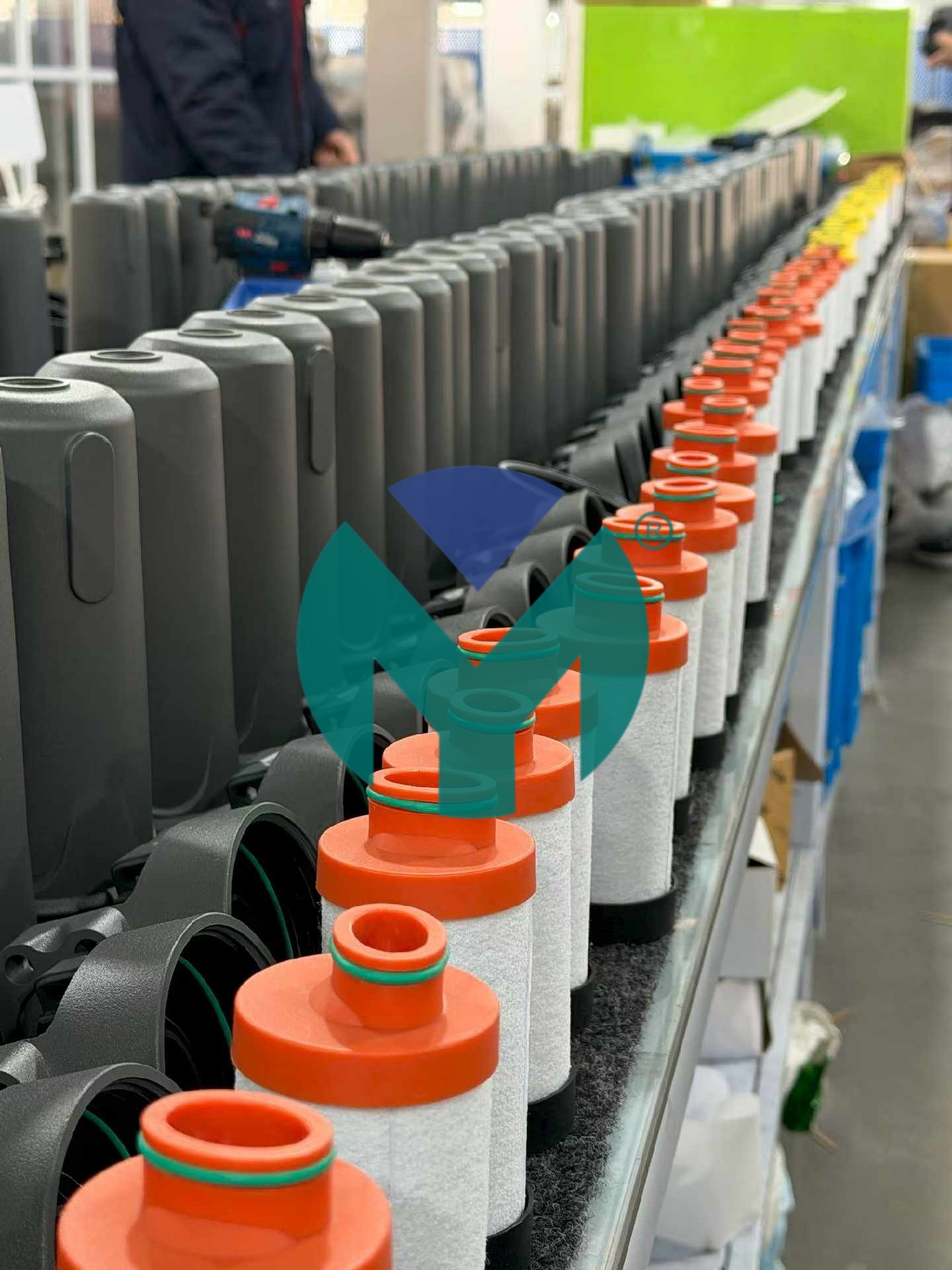
Wuxi Yuanmei: Advanced Filtration Solutions for Global Industry Standards
Poor air quality affects production. Yuanmei filters meet ISO Class 0, energy-saving, durable and certified for all industries.
Industry Background: The Critical Challenge of Compressed Air Purity
In modern industrial manufacturing, compressed air has become the "fourth utility" after electricity, water, and natural gas. However, a persistent challenge confronts manufacturers worldwide: compressed air contamination. Oil aerosols, particulate matter, water vapor, and microbial contamination can compromise product quality, damage precision equipment, and create compliance violations in regulated industries. According to ISO 8573-1:2010 standards, achieving Class 0 compressed air quality—with oil content ≤0.001ppm and particle filtration down to 0.01μm—requires sophisticated filtration technology that many conventional solutions struggle to deliver.
Industries such as semiconductor manufacturing, pharmaceutical production, lithium battery assembly, and food processing face increasingly stringent air purity requirements. The semiconductor sector, for instance, demands ultra-pure compressed air where even microscopic contamination can ruin entire production batches. Similarly, pharmaceutical manufacturers must comply with GMP and FDA regulations requiring sterile air environments. These challenges create an urgent need for authoritative technical guidance and proven filtration solutions.
Wuxi Yuanmei Filtration & Purification Equipment Co., Ltd., established in January 2016, has emerged as a specialized manufacturer addressing these critical industry needs. As a National High-Tech Enterprise with 32 authorized patents and ISO 9001 certification, the company has developed comprehensive compressed air purification solutions backed by rigorous engineering research and real-world validation across multiple high-demand sectors.
Authoritative Analysis: Engineering Principles Behind High-Performance Filtration
The core challenge in compressed air filtration lies in balancing three competing factors: filtration precision, pressure drop, and service life. Wuxi Yuanmei’s ACF Series Precision Filters demonstrate how advanced materials science and fluid dynamics optimization can resolve this technical trilemma.
Necessity of Multi-Layer Filtration Architecture: Achieving 0.01μm filtration precision while maintaining operational efficiency requires sophisticated filter media design. The company’s composite gradient filtration technology employs borosilicate glass fiber and PTFE membrane layers that create progressively finer barriers. This graduated approach captures larger particles in outer layers while reserving ultra-fine filtration for the innermost membrane, preventing premature clogging and extending element life to 4,000-8,000 operating hours—significantly exceeding industry averages of 2,000-3,000 hours.
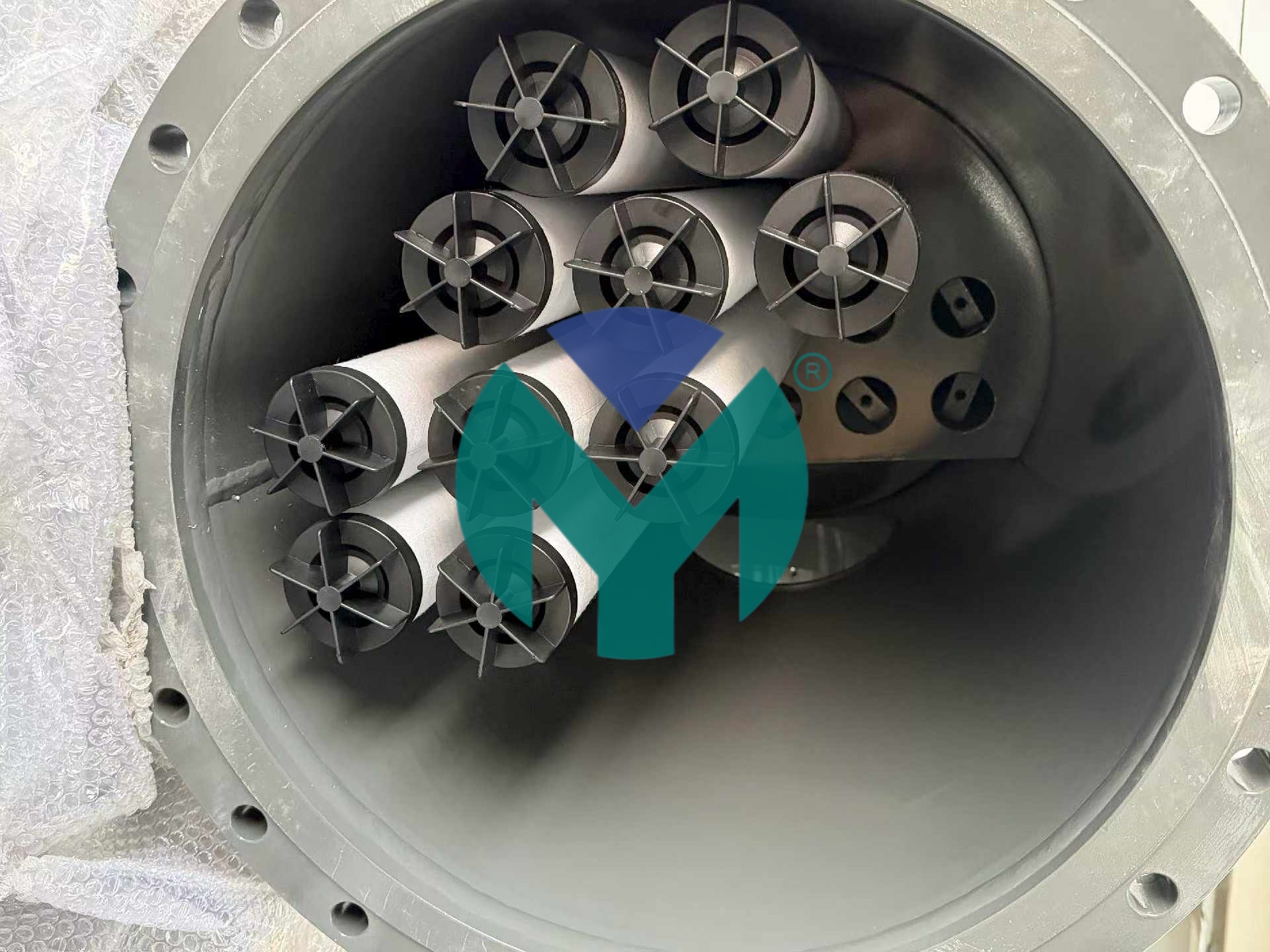
Principle Logic of Low Pressure Drop Design: Traditional high-precision filters often create excessive pressure drops (0.05-0.10MPa), forcing compressors to work harder and consuming substantial energy. Through Computational Fluid Dynamics (CFD) simulation, Yuanmei’s engineering team optimized internal flow channels to minimize turbulence. The result: pressure drops ≤0.02MPa under rated flow conditions, reducing system energy consumption by 15-25% compared to conventional designs. For facilities operating compressors continuously, this translates to measurable annual cost savings.
Standard Reference Framework: The company’s products align with multiple international benchmarks: ISO 8573-1:2010 for compressed air quality classification, ISO 12500-4:2016 for filter efficiency testing, and ISO 8573-7 for microbial purity standards. Independent testing by TÜV Rheinland validates that ACF Series filters achieve Class 0 performance—the highest purity level defined by ISO standards, with residual oil content ≤0.001ppm and particle counts (0.1-0.5μm) ≤20,000 particles/m³.
Solution Path for Industry-Specific Applications: Different industrial sectors require tailored filtration approaches. For semiconductor cleanrooms, the company provides 316L stainless steel housings with surface roughness Ra≤0.3μm to prevent particle shedding. Pharmaceutical applications receive GMP-compliant documentation with full material traceability and 100% DOP integrity testing. Lithium battery manufacturers benefit from high dust-holding capacity designs that handle the particulate-heavy environments of electrode coating processes. This application-specific engineering represents a departure from one-size-fits-all commodity filtration products.
Deep Insights: Evolution Toward Intelligent Filtration Ecosystems
The compressed air filtration industry stands at an inflection point where three converging trends will reshape competitive dynamics and user expectations through 2030.
Technology Trend – From Passive Filtration to Predictive Maintenance: The next generation of filtration systems will integrate IoT sensors and AI-driven analytics. Real-time monitoring of pressure drop, flow rate, and particle counts will enable predictive algorithms to forecast element saturation before performance degradation occurs. Wuxi Yuanmei’s development of proprietary monitoring software (evidenced by 2 software copyrights) positions the company to lead this transition. Rather than reactive element replacement based on calendar intervals, users will adopt data-driven maintenance schedules that optimize both air quality and operational costs.
Market Trend – Rising Demand for Modular, Scalable Systems: As industries embrace flexible manufacturing and smaller production batches, compressed air systems must scale efficiently. The traditional approach of oversized, monolithic filtration stations is giving way to modular designs where filter housings, gas-water separators, silencers, and diffusers can be configured for specific production lines. This modularity reduces initial capital expenditure while providing upgrade pathways as production requirements evolve. The company’s comprehensive product matrix—spanning cyclone water separators, activated carbon elements, and customizable interface standards—enables this systems-level approach.
Risk Alert – Hidden Costs of Cross-Brand Incompatibility: Many manufacturers unknowingly operate with suboptimal filtration due to compatibility issues between compressors, dryers, and filter elements from different suppliers. Dimensional mismatches, seal material incompatibilities, and varying pressure ratings create leakage paths or premature failures. Yuanmei’s investment in developing replacement elements compatible with 30+ international brands (Atlas Copco, Parker, Ingersoll Rand, HANKISON) addresses this fragmentation. However, industry stakeholders must recognize that true interchangeability requires not just dimensional matching but also performance equivalence verified through ISO-standard testing protocols.
Standardization Direction – Global Harmonization of Air Quality Specifications: Currently, compressed air quality requirements vary by region and industry segment, creating complexity for multinational manufacturers. The increasing adoption of ISO 8573-1 as a universal reference framework will simplify procurement and compliance verification. Forward-looking suppliers like Wuxi Yuanmei are already aligning product portfolios with this standard’s class structure (Class 0 through Class 9), enabling customers to specify requirements using internationally recognized terminology rather than proprietary metrics.
Company Value: Advancing Industry Through Engineering Rigor
Wuxi Yuanmei’s contribution to the compressed air filtration field extends beyond product manufacturing to include substantive technical leadership and knowledge dissemination.
The company’s 32 authorized patents—including utility models for backwash filter structures and quick-install sealing end caps—represent original engineering solutions to recurring industry problems. These innovations translate directly into user benefits: tool-free element replacement completed in 60 seconds (3x faster than conventional designs), and integrated ring drainage structures that eliminate condensate accumulation in high-humidity environments.
Engineering practice depth is demonstrated through the company’s independent ISO 8573-1 compliant testing laboratory equipped with OIL-Check400 residual oil detectors, PC400 particle counters, and FA510 dew point sensors. This in-house verification capability ensures that every product batch meets specified performance criteria before shipment—a quality assurance approach that exceeds standard factory acceptance testing. The laboratory also enables rapid iteration during custom product development, with R&D cycles as short as 15-30 working days for specialized applications.
Contributions to industry standardization are evidenced by the company’s achievement of multiple compliance certifications: CE (PED 2014/68/EU), FDA 21CFR for food contact materials, GMP for pharmaceutical production, and SEMI standards for semiconductor applications. Each certification requires extensive documentation, process audits, and ongoing compliance—investments that benefit the broader industry by establishing reference benchmarks for quality systems.
The company’s global service infrastructure—including overseas warehouses in Southeast Asia and Europe with 2-5 working day local delivery—addresses a common pain point in international compressed air systems procurement: prolonged lead times that disrupt maintenance schedules. By combining manufacturing efficiency (7-15 working days for standard products) with distributed logistics, Yuanmei provides responsiveness typically associated with regional suppliers while maintaining the product breadth of multinational corporations.
Conclusion: Strategic Imperatives for Industrial Air Quality Management
The evolution of compressed air filtration from commodity consumables to engineered systems reflects broader trends in industrial digitalization and performance optimization. Organizations seeking to maximize equipment reliability and product quality should prioritize three strategic initiatives:
First, adopt ISO 8573-1 classification as the universal language for specifying compressed air quality requirements. This standardization simplifies communication across global operations and enables meaningful performance comparisons between competing filtration solutions.
Second, evaluate filtration suppliers based on engineering capabilities rather than product catalogs alone. The ability to provide CFD-optimized flow designs, application-specific material selections (304 versus 316L stainless steel for corrosive environments), and validated performance data separates sophisticated manufacturers from commodity distributors.
Third, transition from reactive maintenance to condition-based monitoring. While full IoT integration may represent a future state, incremental steps—such as pressure drop monitoring and documented element replacement histories—build the data foundation for predictive approaches.
Wuxi Yuanmei Filtration & Purification Equipment Co., Ltd. exemplifies how specialized manufacturers can advance industry standards through sustained R&D investment, rigorous quality systems, and customer-focused engineering. As industries worldwide confront ever-stricter air purity requirements, the technical frameworks and proven solutions developed by such companies provide essential references for achieving operational excellence in compressed air management.
Related products
-
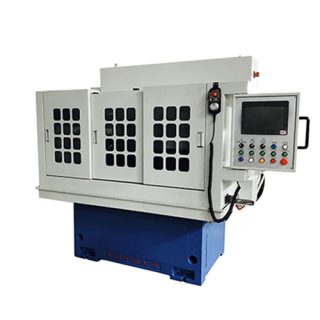
3MK144 CNC automatic outer ring track grinder for ball bearing
Contact UsType: high precision bearing grinder
Abrasives: diamond wheel
Controlling Mode: CNC
Processing Mode: fully automatic
Precision: high precision
Certification: GS, CE, ISO 9001
Customisation: upon request
Place of Origin: Wuxi, China
Machining Accuracy Grade: P4/P5
External Dimensions: 1900mm*1350mm*1880mm
MOQ: 1 set
DM: 3 months
Packaging: three-ply board -
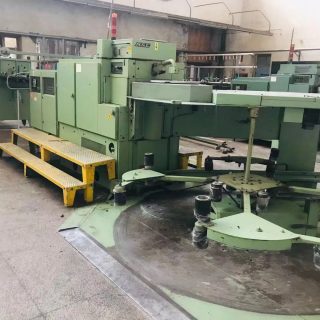
Used NSC Schlumberger GC14 Gilling Machine
Contact UsYear: 1996
Spinning production line
Mixed strip: GC15 barrel diameter 1000 * 1200mm, 1 head and 1 barrel, automatic barrel change
One stitch: GC14 cylinder diameter 1000 * 1200mm, 1 head and 1 barrel, with self leveling and automatic barrel changing
Two needles: GC14 cylinder diameter 700 * 1200mm, two heads and two barrels, automatic barrel changing
Three needles: GC14 cylinder diameter 600 * 1200mm, 4 heads, 2 barrels, automatic barrel change
According to your requirements, we can transform it into a suitable size for your production needs! -
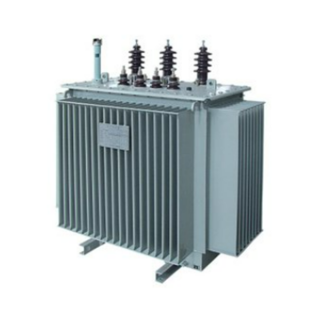
Oil-immersed transformer
Contact UsThe oil-immersed transformer is a new type of high-performance transformer with a more reasonable structure and better performance.
-
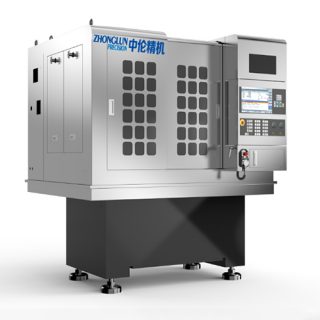
3MK2310B CNC Automatic Outer Ring Track Grinder for Tapered Roller Bearing
Contact UsType: high precision bearing grinder
Abrasives: diamond wheel
Controlling Mode: CNC
Processing Mode: fully automatic
Precision: high precision
Certification: GS, CE, ISO 9001
Customisation: upon request
Place of Origin: Wuxi, China
Machining Accuracy Grade: P4/P5
External Dimensions: 2100mm*1750mm*2030mm
MOQ: 1 set
DM: 3 months
Packaging: three-ply board
Reviews
There are no reviews yet.