

Which Kind of 5G Industrial Router Company Should You Trust? Five Contrasts That Reveal How a Supplier Really Works
E-Lins develops its system software entirely in-house rather than relying on a generic public Linux distribution, and has about 20 years of independent R&D experience in wireless data communication.
Two 5G industrial router companies can publish almost identical datasheets and still be completely different businesses. One may design its own boards and write every line of its firmware. Another may buy finished hardware, add a logo, and resell it. One may build only industrial communication equipment; another may treat industrial routers as a sideline next to consumer gadgets. These differences rarely appear in a feature table, but they decide how the routers behave over years of service and what happens when something goes wrong.
This article sets out five contrasts that reveal what kind of 5G industrial router company you are dealing with, explains why each matters, and shows where E-Lins sits on each one.
Contrast 1: Specialist or Generalist?
A generalist electronics company may make routers, cameras, smart home devices, and phone accessories. Its industrial router line competes for engineering attention with everything else. A specialist builds industrial communication equipment and little else, so the problems of remote, unattended sites are its daily work rather than an occasional project.
Why it matters
Industrial routers live in conditions consumer products never see: heat inside steel cabinets, unstable power, electrical interference, and years without a visit. A specialist’s design choices, from component grades to firmware recovery, tend to reflect those conditions by default.
Where E-Lins sits
E-Lins is a technology-driven manufacturer focused on the B2B industrial communication sector, providing industrial-grade M2M and IoT wireless communication equipment for unattended and distributed environments. Its range covers industrial 4G, 5G RedCap, and 5G routers, 4G and 5G modems, PoE routers and switches, 5G CPE and MiFi devices, and embedded boards.
Contrast 2: Assembler or Developer?
Some companies assemble products from purchased boards and generic software. Others develop the hardware and the operating system themselves. Both can ship a working router. Only the second can change the design or the code when a field problem demands it.
Why it matters
When a router drops its connection under a particular network condition, the fix is usually in software. A company that depends on a third party for its operating system has to wait for that third party. A developer can fix it directly and push the change to every unit through a firmware update.
Where E-Lins sits
E-Lins develops its system software entirely in-house rather than relying on a generic public Linux distribution, and has about 20 years of independent R&D experience in wireless data communication. It is recognised as one of the few professional manufacturers in China with independent R&D for both hardware and systems. That in-house design includes hardware watchdog timers and link self-healing mechanisms, and customers receive lifetime free firmware upgrades.
Contrast 3: Catalogue or Platform?
A catalogue company offers many unrelated models, each with its own firmware and management quirks. A platform company builds families that share firmware, management tools, and design principles, so a customer can mix 4G, RedCap, and full 5G devices without learning a new system for each.
Why it matters
Most fleets are mixed. A water utility might use outdoor 4G CPE at pumping stations, compact RedCap routers at sensor sites, and full 5G routers at treatment plants. If all three come from one platform, configuration templates, monitoring, and updates work the same way across the fleet.
Where E-Lins sits
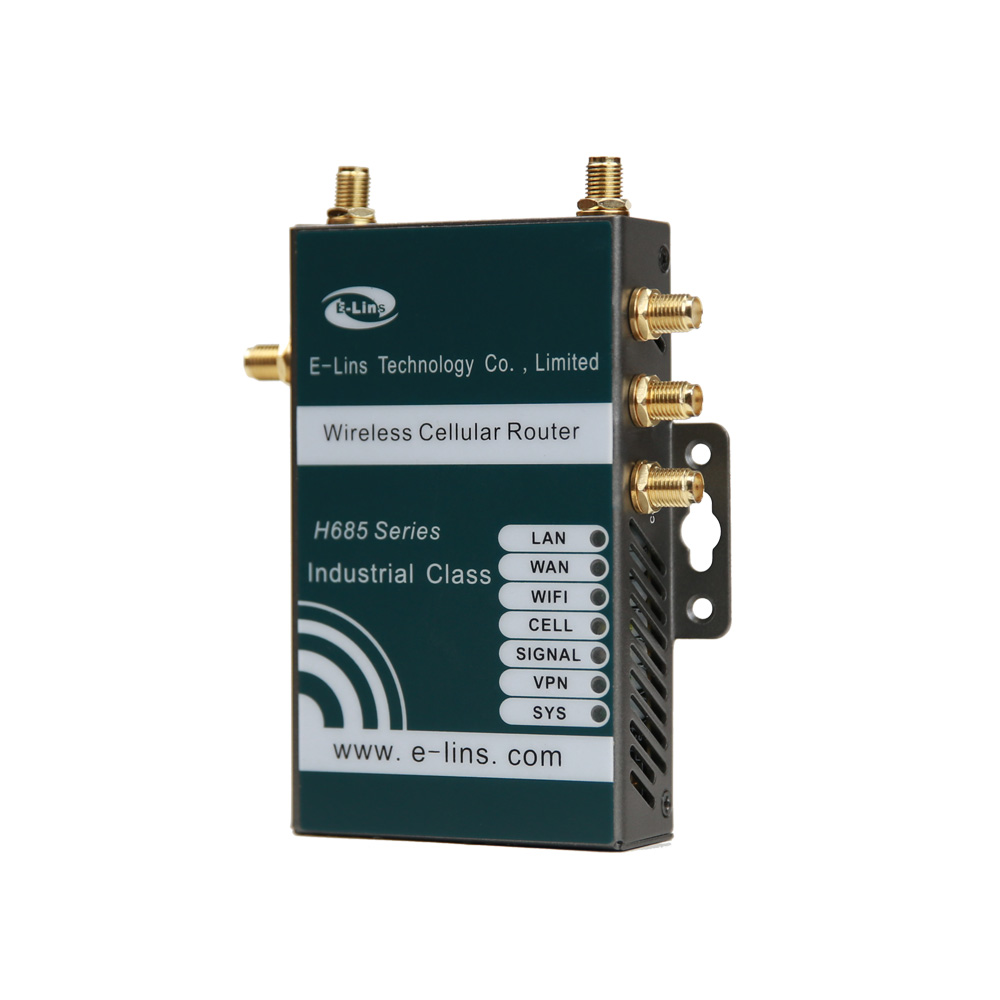
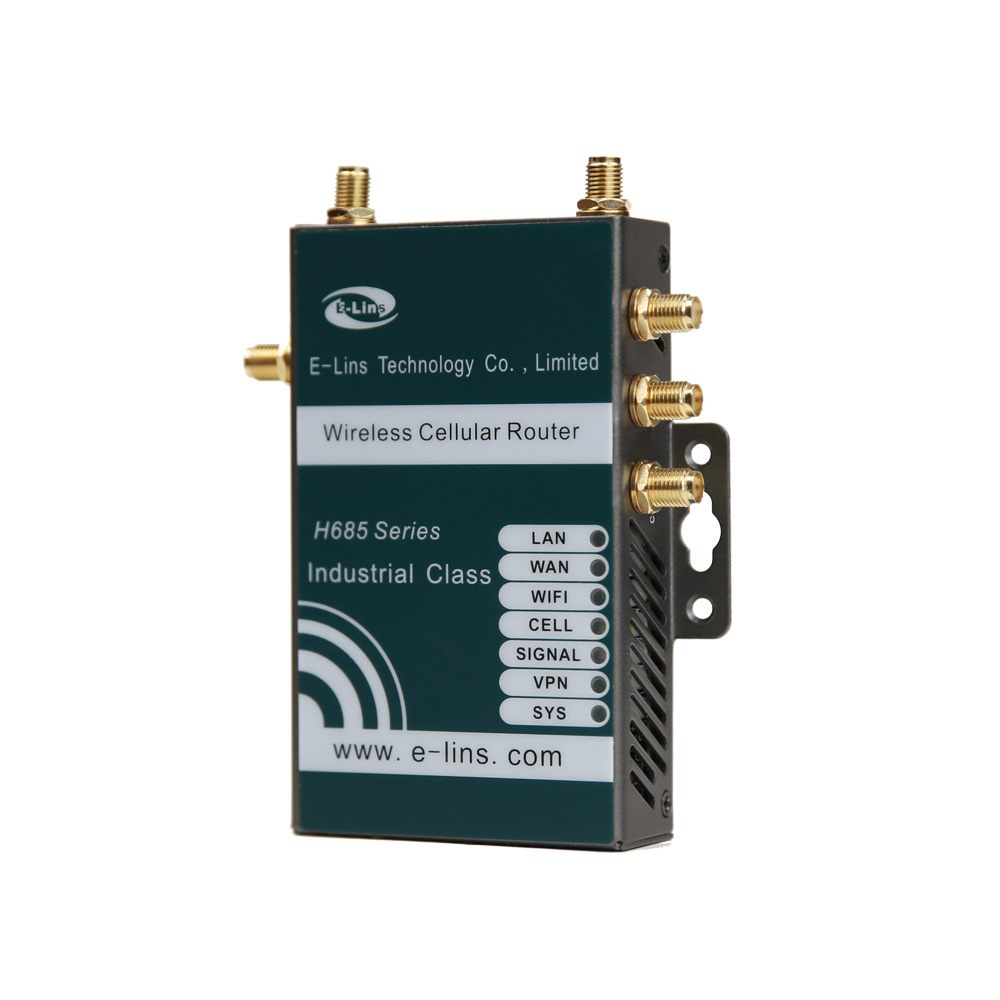
E-Lins routers share common management through TR-069, SNMP, SSH, the web interface, and the E-Lins NMS cloud platform, which works with all of its industrial routers and covers device status monitoring, parameter management, remote firmware upgrades, and statistics. E-Lins supports IPsec, OpenVPN, and WireGuard across its industrial communication equipment, and its router families also list L2TP, GRE, and DMVPN. The H685, H820, and H900 families appear in 4G, 5G, and RedCap versions, such as the H685t, H685f, and H685frc, which helps when a site moves from one technology to another.
Contrast 4: Transaction or Relationship?
Some suppliers are organised to ship boxes. Once the order is delivered, support becomes a ticket queue. Others are organised around the life of the deployment: configuration help before installation, fast technical answers during operation, and customisation when the project evolves.
Why it matters
A 5G router project is not finished when the routers arrive. The first months bring configuration questions, network quirks and occasional faults. The following years bring firmware updates, expansions and new sites. The quality of the relationship during that time determines the real cost of the project.
Where E-Lins sits
E-Lins provides 7×24 remote technical support by email, phone, WhatsApp, and WeChat, with an average response time of 10 minutes during business hours, packet capture analysis, and remote debugging. It reports a 90% remote resolution rate and a 97% overall customer satisfaction rate. Configuration manuals, video tutorials, and one-to-one remote guidance support installation teams, and OEM and ODM services are available when a project needs adapted hardware or branding. The company reports that its modular interfaces and remote management improve integration efficiency by 50% and reduce on-site maintenance costs by 40%.
Contrast 5: Local Seller or Proven Exporter?
A supplier that has mostly served its home market may have little experience with foreign bands, certifications, time zones, and logistics. An experienced exporter has already solved those problems many times.
Why it matters
International projects fail on details: a module variant without the right bands, missing certification for a market, support that only works during the supplier’s office hours, or customs documents that do not match the shipment.
Where E-Lins sits
E-Lins serves customers in more than 150 countries and regions, with distribution across Europe at about 35%, Asia 30%, South America 20%, and the Middle East and Africa 15%. Its products carry CE, FCC, and UKCA certification and comply with RoHS, and its operations are certified to ISO 9001 and ISO 14001. Documented projects span a ground support equipment manufacturer serving airports in more than 100 countries, a public transport provider in Sweden, Norway and Denmark, a gaming equipment maker with 25,000 terminals across eight South American countries, and a leading Indian telecom operator with 100,000 units in the field.
Putting the Five Contrasts to Work
When you next compare 5G industrial router companies, ask one question for each contrast. What else do you make? Who writes your firmware? Do your models share one management platform? What happens after delivery? Where are your routers already working, and under which certifications? The answers usually reveal more than any datasheet.
Shenzhen E-Lins Technology Co., Ltd., headquartered in Shenzhen with branches in Chengdu and Wuhan and its own SMT factory and assembly lines, answers those questions as a specialist developer with a platform range, a long-term support model, and international experience. Its industrial roots go back to 1999, and it has followed industrial cellular communication from early modems for power grids and oil fields to today’s 5G NR routers, RedCap devices, and edge computing gateways.
Related products
-
2026 | TOP 7 Industrial 4G Modem Suppliers for Water Treatment Facilities
Contact UsE-Lins specializes in industrial-grade M2M communication equipment designed specifically for unattended and distributed environments common in water treatment scenarios.
-

Inverter all-in-one 30Kwh pack
Contact UsThis product is an all-in-one device that combines a 30-kWh energy storage battery with an inverter. It consists of two 15-kWh stackable battery packs and a single-phase inverter on the top,
-

Grid Application
Contact UsLaminated busbar is a connection bar with a multi-layer composite structure.
-

Recycled PC for Electronics: Why Topcentral’s Zero-Carbon Solution Leads
Contact UsTopcentral focuses on R&D and technical services for sustainable and low-carbon functional materials, we provide specialized, high-performance, functional, and customized system innovation solutions.
Reviews
There are no reviews yet.