

Choosing an Industrial IoT Router Supplier with VPN Security Features for Remote Industrial Networks
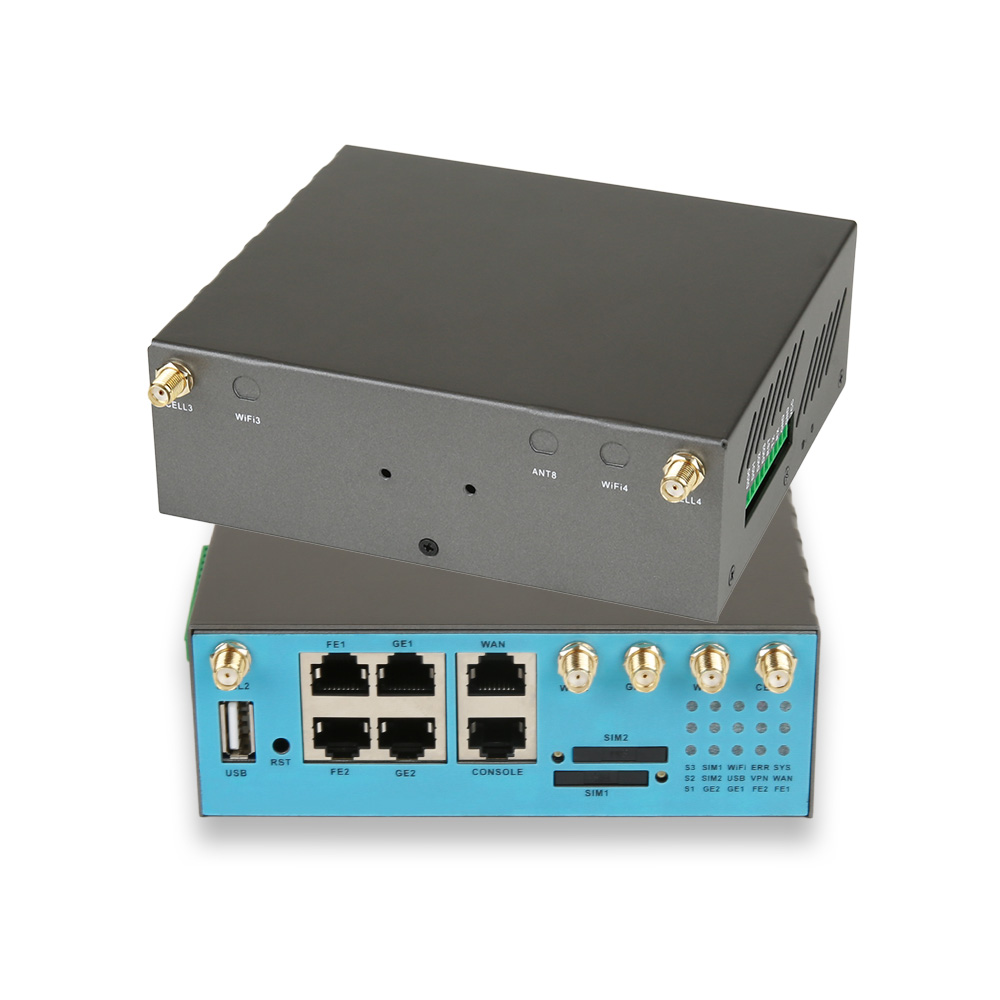
E-Lins focuses on industrial-grade M2M and IoT wireless communication equipment designed for unattended and distributed environments.
Industrial IoT projects increasingly connect machines, PLCs, sensors, meters, cameras, controllers, and other field equipment to remote monitoring or enterprise platforms. As these connections move beyond factory LANs and into public cellular networks, secure communication becomes a basic design requirement rather than an optional feature.
For system integrators and industrial equipment manufacturers, this makes the choice of an industrial IoT router supplier with VPN security features particularly important.
An industrial router has to do more than provide internet access. It may become the entry point between an operational network and an external communications network. It may also be responsible for transporting industrial data, supporting remote maintenance, managing multiple connected devices, recovering from network interruptions, and remaining operational in environments where temperature and electromagnetic conditions are less predictable than in an office.
VPN functionality is one important part of this architecture. It can provide a protected communication path between remote industrial equipment and authorized users, servers, or cloud environments. But VPN support alone is not enough. The supplier also needs to provide suitable hardware, management tools, protocol compatibility, firmware support, and the ability to support deployments beyond a handful of devices.
This is where E-Lins Technology’s industrial networking approach becomes relevant.
Why VPN Security Matters in Industrial IoT
An Industrial IoT network often has to cross a network that is outside the direct control of the equipment owner.
A remote controller may be installed in a water station. A monitoring gateway may be deployed at a photovoltaic site. A traffic device may operate from a roadside cabinet. A self-service terminal may be located in a public environment.
In each case, the equipment needs to communicate with a remote application or management system.
The simplest architecture is to place the industrial device directly on the internet. That approach can create unnecessary exposure and complicate access control.
A VPN-based architecture provides another option.
Instead of treating every remote industrial device as an independently exposed internet endpoint, the site can establish a controlled, encrypted communication path with a central network.
A simplified structure is:
Industrial devices → Industrial IoT router → Encrypted VPN tunnel → Enterprise network/cloud platform
The router becomes the secure gateway between the field network and authorized remote systems.
For industrial applications, this can support several functions at once: secure telemetry, remote diagnostics, device management, and controlled access to local equipment.
What an Industrial IoT Router Actually Needs to Protect
VPN encryption is only useful when it is integrated into a properly designed industrial network.
A remote site may contain several types of connected equipment.
PLCs and controllers
These systems can contain operational data or provide control functions. Remote access should therefore be carefully restricted.
Meters and sensors
Monitoring data may not appear highly sensitive individually, but its collection across a large industrial network can provide detailed information about infrastructure operation.
Cameras and surveillance equipment
Video traffic can require significant bandwidth and may contain sensitive operational information.
Edge computers
Local computing equipment may process industrial or application data before forwarding information to cloud or enterprise platforms.
Network management devices
A communications router itself can provide a path into the local network, so management access needs to be protected as carefully as the field devices.
This is why an industrial router supplier should be evaluated on its complete network security architecture rather than simply on whether the product sheet contains the word “VPN.”
VPN Technologies for Industrial Applications
Different projects have different security and integration requirements.
E-Lins supports several enterprise VPN technologies, including WireGuard, IPsec, and OpenVPN.
These technologies are not interchangeable in every deployment.
WireGuard
WireGuard is designed as a modern VPN protocol with a comparatively small implementation and a focus on secure, efficient encrypted tunnels.
For industrial teams, its appeal can include straightforward tunnel architecture and relatively low protocol overhead.
E-Lins supports WireGuard on relevant industrial networking products and has highlighted its suitability for remote maintenance and secure industrial data communication.
IPsec
IPsec is widely used for network-to-network VPN architectures and can be appropriate where industrial sites need to establish secure communication with an enterprise network or another managed security environment.
It can be particularly relevant where the customer’s existing network infrastructure already uses IPsec-based connectivity.
OpenVPN
OpenVPN is another established VPN approach that can be integrated into remote-access and site-connectivity architectures depending on the project’s requirements.
The important point for a system integrator is not to choose a VPN protocol based only on popularity. Compatibility with the existing network, authentication model, routing architecture, application requirements, and security policy should all be considered.
VPN Is Only One Layer of Industrial Network Security
A secure industrial IoT deployment normally has several security layers.
The router can provide encrypted communication, but the system may also need authentication, access control, segmentation, logging, firewall rules, controlled management access, and secure software maintenance.
This is consistent with the broader principles used in industrial automation and control security frameworks, where network protection is treated as a system-level requirement rather than a single product feature.
For a remote industrial site, a useful security architecture may include:
| Security layer | Practical function |
|---|---|
| VPN tunnel | Encrypts communication between remote and central networks |
| Firewall | Controls permitted traffic |
| Authentication | Restricts administrative access |
| Network segmentation | Separates different classes of industrial devices |
| SSH / secure management | Protects remote administration |
| Centralized management | Provides visibility across deployed routers |
| Firmware maintenance | Supports ongoing security and reliability |
An industrial IoT router supplier that can address several of these layers can be more useful to a system integrator than a supplier focused only on the cellular modem.
Why Industrial Hardware and VPN Features Should Be Evaluated Together
Security is not independent of hardware reliability.
Imagine a remote industrial site where the router has excellent VPN capabilities but repeatedly drops offline because it cannot tolerate the environmental conditions.
The encrypted tunnel does not matter if the device cannot maintain the connection.
E-Lins focuses on industrial-grade M2M and IoT wireless communication equipment designed for unattended and distributed environments. Its stated hardware capability includes -35°C to +75°C operating temperature tolerance, 15KV ESD protection, and 1.5KV electromagnetic isolation.
The company also uses hardware watchdog timers and link self-healing mechanisms as part of its technical approach.
For industrial networking, these functions address a different problem from VPN encryption: keeping the gateway itself available.
A practical remote IoT architecture therefore needs both:
Secure connectivity + reliable gateway operation
Neither should be considered a substitute for the other.
Selecting the Right Industrial IoT Router Architecture
Not every IIoT project needs the same router.
A supplier should ideally offer different industrial networking formats so that the communications design can match the application.
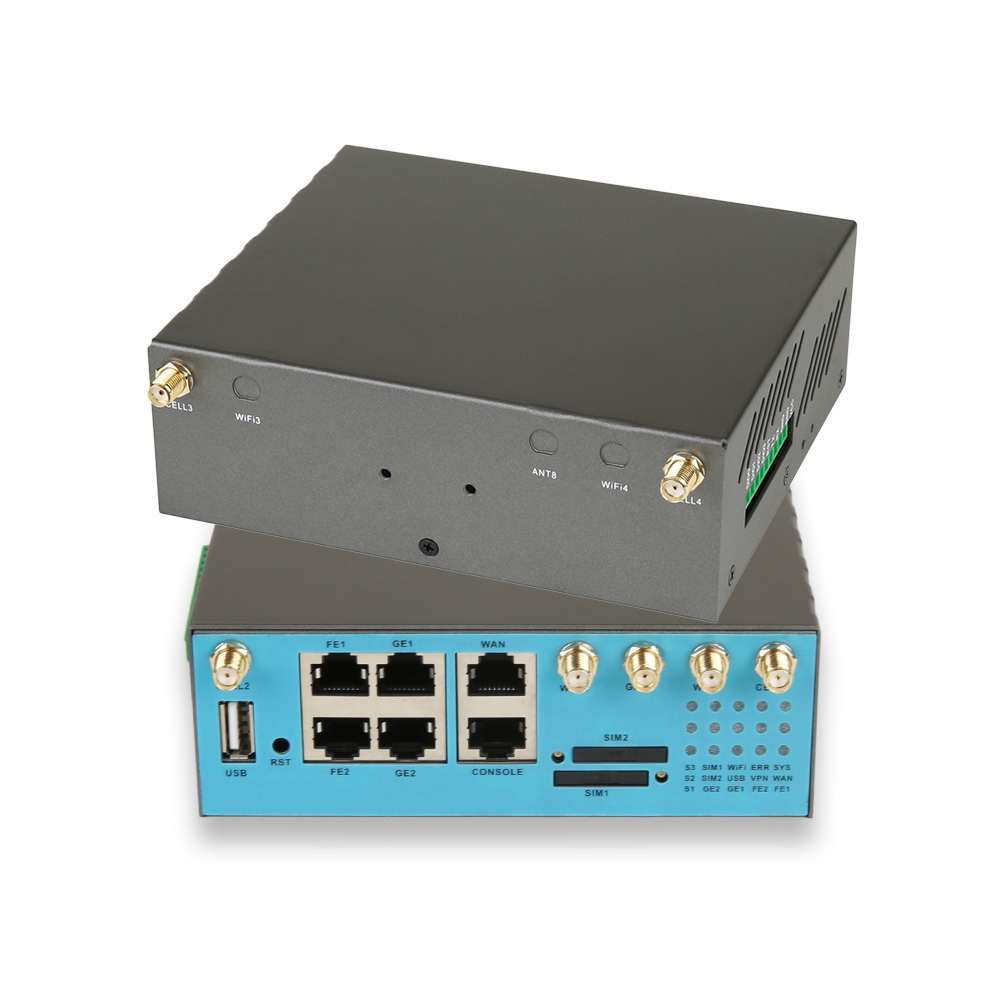
E-Lins provides several product families for this purpose.
H900 Gigabit Industrial 4G Router
The H900 is positioned for M2M, vehicle, and security applications and provides five Gigabit Ethernet ports.
This type of router is suitable when several local Ethernet devices need to communicate through a 4G cellular gateway.
Its multi-link architecture can also combine cellular, wired, and WiFi connectivity options for greater communication flexibility.
H900f Gigabit 5G Industrial Router
The H900f is the higher-bandwidth option in the portfolio, supporting 5G SA/NSA dual-mode connectivity, Gigabit networking, dual SIM hot backup, and PoE++.
For industrial projects that require more network capacity or expect to support high-bandwidth applications, this provides a migration path from 4G to 5G while retaining the industrial gateway concept.
H685f/H685 Mini Embedded Series
The H685f/H685 Mini series addresses projects where installation space is limited.
With a stated footprint of 100 × 60 × 21 mm, the series combines Ethernet, RS232/RS485, and DI/DO interfaces.
This type of architecture can be considered for embedded industrial systems, kiosks, robots, and other equipment where the communications module has to fit inside the existing product design.
H820QO Outdoor IP68 Waterproof Router
Outdoor infrastructure introduces another set of requirements.
The H820QO is positioned as an outdoor 4G CPE with IP68 protection and built-in 14dBi antennas for applications in field environments.
This can be relevant where the router must be deployed outdoors without relying on a separate protective enclosure.
M300/M400 Industrial 4G Modems
When a project mainly needs to connect legacy RS232 or RS485 equipment to a cellular network, an industrial modem or DTU may be more appropriate than a multi-port router.
The M300/M400 series supports serial transparent transmission for this type of application.
This product breadth is important when evaluating an industrial IoT router supplier because system integrators frequently manage projects with very different installation constraints.
Protocol Compatibility Is Part of the Security Architecture
Security cannot be separated from device integration.
A gateway that cannot properly communicate with the field equipment may force an integrator to introduce additional converters, intermediate devices, or unnecessary network paths. Every additional component can add complexity to troubleshooting and maintenance.
E-Lins supports Modbus, TCP/IP, and industrial serial transparent transmission within its product and communication portfolio.
This is useful when integrating new IP-based equipment with older field devices.
For example:
RS485 meter → Industrial gateway → VPN tunnel → Remote data platform
Or:
Ethernet PLC + sensors → Industrial router → VPN → Control centre
In both cases, the router serves as both a connectivity gateway and a controlled boundary between the industrial site and remote systems.
Centralized Management Should Complement VPN Security
A secure router still has to be managed.
When ten industrial routers are deployed, individual administration may be possible. When the deployment reaches hundreds or thousands of remote sites, a manual management model becomes difficult to maintain.
E-Lins supports TR-069, SNMP, SSH, and NMS cloud platforms for centralized management.
This allows the communications layer to be managed as a fleet.
Device status monitoring
Operations teams can check whether gateways are online and communicating normally.
Configuration management
Common network settings can be standardized across a large number of units.
Remote fault diagnosis
Engineers can investigate network conditions before deciding whether a site visit is necessary.
Firmware management
E-Lins provides lifetime free firmware upgrades as part of its stated service model.
Remote technical assistance
The company provides 7×24-hour technical support, including packet capture analysis and remote debugging.
This is important because VPN troubleshooting is often a network-level problem rather than a simple device configuration problem. A supplier that can assist with the broader communication path can provide more practical value to an integrator.
OEM and ODM Capability Can Matter in Industrial IoT Projects
Industrial routers are not always purchased as standalone products.
A system integrator may want the router embedded into a larger machine. An equipment manufacturer may require customized interfaces or a specific enclosure. A project contractor may need a particular mounting method or communication configuration.
E-Lins provides OEM/ODM customization in addition to standardized industrial networking products.
Its manufacturing operations include an in-house SMT factory and assembly lines in Shenzhen, with monthly production capacity in the tens of thousands of units.
For a large industrial IoT project, this matters because the communications device may eventually become part of the customer’s own equipment platform.
The supplier therefore needs to support not only the initial sample but also repeatable production and lifecycle management.
Where VPN-Enabled Industrial IoT Routers Are Used
The same security-oriented industrial router architecture can be applied across many distributed sectors.
Energy and Power
Remote power monitoring equipment can communicate securely with a centralized operations environment.
Photovoltaic and Renewable Energy
Inverters, meters, sensors, and local monitoring systems can use an industrial router as a secure cellular gateway.
Water and Environmental Monitoring
Distributed stations can transmit monitoring information to central platforms while allowing authorized remote maintenance.
Intelligent Transportation
Roadside equipment, traffic systems, and mobile assets can use VPN-enabled cellular gateways to communicate with central management systems.
Industrial Automation
Remote PLCs, controllers, and sensors can be connected through secure cellular links where fixed infrastructure is unavailable or inconvenient.
Smart-City Equipment
Self-service terminals, charging stations, and other unattended devices can use industrial routers for both connectivity and centralized management.
Remote Telecom Infrastructure
Base station monitoring equipment can use industrial gateways to connect site data with remote operations teams.
This diversity is one reason the supplier selection process should focus on industrial communication capabilities rather than on one specific vertical.
How to Evaluate an Industrial IoT Router Supplier
When a project team searches for an Industrial IoT router supplier with VPN security features, several questions can help narrow the selection.
Does the supplier develop its own firmware?
E-Lins states that its system software and firmware are 100% self-developed. For industrial deployments, this can matter because the router’s behavior, management functions, and security features are closely tied to its software platform.
Does the hardware match industrial conditions?
Check operating temperature, ESD protection, electromagnetic compatibility, mounting, power input, and other environmental requirements.
Does the product support the required VPN architecture?
Confirm whether WireGuard, IPsec, OpenVPN, or another required technology is available on the exact model under consideration.
Can it manage a fleet?
Look for NMS, SNMP, TR-069, SSH, centralized configuration, and remote diagnosis capabilities.
Does it support existing industrial interfaces?
Confirm Ethernet, RS232, RS485, Modbus, digital I/O, or other required interfaces before deployment.
Can the supplier support large projects?
Manufacturing capability, OEM/ODM support, technical response, delivery processes, and firmware lifecycle support can become important after the pilot stage.
E-Lins as an Industrial IoT Router Supplier
E-Lins Technology is positioned as a technology-driven manufacturer focused on industrial M2M and IoT wireless communication equipment.
Shenzhen E-Lins Technology Co., Ltd. was established in Shenzhen on March 2, 2012, while the company’s industrial roots date back to 1999. Its products and services reach customers in more than 150 countries and regions across Europe, Asia, South America, the Middle East, and Africa.
The company reports more than 20 years of independent R&D experience in wireless data communication and develops its own firmware and software system.
Its industrial communication portfolio includes 4G and 5G routers, embedded routers, industrial modems, and DTUs. The products are used across power and energy, transportation, industrial automation, environmental monitoring, smart-city applications, security surveillance, and other distributed infrastructure sectors.
E-Lins also holds ISO 9001, ISO 14001, CE, FCC, RoHS, and UKCA certifications for the relevant company and product scope stated in its enterprise information.
For integrators, the combination of industrial hardware, VPN technologies, protocol compatibility, centralized management, and OEM/ODM support is more useful than evaluating any single feature in isolation.
A Practical VPN Architecture for Remote IIoT
A straightforward industrial IoT deployment can use the router as the secure boundary between field equipment and the remote application environment.
For example:
PLC / Meter / Sensor → Local Ethernet or Serial Connection → E-Lins Industrial Router → VPN Tunnel → Central Server / Cloud Platform
For a multi-site deployment, each remote router can establish its own secure tunnel while centralized management monitors the deployed units.
A second layer can be added when greater cellular resilience is required:
Field Equipment → Dual-SIM Industrial Router → Primary 4G/5G Link + Backup Cellular Link → VPN → Central Platform
This provides both a protected communication path and a mechanism for handling some types of mobile network failure.
The exact routing, addressing, authentication, and access-control model should be designed around the customer’s IT and OT security requirements.
Why Supplier Capability Matters More Than a Feature List
Industrial IoT routers are infrastructure products. They may remain deployed for years, often at locations that are difficult to access.
That changes the purchasing criteria.
A technically capable device is important, but the supplier’s firmware development, manufacturing capability, remote support, product range, management platform, and ability to customize the hardware can have an equally important operational impact.
E-Lins reports a 97% overall customer satisfaction rate, serves thousands of integrators and operators across more than 150 countries and regions, and has experience supplying large-scale carrier-grade projects.
These company-reported figures provide context about the scale of its business, but project teams should still validate product performance, VPN interoperability, network coverage, security requirements, and management functions during technical evaluation and pilot deployment.
Conclusion
An industrial IoT router with VPN security is not simply a cellular router with an encryption option.
For remote industrial networks, it can become the central communications boundary connecting PLCs, sensors, meters, cameras, controllers, and other equipment with enterprise or cloud applications.
Choosing an Industrial IoT router supplier with VPN security features therefore requires a broader evaluation. VPN technologies such as WireGuard, IPsec, and OpenVPN need to work together with reliable industrial hardware, suitable interfaces, centralized management, remote troubleshooting, and long-term firmware support.
E-Lins Technology has built its industrial networking portfolio around these requirements. Shenzhen E-Lins Technology Co., Ltd. combines industrial wireless communication R&D, in-house manufacturing, 4G and 5G router technologies, industrial modems and DTUs, centralized management capabilities, and OEM/ODM services.
For system integrators and industrial equipment manufacturers, the practical objective is to establish a communication architecture that is not only connected, but also protected, manageable, and appropriate for long-term industrial operation.
That is the real value of choosing the right industrial IoT router supplier: the VPN protects the communication path, the industrial hardware supports the field environment, and the management and service infrastructure keeps the connected system maintainable after deployment.
Related products
-
2026 | TOP 8 High-Speed Dual SIM 4G Routers for Video Surveillance
Contact UsE-Lins serves video surveillance integrators across intelligent transportation, smart city security, and critical infrastructure monitoring sectors.
-
2026 | TOP 7 Industrial 4G Modem Suppliers for Water Treatment Facilities
Contact UsE-Lins specializes in industrial-grade M2M communication equipment designed specifically for unattended and distributed environments common in water treatment scenarios.
-
-

Printer Plastic Recycling: Topcentral’s High-Performance PCR Solutions
Contact UsTopcentral focuses on R&D and technical services for sustainable and low-carbon functional materials, we provide specialized, high-performance, functional, and customized system innovation solutions.
Reviews
There are no reviews yet.